Library
Browse and search books
8 novels found
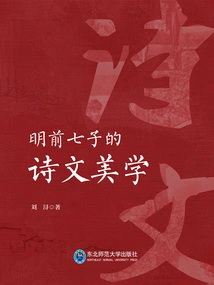
明前七子的诗文美学
Liu Xun
In the history of Chinese and Western literature, literary retrogression has appeared repeatedly. For example, the restoration of poetry in the Tang Dynasty, the ancient prose movement of the Tang and Song Dynasties, and the restoration movement of the Seven Masters before and after the Ming Dynasty. In the West, it is the classicism of ancient Rome, the Renaissance, and the neoclassicism of the seventeenth century. Although there are many differences between literary phenomena in foreign lands and different times, they are surprisingly consistent on fundamental issues such as returning to classics and emphasizing rationality and norms. From an aesthetic perspective, this book conducts a comprehensive study of the poems of the Seven Sons of the Ming Dynasty, integrating literature, aesthetics, and culture, and attempts to explore a new research paradigm on ancient literature in the fields of literary theory and aesthetic research. This book has certain reading significance for teaching and researchers engaged in ancient literature, literature and art, aesthetics and other related disciplines.
In the history of Chinese and Western literature, literary retrogression has appeared repeatedly. For example, the restoration of poetry in the Tang Dynasty, the ancient prose movement of the Tang and Song Dynasties, and the restoration movement of the Seven Masters before and after the Ming Dynasty. In the West, it is the classicism of ancient Rome, the Renaissance, and the neoclassicism of the seventeenth century. Although there are many differences between literary phenomena in foreign lands and different times, they are surprisingly consistent on fundamental issues such as returning to classics and emphasizing rationality and norms. From an aesthetic perspective, this book conducts a comprehensive study of the poems of the Seven Sons of the Ming Dynasty, integrating literature, aesthetics, and culture, and attempts to explore a new research paradigm on ancient literature in the fields of literary theory and aesthetic research. This book has certain reading significance for teaching and researchers engaged in ancient literature, literature and art, aesthetics and other related disciplines.
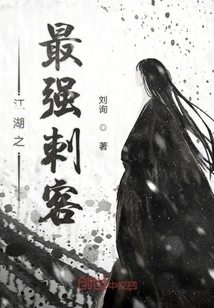
江湖之最强刺客
Liu Xun
Suffering from a terminal illness, there is no possibility of cure. This is his final fate. Unless a miracle happens, even if the King of Heaven comes, I will not be able to keep him. But in another world, a person lying in a coffin is slowly waking up. The weaker his consciousness is, the weaker he is. Finally, when he died, he woke up.
Suffering from a terminal illness, there is no possibility of cure. This is his final fate. Unless a miracle happens, even if the King of Heaven comes, I will not be able to keep him. But in another world, a person lying in a coffin is slowly waking up. The weaker his consciousness is, the weaker he is. Finally, when he died, he woke up.
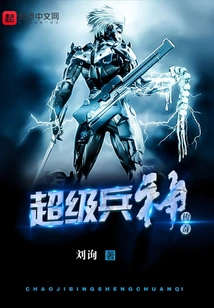
My Road to the God of War
Military我的兵神之路
Liu Xun
In 4326, people were no longer satisfied with life on earth. They built a super Great Wall to connect the solar system. People have discovered that there are more powerful forces outside the solar system and the Milky Way. Human beings are like ants in front of them, fragile. Their latitudes may be higher, their weapons may be stronger, and we cannot compete with them. So, the Joint Strength Plan began, and people became more united than ever before. Humanity has become a strong force and cultivated super soldiers one by one... (Note: This article is not based on scientific writing and is purely fictitious. If it is involved, it is entirely due to literary needs. Please do not imitate at your own risk!)
In 4326, people were no longer satisfied with life on earth. They built a super Great Wall to connect the solar system. People have discovered that there are more powerful forces outside the solar system and the Milky Way. Human beings are like ants in front of them, fragile. Their latitudes may be higher, their weapons may be stronger, and we cannot compete with them. So, the Joint Strength Plan began, and people became more united than ever before. Humanity has become a strong force and cultivated super soldiers one by one... (Note: This article is not based on scientific writing and is purely fictitious. If it is involved, it is entirely due to literary needs. Please do not imitate at your own risk!)
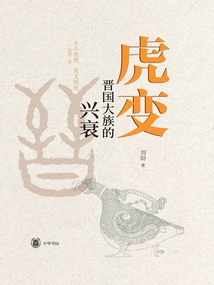
虎变:晋国大族的兴衰
Liu Xun
"Yi Zhuan·Ge" says: "When a great man changes from tiger to tiger, his literary talent is also outstanding." If the Seven Heroes of the Warring States Period are compared to seven fierce tigers, then the three tigers among them, Zhao, Wei, and Han, all evolved from the Qing clan of the same name in the Spring and Autumn Period of Jin. This book makes full use of the rich materials from handed down documents and unearthed documents such as "Zuo Zhuan", focusing on the Jin State, the most powerful vassal state in the Spring and Autumn Period. Taking the politics of the Qing clan as the main line, it not only restores the magnificent historical events of the leadership team of Jin's ministers and the rise and fall of the Qing clan in chronological order, but also combs the brief evolution history of the ten Qing clans in Jin one by one, vividly and clearly showing the "tiger transformation" career of each Qing clan to turn the family into the country and the historical ending of success or failure.
"Yi Zhuan·Ge" says: "When a great man changes from tiger to tiger, his literary talent is also outstanding." If the Seven Heroes of the Warring States Period are compared to seven fierce tigers, then the three tigers among them, Zhao, Wei, and Han, all evolved from the Qing clan of the same name in the Spring and Autumn Period of Jin. This book makes full use of the rich materials from handed down documents and unearthed documents such as "Zuo Zhuan", focusing on the Jin State, the most powerful vassal state in the Spring and Autumn Period. Taking the politics of the Qing clan as the main line, it not only restores the magnificent historical events of the leadership team of Jin's ministers and the rise and fall of the Qing clan in chronological order, but also combs the brief evolution history of the ten Qing clans in Jin one by one, vividly and clearly showing the "tiger transformation" career of each Qing clan to turn the family into the country and the historical ending of success or failure.
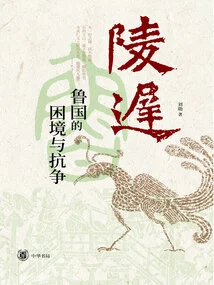
陵迟:鲁国的困境与抗争
Liu Xun
This book focuses on the decline history of the middle-ranking vassal state of Lu during the Spring and Autumn Period. "Lingchi" in the title of the book means "gradual decline". The reason why the state of Lu was chosen is, firstly, because it is the home state of Confucius, secondly, because it is the middle-level vassal state with the richest historical records, and thirdly, because it provides a typical case of the decline process of the middle-level vassal state in the Spring and Autumn Period. On the basis of sorting out the historical events of the political evolution of the State of Lu, this book focuses on the following questions: Why did the power of the monarch of the State of Lu gradually shift down to the ministers? How did the monarchs and ministers of Lu State resist in the face of internal and external pressure? How did Confucius, a scholar from the state of Lu, learn about the destiny of heaven and set out to practice the right way? How did the centralized military state of the Warring States Period grow out of the decentralized system of the Zhou Dynasty? This book provides a sincere exploration of the above issues and is worthy of reading by lovers of Spring and Autumn history and even traditional culture.
This book focuses on the decline history of the middle-ranking vassal state of Lu during the Spring and Autumn Period. "Lingchi" in the title of the book means "gradual decline". The reason why the state of Lu was chosen is, firstly, because it is the home state of Confucius, secondly, because it is the middle-level vassal state with the richest historical records, and thirdly, because it provides a typical case of the decline process of the middle-level vassal state in the Spring and Autumn Period. On the basis of sorting out the historical events of the political evolution of the State of Lu, this book focuses on the following questions: Why did the power of the monarch of the State of Lu gradually shift down to the ministers? How did the monarchs and ministers of Lu State resist in the face of internal and external pressure? How did Confucius, a scholar from the state of Lu, learn about the destiny of heaven and set out to practice the right way? How did the centralized military state of the Warring States Period grow out of the decentralized system of the Zhou Dynasty? This book provides a sincere exploration of the above issues and is worthy of reading by lovers of Spring and Autumn history and even traditional culture.
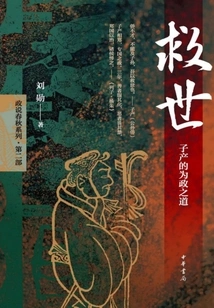
救世:子产的为政之道
Liu Xun
During the Spring and Autumn Period, there were many countries, and the domestic and foreign affairs situation between countries was complicated. During the period when Jin and Chu controlled the north and south respectively, the small country caught in the middle suffered from the torment between the two countries for hegemony. However, after the armistice between Jin and Chu, the State of Zheng miraculously reversed the situation and moved toward resurgence. It skillfully dealt with major powers externally, continuously improved its international status, steadily promoted reforms internally, and continuously improved its comprehensive strength, becoming the most respected "model country" among the major vassal states. How did Zheng Guo do it? This book takes the rise of Zheng, a small country caught in the whirlpool of the Jin-Chu struggle for hegemony, as the background. It depicts how Zichan, a new generation of young people in Zheng, grew up to be a leader who turned the tide, and how he governed and led Zheng to rejuvenate and become a "model country." Why was Zichan the model Confucius wanted to follow? Why did Confucius think Confucianism was the best strategy for governing the country? Zichan's way of governing is the answer to all this.
During the Spring and Autumn Period, there were many countries, and the domestic and foreign affairs situation between countries was complicated. During the period when Jin and Chu controlled the north and south respectively, the small country caught in the middle suffered from the torment between the two countries for hegemony. However, after the armistice between Jin and Chu, the State of Zheng miraculously reversed the situation and moved toward resurgence. It skillfully dealt with major powers externally, continuously improved its international status, steadily promoted reforms internally, and continuously improved its comprehensive strength, becoming the most respected "model country" among the major vassal states. How did Zheng Guo do it? This book takes the rise of Zheng, a small country caught in the whirlpool of the Jin-Chu struggle for hegemony, as the background. It depicts how Zichan, a new generation of young people in Zheng, grew up to be a leader who turned the tide, and how he governed and led Zheng to rejuvenate and become a "model country." Why was Zichan the model Confucius wanted to follow? Why did Confucius think Confucianism was the best strategy for governing the country? Zichan's way of governing is the answer to all this.
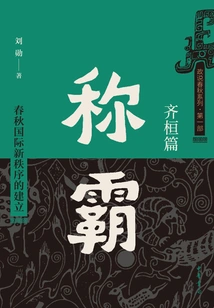
称霸:春秋国际新秩序的建立(齐桓篇)
Liu Xun
This book breaks away from the old perspective of "the collapse of rituals and the collapse of music" and interprets the history of the Spring and Autumn Period from the perspective of international political games and domestic political evolution. It is a popular history book that explains the political stories of the Spring and Autumn Period. The whole book is divided into two volumes. The first volume is "Qi Huan Pian" and the second volume is "Jin Wen Pian". "Qi Huan Chapter" focuses on the keyword "Qi Huan Hegemony", starting from the collapse of the old order of the Western Zhou Dynasty, and describing the efforts of each vassal state to develop and strive for a higher status in the process of establishing a new order in this general environment. It focuses on the Qi State and analyzes the historical process of the Qi State after the unremitting efforts of four generations of monarchs and ministers. Finally, with the assistance of Guan Zhong, Qi Huan Gong finally became the hegemony. "Jin Wen Pian" tells the story of the rise of the Jin State in the midst of changes, its growth in hardships, its dominance under the leadership of Jin Wengong's team, and the process of building a new world order with the southern hegemon Chu State. At the end of the book, the author combs the evolution of the Spring and Autumn international order of "confusion-exploration-new normal-checks and balances" from a macro perspective, showing the general development trend of the early Spring and Autumn period history.
This book breaks away from the old perspective of "the collapse of rituals and the collapse of music" and interprets the history of the Spring and Autumn Period from the perspective of international political games and domestic political evolution. It is a popular history book that explains the political stories of the Spring and Autumn Period. The whole book is divided into two volumes. The first volume is "Qi Huan Pian" and the second volume is "Jin Wen Pian". "Qi Huan Chapter" focuses on the keyword "Qi Huan Hegemony", starting from the collapse of the old order of the Western Zhou Dynasty, and describing the efforts of each vassal state to develop and strive for a higher status in the process of establishing a new order in this general environment. It focuses on the Qi State and analyzes the historical process of the Qi State after the unremitting efforts of four generations of monarchs and ministers. Finally, with the assistance of Guan Zhong, Qi Huan Gong finally became the hegemony. "Jin Wen Pian" tells the story of the rise of the Jin State in the midst of changes, its growth in hardships, its dominance under the leadership of Jin Wengong's team, and the process of building a new world order with the southern hegemon Chu State. At the end of the book, the author combs the evolution of the Spring and Autumn international order of "confusion-exploration-new normal-checks and balances" from a macro perspective, showing the general development trend of the early Spring and Autumn period history.
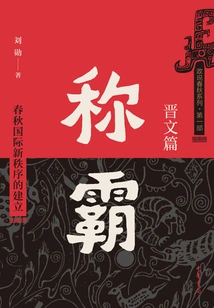
Hegemony: the Establishment of a New International Order in the Spring and Autumn Period (jin Wen)
History称霸:春秋国际新秩序的建立(晋文篇)
Liu Xun
This book breaks away from the old perspective of "the collapse of rituals and the collapse of music" and interprets the history of the Spring and Autumn Period from the perspective of international political games and domestic political evolution. It is a popular history book that explains the political stories of the Spring and Autumn Period. The whole book is divided into two volumes. The first volume is "Qi Huan Pian" and the second volume is "Jin Wen Pian". "Qi Huan Chapter" focuses on the keyword "Qi Huan Hegemony", starting from the collapse of the old order of the Western Zhou Dynasty, and describing the efforts of each vassal state to develop and strive for a higher status in the process of establishing a new order in this general environment. It focuses on the Qi State and analyzes the historical process of the Qi State after the unremitting efforts of four generations of monarchs and ministers. Finally, with the assistance of Guan Zhong, Qi Huan Gong finally became the hegemony. "Jin Wen Pian" tells the story of the rise of the Jin State in the midst of changes, its growth in hardships, its dominance under the leadership of Jin Wengong's team, and the process of building a new world order with the southern hegemon Chu State. At the end of the book, the author combs the evolution of the Spring and Autumn international order of "confusion-exploration-new normal-checks and balances" from a macro perspective, showing the general development trend of the early Spring and Autumn period history.
This book breaks away from the old perspective of "the collapse of rituals and the collapse of music" and interprets the history of the Spring and Autumn Period from the perspective of international political games and domestic political evolution. It is a popular history book that explains the political stories of the Spring and Autumn Period. The whole book is divided into two volumes. The first volume is "Qi Huan Pian" and the second volume is "Jin Wen Pian". "Qi Huan Chapter" focuses on the keyword "Qi Huan Hegemony", starting from the collapse of the old order of the Western Zhou Dynasty, and describing the efforts of each vassal state to develop and strive for a higher status in the process of establishing a new order in this general environment. It focuses on the Qi State and analyzes the historical process of the Qi State after the unremitting efforts of four generations of monarchs and ministers. Finally, with the assistance of Guan Zhong, Qi Huan Gong finally became the hegemony. "Jin Wen Pian" tells the story of the rise of the Jin State in the midst of changes, its growth in hardships, its dominance under the leadership of Jin Wengong's team, and the process of building a new world order with the southern hegemon Chu State. At the end of the book, the author combs the evolution of the Spring and Autumn international order of "confusion-exploration-new normal-checks and balances" from a macro perspective, showing the general development trend of the early Spring and Autumn period history.