Library
Browse and search books
3 novels found
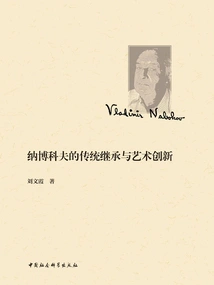
纳博科夫的传统继承与艺术创新
Liu Wenxia
Based on Marx's historical materialism and dialectical materialism worldview, this book combines the theoretical discussion of literary criticism such as modernism, postmodernism, and cultural studies with the text analysis of novels to comprehensively, deeply, and systematically study Nabokov's literary creation, and explore how he boldly carried out postmodernist art form innovation on the basis of inheriting the Russian literary tradition. Nabokov's creation is not only an inheritance of the Russian literary tradition, but also an artistic innovation to express human experience in post-modern society, achieving an organic combination and dialectical unity of profound ideological significance and innovative artistic forms.
Based on Marx's historical materialism and dialectical materialism worldview, this book combines the theoretical discussion of literary criticism such as modernism, postmodernism, and cultural studies with the text analysis of novels to comprehensively, deeply, and systematically study Nabokov's literary creation, and explore how he boldly carried out postmodernist art form innovation on the basis of inheriting the Russian literary tradition. Nabokov's creation is not only an inheritance of the Russian literary tradition, but also an artistic innovation to express human experience in post-modern society, achieving an organic combination and dialectical unity of profound ideological significance and innovative artistic forms.

俄国后现代主义小说论(西方后现代主义小说总论)
Liu Wenxia
Russian postmodernist literature quietly emerged, rose rapidly, and faded in just 30 years. However, it filled the gap in Russian literature after the collapse of the Soviet Union and reflected people's common self-imagination, anxiety and desires in the inner world in a specific historical period. Its ideological and poetic characteristics also provided creative experience for the later New Russian Literature. This book aims to use the theories of historical materialism and dialectical materialism and chronological means to sort out and study Russian postmodernist novels in different periods, and to explore the ideological and artistic values of Russian postmodernist novels. In the 1970s, "avant-garde" writers deconstructed tradition, subverted authority, and expressed repressed carnival in their works. After the disintegration of the Soviet Union, postmodern writers represented by Markkanin and Pelevin reflected on history and reality and gradually returned to the tradition of realism. In addition, Nabokov's literary thought, aesthetic tradition and creative art have exerted an explicit or implicit influence on Russian postmodernist writers. Dovlatov and others used "fragmented" "authentic narrative" techniques to show the "absurd reality" and identity anxiety in immigrant life.
Russian postmodernist literature quietly emerged, rose rapidly, and faded in just 30 years. However, it filled the gap in Russian literature after the collapse of the Soviet Union and reflected people's common self-imagination, anxiety and desires in the inner world in a specific historical period. Its ideological and poetic characteristics also provided creative experience for the later New Russian Literature. This book aims to use the theories of historical materialism and dialectical materialism and chronological means to sort out and study Russian postmodernist novels in different periods, and to explore the ideological and artistic values of Russian postmodernist novels. In the 1970s, "avant-garde" writers deconstructed tradition, subverted authority, and expressed repressed carnival in their works. After the disintegration of the Soviet Union, postmodern writers represented by Markkanin and Pelevin reflected on history and reality and gradually returned to the tradition of realism. In addition, Nabokov's literary thought, aesthetic tradition and creative art have exerted an explicit or implicit influence on Russian postmodernist writers. Dovlatov and others used "fragmented" "authentic narrative" techniques to show the "absurd reality" and identity anxiety in immigrant life.
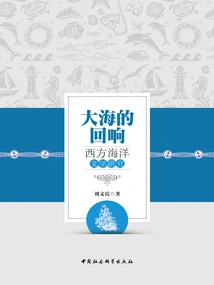
大海的回响:西方海洋文学研究
Liu Wenxia
This monograph uses social historical theory, combines theoretical discussion with text analysis, and conducts a comprehensive and in-depth study of the maritime literature of ancient Greece, modern and contemporary Britain and the United States and other maritime powers from the perspective of water culture. By systematically sorting out the evolution of the image of the ocean, we explore the process of human awareness of the ocean from awe to praise of the ocean, from ocean exploration to conquest, and finally to getting close to the ocean and living in harmony with the ocean. It reveals the historical evolution and connotation of ocean consciousness and ocean culture in the ocean powers such as the United Kingdom and the United States, reveals the relationship between people and the ocean, the ocean and society, and the ocean and human civilization, thereby pointing out the importance of the idea of "human-ocean harmony" and "rational use of ocean resources."
This monograph uses social historical theory, combines theoretical discussion with text analysis, and conducts a comprehensive and in-depth study of the maritime literature of ancient Greece, modern and contemporary Britain and the United States and other maritime powers from the perspective of water culture. By systematically sorting out the evolution of the image of the ocean, we explore the process of human awareness of the ocean from awe to praise of the ocean, from ocean exploration to conquest, and finally to getting close to the ocean and living in harmony with the ocean. It reveals the historical evolution and connotation of ocean consciousness and ocean culture in the ocean powers such as the United Kingdom and the United States, reveals the relationship between people and the ocean, the ocean and society, and the ocean and human civilization, thereby pointing out the importance of the idea of "human-ocean harmony" and "rational use of ocean resources."