Library
Browse and search books
13 novels found
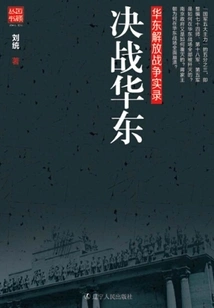
Decisive Battle in East China
Military决战华东
Liu Tong
After the victory of the Anti-Japanese War, the Kuomintang and the Communist Party launched another three years of desperate struggle. On the battlefield of liberation in East China, the People's Liberation Army created a glorious example of defeating more with less, and the common people's wheelbarrow launched the victory of the war. A million-strong army crossed the Yangtze River, vowing to carry the revolution to the end, and planted the red flag at the "Presidential Palace" in Nanjing, announcing the demise of the Chiang dynasty. This book is a detailed and authoritative record of the East China Liberation War. It will focus on answering the following questions: How were three-fifths of the "five main forces of the national army", namely the reorganized 74th Division, the 18th Army, and the Fifth Army, all annihilated on the East China battlefield? How was the Nanjing government destroyed? Why did the Chiang dynasty, which had an obvious numerical advantage, completely collapse in the East China battlefield?
After the victory of the Anti-Japanese War, the Kuomintang and the Communist Party launched another three years of desperate struggle. On the battlefield of liberation in East China, the People's Liberation Army created a glorious example of defeating more with less, and the common people's wheelbarrow launched the victory of the war. A million-strong army crossed the Yangtze River, vowing to carry the revolution to the end, and planted the red flag at the "Presidential Palace" in Nanjing, announcing the demise of the Chiang dynasty. This book is a detailed and authoritative record of the East China Liberation War. It will focus on answering the following questions: How were three-fifths of the "five main forces of the national army", namely the reorganized 74th Division, the 18th Army, and the Fifth Army, all annihilated on the East China battlefield? How was the Nanjing government destroyed? Why did the Chiang dynasty, which had an obvious numerical advantage, completely collapse in the East China battlefield?
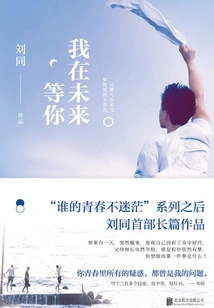
I'm Waiting for You in the Future
General Fiction我在未来等你
Liu Tong
Do you occasionally have the thought "It would be great if I could go back to that year"? I feel that if we go back to that year, with our current knowledge and mentality, many things can be changed. Hao Huihui, a 36-year-old university teacher, has an unsatisfactory life and can see the end at a glance. He really wanted to go back to his 17-year-old self, to that sunny and innocent era, and start over. By chance, he really went back. However, he did not have a chance to start over. He is still 36 years old. He became the intern class teacher for the senior year of high school. In class, he met his 17-year-old self, Liu Dazhi, who was in a mess. Hao Huihui knows Liu Dazhi's future, as well as his luck and misfortune. He wanted to change him. However, when a 36-year-old sophisticate meets a 17-year-old passionate person, everything is far from that simple... If one day you also meet your past or future self, what will you think about? Would you believe it? What would you say to him?
Do you occasionally have the thought "It would be great if I could go back to that year"? I feel that if we go back to that year, with our current knowledge and mentality, many things can be changed. Hao Huihui, a 36-year-old university teacher, has an unsatisfactory life and can see the end at a glance. He really wanted to go back to his 17-year-old self, to that sunny and innocent era, and start over. By chance, he really went back. However, he did not have a chance to start over. He is still 36 years old. He became the intern class teacher for the senior year of high school. In class, he met his 17-year-old self, Liu Dazhi, who was in a mess. Hao Huihui knows Liu Dazhi's future, as well as his luck and misfortune. He wanted to change him. However, when a 36-year-old sophisticate meets a 17-year-old passionate person, everything is far from that simple... If one day you also meet your past or future self, what will you think about? Would you believe it? What would you say to him?
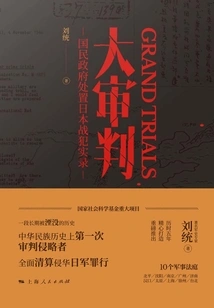
大审判:国民政府处置日本战犯实录
Liu Tong
This book is another military masterpiece by Professor Liu Tong, a famous military history expert. It comprehensively describes the process of the Nationalist Government's trial of Japanese war criminals from 1946 to 1949. The book is divided into six parts. The first part begins with the establishment of the United Nations War Crimes Review Commission in London in 1942 and describes the two stages of the investigation of Japanese war crimes and the process of identifying and arresting war criminals; The second part is divided into 10 chapters to introduce in detail the process of trying Japanese war criminals in ten military courts; the third part is the trial process of five important war criminals and the Shanghai collective trial of Japanese generals; the fourth part introduces the trials of four important foreign-related cases; the fifth part discusses the relevant issues of the trial; the sixth part appendix lists the list of important Japanese war criminals and the statistical table of the trial of Japanese war criminals. This book is the result of a major project of the National Social Science Fund.
This book is another military masterpiece by Professor Liu Tong, a famous military history expert. It comprehensively describes the process of the Nationalist Government's trial of Japanese war criminals from 1946 to 1949. The book is divided into six parts. The first part begins with the establishment of the United Nations War Crimes Review Commission in London in 1942 and describes the two stages of the investigation of Japanese war crimes and the process of identifying and arresting war criminals; The second part is divided into 10 chapters to introduce in detail the process of trying Japanese war criminals in ten military courts; the third part is the trial process of five important war criminals and the Shanghai collective trial of Japanese generals; the fourth part introduces the trials of four important foreign-related cases; the fifth part discusses the relevant issues of the trial; the sixth part appendix lists the list of important Japanese war criminals and the statistical table of the trial of Japanese war criminals. This book is the result of a major project of the National Social Science Fund.
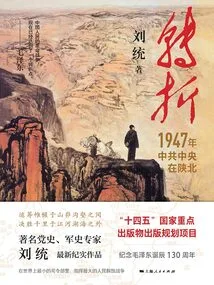
Turning Point: the Central Committee of the Communist Party of China in Northern Shaanxi in 1947
History转折:1947年中共中央在陕北
Liu Tong
In June 1946, the Kuomintang authorities launched a full-scale civil war. In the early days of the war, after our army smashed the Kuomintang's attempt for a quick victory, the Kuomintang army shifted its focus to attack the liberated areas in northern Shaanxi and Shandong, and Yan'an fell into crisis. Faced with the advance of the Kuomintang Hu Zongnan and other units, Mao Zedong and the Party Central Committee made the strategic decision to evacuate Yan'an. For more than a year since March 1947, the Central Committee of the Communist Party of China began the arduous transition to northern Shaanxi and successfully achieved a historic transition from passive to active battlefield situation. This book is one of the most comprehensive and detailed results in domestic research on the Central Committee of the Communist Party of China's move to northern Shaanxi. With magnificent yet delicate writing, the book depicts the majesty of the People's War, reproduces the thrilling battle scenes, tells the critical moments on the way to war, and demonstrates the far-sightedness of the Party Central Committee in planning and planning. History has eloquently proved that the victory or defeat of a war or even a party ultimately depends on the support of the people.
In June 1946, the Kuomintang authorities launched a full-scale civil war. In the early days of the war, after our army smashed the Kuomintang's attempt for a quick victory, the Kuomintang army shifted its focus to attack the liberated areas in northern Shaanxi and Shandong, and Yan'an fell into crisis. Faced with the advance of the Kuomintang Hu Zongnan and other units, Mao Zedong and the Party Central Committee made the strategic decision to evacuate Yan'an. For more than a year since March 1947, the Central Committee of the Communist Party of China began the arduous transition to northern Shaanxi and successfully achieved a historic transition from passive to active battlefield situation. This book is one of the most comprehensive and detailed results in domestic research on the Central Committee of the Communist Party of China's move to northern Shaanxi. With magnificent yet delicate writing, the book depicts the majesty of the People's War, reproduces the thrilling battle scenes, tells the critical moments on the way to war, and demonstrates the far-sightedness of the Party Central Committee in planning and planning. History has eloquently proved that the victory or defeat of a war or even a party ultimately depends on the support of the people.
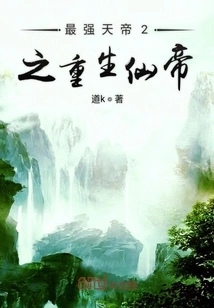
重生归来去修仙
Liu Tong
Chu Fan, the strongest immortal emperor, had an unstable foundation and fell under the strongest immortal tribulation. He was unexpectedly reborn at the age of 18. He practiced the "Hongmeng Immortal Vault Art" and obtained the three major hegemons in the universe. In the end, together with his beloved, they fought back to the stars, broke out of the cycle of fate, reached unprecedented heights, and became the supreme emperor!
Chu Fan, the strongest immortal emperor, had an unstable foundation and fell under the strongest immortal tribulation. He was unexpectedly reborn at the age of 18. He practiced the "Hongmeng Immortal Vault Art" and obtained the three major hegemons in the universe. In the end, together with his beloved, they fought back to the stars, broke out of the cycle of fate, reached unprecedented heights, and became the supreme emperor!
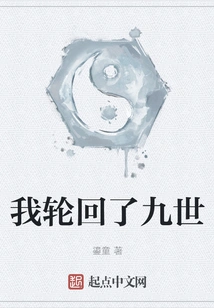
我轮回了九世
Liu Tong
Chu Mo's first nine reincarnations did not prove the way to immortality, but he owed a lot of debt. After nine reincarnations, after the tenth reincarnation, he finally started a life that defies heaven. ... ... ... See how Chu Mo becomes the Creation Emperor step by step! ............ This book is also known as "The Emperor of Heaven Does Not Just Have a Wife", "Reincarnation and Reincarnation to Cultivate Immortals", "I Really Don't Want to Eat Soft Rice", "I Really Don't Rely on Soft Rice to Be Invincible"...
Chu Mo's first nine reincarnations did not prove the way to immortality, but he owed a lot of debt. After nine reincarnations, after the tenth reincarnation, he finally started a life that defies heaven. ... ... ... See how Chu Mo becomes the Creation Emperor step by step! ............ This book is also known as "The Emperor of Heaven Does Not Just Have a Wife", "Reincarnation and Reincarnation to Cultivate Immortals", "I Really Don't Want to Eat Soft Rice", "I Really Don't Rely on Soft Rice to Be Invincible"...
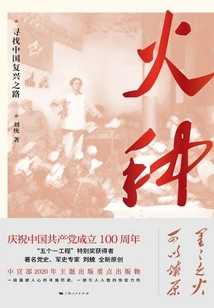
火种:寻找中国复兴之路
Liu Tong
100 years ago, the question "Where should China go?" Lingered in the minds of every patriot. At that time, the international communist movement was surging. The Communist Party of China was gloriously born from the combination of Marxism-Leninism and the Chinese workers' movement and continued to grow and develop through tenacious struggle. This book traces the history of the Party, the history of New China, and the history of socialist development, from the beginning of the 20th century to the Gutian Conference in 1929. It uses a grand historical perspective and a panoramic narrative method to write about China in the context of the international communist movement. It explains clearly what key decisions the party will make at the critical moment of life and death, and how the red fire can successfully start a prairie fire in the dark night. This book breaks away from the traditional general history writing framework and takes "searching for the road to China's rejuvenation" as the starting point to start a journey of tracing the roots, reviewing the past and learning the new. While pursuing comprehensive historical materials, verifying document versions, and focusing on field investigations and oral interviews, it uses plain language and vivid details to show China's extraordinary path-finding process in the early 20th century point by point. Using a combination of pictures and texts, more than 80 precious historical pictures truly restore historical scenes and reproduce the true temperament and true appearance of historical figures. It is a popular academic monograph and popular party history reading that is both academically rigorous and readable.
100 years ago, the question "Where should China go?" Lingered in the minds of every patriot. At that time, the international communist movement was surging. The Communist Party of China was gloriously born from the combination of Marxism-Leninism and the Chinese workers' movement and continued to grow and develop through tenacious struggle. This book traces the history of the Party, the history of New China, and the history of socialist development, from the beginning of the 20th century to the Gutian Conference in 1929. It uses a grand historical perspective and a panoramic narrative method to write about China in the context of the international communist movement. It explains clearly what key decisions the party will make at the critical moment of life and death, and how the red fire can successfully start a prairie fire in the dark night. This book breaks away from the traditional general history writing framework and takes "searching for the road to China's rejuvenation" as the starting point to start a journey of tracing the roots, reviewing the past and learning the new. While pursuing comprehensive historical materials, verifying document versions, and focusing on field investigations and oral interviews, it uses plain language and vivid details to show China's extraordinary path-finding process in the early 20th century point by point. Using a combination of pictures and texts, more than 80 precious historical pictures truly restore historical scenes and reproduce the true temperament and true appearance of historical figures. It is a popular academic monograph and popular party history reading that is both academically rigorous and readable.
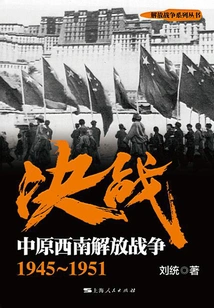
决战:中原西南解放战争1945~1951
Liu Tong
One of the "Liberation War" series of books presented by Shanghai People's Publishing House for the 90th anniversary of the founding of the army. This is "The Decisive Battle: The Liberation War of Southwest China 1945-1951", written by Liu Tong, a famous military history expert and author of "Going North: The Whole Story of the Struggle between the Party Central Committee and Zhang Guotao". With smooth writing, it tells the story of the Central Plains Field Army, also known as Liu and Deng's Army, according to the strategic deployment of the Party Central Committee, starting from the Battle of Shangdang in cooperation with Chongqing negotiations, the struggle to return home on the Yellow River, insisting on the Central Plains, breaking through the Central Plains, and leaping thousands of miles into the Dabie Mountains to kick off the strategic offensive. It can be said that the process of liberation of the Central Plains particularly highlighted Mao Zedong's superior strategic thoughts and tactics.
One of the "Liberation War" series of books presented by Shanghai People's Publishing House for the 90th anniversary of the founding of the army. This is "The Decisive Battle: The Liberation War of Southwest China 1945-1951", written by Liu Tong, a famous military history expert and author of "Going North: The Whole Story of the Struggle between the Party Central Committee and Zhang Guotao". With smooth writing, it tells the story of the Central Plains Field Army, also known as Liu and Deng's Army, according to the strategic deployment of the Party Central Committee, starting from the Battle of Shangdang in cooperation with Chongqing negotiations, the struggle to return home on the Yellow River, insisting on the Central Plains, breaking through the Central Plains, and leaping thousands of miles into the Dabie Mountains to kick off the strategic offensive. It can be said that the process of liberation of the Central Plains particularly highlighted Mao Zedong's superior strategic thoughts and tactics.
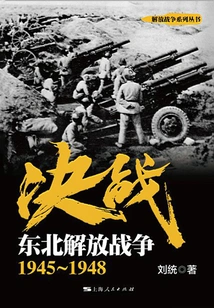
决战:东北解放战争1945~1948
Liu Tong
One of the "Liberation War" series of books presented by Shanghai People's Publishing House for the 90th anniversary of the founding of the army. This is "The Decisive Battle: The Northeast Liberation War 1945-1948", written by Liu Tong, a famous military history expert and author of "Going North: The Whole Story of the Struggle between the Party Central Committee and Zhang Guotao". The Northeastern battlefield from 1945 to 1948 was undergoing great changes. After surrendering from Japan, they quickly entered Shenyang, and a hundred thousand troops broke into Guandong in an attempt to "occupy" the Northeast. Then "the situation suddenly changed" and the takeover was blocked. The battle situation in Shanhaiguan and Jinzhou changed. The Northeast Field Army "vacated the road", and Lin Biao opened up the Northeast base area and carried out the suppression of bandits. , Land reform, large-scale military training, and finally "everything was ready". Mao Zedong made the right strategic decision to attack Jinzhou first. The first decisive battle with the Kuomintang army in the War of Liberation - the Liaoshen Campaign took 52 days to achieve the liberation of the entire Northeast. From then on, the forces of the Kuomintang and the Communist Party underwent a turning change.
One of the "Liberation War" series of books presented by Shanghai People's Publishing House for the 90th anniversary of the founding of the army. This is "The Decisive Battle: The Northeast Liberation War 1945-1948", written by Liu Tong, a famous military history expert and author of "Going North: The Whole Story of the Struggle between the Party Central Committee and Zhang Guotao". The Northeastern battlefield from 1945 to 1948 was undergoing great changes. After surrendering from Japan, they quickly entered Shenyang, and a hundred thousand troops broke into Guandong in an attempt to "occupy" the Northeast. Then "the situation suddenly changed" and the takeover was blocked. The battle situation in Shanhaiguan and Jinzhou changed. The Northeast Field Army "vacated the road", and Lin Biao opened up the Northeast base area and carried out the suppression of bandits. , Land reform, large-scale military training, and finally "everything was ready". Mao Zedong made the right strategic decision to attack Jinzhou first. The first decisive battle with the Kuomintang army in the War of Liberation - the Liaoshen Campaign took 52 days to achieve the liberation of the entire Northeast. From then on, the forces of the Kuomintang and the Communist Party underwent a turning change.
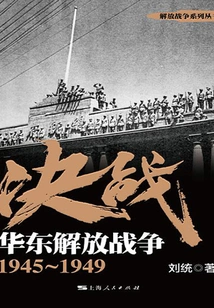
决战:华东解放战争1945~1949
Liu Tong
One of the "Liberation War" series of books presented by Shanghai People's Publishing House for the 90th anniversary of the founding of the army. This is "The Decisive Battle: The East China Liberation War 1945-1949", written by Liu Tong, a famous military history expert and author of "Going North: The Whole Story of the Struggle between the Party Central Committee and Zhang Guotao". It tells the wonderful process of the East China Field Army concentrating superior forces to annihilate the enemy's effective forces, innovatively transforming captured soldiers to turn the enemy into ourselves, giving full play to the advantages of the masses to support the war, and through intelligence, infiltration, instigation and other work to incredibly defeat the Kuomintang troops on the East China battlefield. It focuses on the seven battles and seven victories in Central Jiangsu, the Battle of Laiwu, the fierce battle at Menglianggu, the Shandong counterattack, the Battle of Huaihai, the march to the south of the Yangtze River, the crossing of a million troops across the river, the "Amethyst" incident, the battle in Shanghai, etc.
One of the "Liberation War" series of books presented by Shanghai People's Publishing House for the 90th anniversary of the founding of the army. This is "The Decisive Battle: The East China Liberation War 1945-1949", written by Liu Tong, a famous military history expert and author of "Going North: The Whole Story of the Struggle between the Party Central Committee and Zhang Guotao". It tells the wonderful process of the East China Field Army concentrating superior forces to annihilate the enemy's effective forces, innovatively transforming captured soldiers to turn the enemy into ourselves, giving full play to the advantages of the masses to support the war, and through intelligence, infiltration, instigation and other work to incredibly defeat the Kuomintang troops on the East China battlefield. It focuses on the seven battles and seven victories in Central Jiangsu, the Battle of Laiwu, the fierce battle at Menglianggu, the Shandong counterattack, the Battle of Huaihai, the march to the south of the Yangtze River, the crossing of a million troops across the river, the "Amethyst" incident, the battle in Shanghai, etc.
Wait Until Everything is Calm
Literature等一切风平浪静
Liu Tong
Liu Tong's new essay, the work of ten years of transformation. I hope every story can help you pry away some inner barnacles. This book is the most Liu Tong one. Let me tell you everything, those moments of depression that suddenly come, the self-help life of picking myself up after hitting rock bottom. He comes back from the trough and teaches you how to calm all your anxieties. In the past, "the harder you work, the luckier you are", now "the harder you work, the more tired you are." In the thirty stories in six chapters of the book, there are moments of falling, but also self-rescue methods, from the beginning of the storm to the calm. Happiness in life is not about comparing with others, but living in a life that is within your control. Everyone can find themselves in this book. Your life does not only have four seasons. As long as you carry the seed in your heart and lower your head to nourish it, it will be your spring again and again. Liu Tong said that the title of the book is the best blessing. I hope you will understand after reading this: When there are winds and waves, just take a break without fighting. Once everything calms down, it will be too late to set off again.
Liu Tong's new essay, the work of ten years of transformation. I hope every story can help you pry away some inner barnacles. This book is the most Liu Tong one. Let me tell you everything, those moments of depression that suddenly come, the self-help life of picking myself up after hitting rock bottom. He comes back from the trough and teaches you how to calm all your anxieties. In the past, "the harder you work, the luckier you are", now "the harder you work, the more tired you are." In the thirty stories in six chapters of the book, there are moments of falling, but also self-rescue methods, from the beginning of the storm to the calm. Happiness in life is not about comparing with others, but living in a life that is within your control. Everyone can find themselves in this book. Your life does not only have four seasons. As long as you carry the seed in your heart and lower your head to nourish it, it will be your spring again and again. Liu Tong said that the title of the book is the best blessing. I hope you will understand after reading this: When there are winds and waves, just take a break without fighting. Once everything calms down, it will be too late to set off again.
想为你的深夜放一束烟火
Liu Tong
Liu Tong's 2022 new work writes 23 stories that heal the soul. There is light in the dark and healing even in the middle of the night. In this book, Liu Tong used 120% sincerity to record 23 late-night moments in his life that were awkward, embarrassing, and unwilling to face, and he also recorded 23 fireworks moments when people around him inspired him again and again. Everyone goes through those days when the nights are hard and the days are hard to sleep. But you must know that life is not only day or sunshine, but also late night and fireworks. Even if there are ups and downs, rush forward fearlessly and mourn with enthusiasm! Have a happy late night. What Liu Tong wants to say to readers - why is the book called "I Want to Set Off a Fireworks for Your Late Night"? I wrote this book late at night, and I often felt healed after finishing a story.
Liu Tong's 2022 new work writes 23 stories that heal the soul. There is light in the dark and healing even in the middle of the night. In this book, Liu Tong used 120% sincerity to record 23 late-night moments in his life that were awkward, embarrassing, and unwilling to face, and he also recorded 23 fireworks moments when people around him inspired him again and again. Everyone goes through those days when the nights are hard and the days are hard to sleep. But you must know that life is not only day or sunshine, but also late night and fireworks. Even if there are ups and downs, rush forward fearlessly and mourn with enthusiasm! Have a happy late night. What Liu Tong wants to say to readers - why is the book called "I Want to Set Off a Fireworks for Your Late Night"? I wrote this book late at night, and I often felt healed after finishing a story.
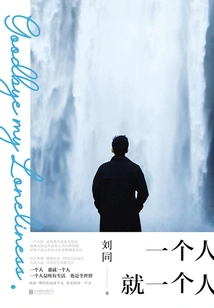
Just One Person
Literature一个人就一个人
Liu Tong
You can never be the protagonist in someone else's story. Only when a person has the confidence to face the world alone can he be qualified to talk to the world on an equal footing. When you stand here, you represent yourself. One person is all life and the whole world. One person, then one person. After four years, Liu Tong released a new prose work "One Person is One Person". This is not a declaration of singleness, but a recognition of self-existence, a look back and introspection, and a bit of stubbornness. 27 Essays, 2 short stories, 4 special videos, and 1 original theme single. There are few people who record life as minutely, daily and warmly as he does. From 1999 to 2020, I started from a small town in southern Hunan, passed through the provincial capital Changsha, and arrived at the capital Beijing, a distance of 1,800 kilometers, and I walked for 21 years. Beijing West Railway Station, Zizhuqiao Bus Station, Yonghegong Subway Station... Today, the train stations are still crowded with people, cars still compete with buses, and the wind in the subway has been the same all year round for more than 20 years. And I am often asked: Are you still alone? Sometimes I wonder, is a person's condition not very good? But thinking about it again, a person's condition is actually quite good. When you are alone, you don't even need to look at people's faces when you cry. When you laugh, no one will call you crazy. When you fall down, only you have the right to laugh at yourself. A person is by no means isolated in number, but independent in personality. Therefore, even if you are two people at the moment, you should still remain alone. Don't give up the hobbies you had when you were alone, insist on the thinking you had when you were alone, and retain the independence you had when you were alone. If you like it, stay together. If you don't like it, you can just turn around. Being able to agree with another person is the icing on the cake of life; learning not to rely on any relationship is to give yourself timely help. Looking back, it was such a long road and such a long time, with people coming and going, and only myself being with me. One person, then one person.
You can never be the protagonist in someone else's story. Only when a person has the confidence to face the world alone can he be qualified to talk to the world on an equal footing. When you stand here, you represent yourself. One person is all life and the whole world. One person, then one person. After four years, Liu Tong released a new prose work "One Person is One Person". This is not a declaration of singleness, but a recognition of self-existence, a look back and introspection, and a bit of stubbornness. 27 Essays, 2 short stories, 4 special videos, and 1 original theme single. There are few people who record life as minutely, daily and warmly as he does. From 1999 to 2020, I started from a small town in southern Hunan, passed through the provincial capital Changsha, and arrived at the capital Beijing, a distance of 1,800 kilometers, and I walked for 21 years. Beijing West Railway Station, Zizhuqiao Bus Station, Yonghegong Subway Station... Today, the train stations are still crowded with people, cars still compete with buses, and the wind in the subway has been the same all year round for more than 20 years. And I am often asked: Are you still alone? Sometimes I wonder, is a person's condition not very good? But thinking about it again, a person's condition is actually quite good. When you are alone, you don't even need to look at people's faces when you cry. When you laugh, no one will call you crazy. When you fall down, only you have the right to laugh at yourself. A person is by no means isolated in number, but independent in personality. Therefore, even if you are two people at the moment, you should still remain alone. Don't give up the hobbies you had when you were alone, insist on the thinking you had when you were alone, and retain the independence you had when you were alone. If you like it, stay together. If you don't like it, you can just turn around. Being able to agree with another person is the icing on the cake of life; learning not to rely on any relationship is to give yourself timely help. Looking back, it was such a long road and such a long time, with people coming and going, and only myself being with me. One person, then one person.