Library
Browse and search books
8 novels found
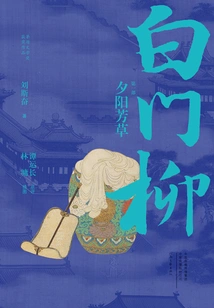
White Gate Willow (part 1): Sunset Grass
General Fiction白门柳(第一部):夕阳芳草
Liu Sifen
"Sunset Grass" is the first part of the long historical novel "White Gate Willow". This book describes how the Qing army and the peasant uprising army were eyeing each other, internal party disputes continued, and the moment before the building was about to collapse, the scholars and celebrities in Jiangnan were still struggling for their ideals and desires. The author uses realism to depict the appearance of the literati and bureaucratic class and paints a colorful historical panorama. In the fifteenth year of Chongzhen's reign, peasant uprisings broke out, and the Qing army threatened Shanhaiguan. In the rear area of Nanjing, the struggle between the Donglin Party and the Eunuch Party continued. Qian Qianyi, the former right minister of the Ministry of Rites and former leader of the Donglin Party, who lost the party struggle, discussed with his favorite concubine Liu Rushi. In order to be reinstated, he planned an exchange of interests with Zhou Yanru, the chief minister of the cabinet, and agreed to use his influence to persuade the majority of the members of the restoration society to make a public decision at the Tiger Hill Conference to support Ruan Dacheng, the remnant of the Eunuch Party, to come out. At the same time, Maoxiang, one of the four sons of Fushe, also secretly accepted Zhou Yanru's favor in order to transfer his father away from the front line.
"Sunset Grass" is the first part of the long historical novel "White Gate Willow". This book describes how the Qing army and the peasant uprising army were eyeing each other, internal party disputes continued, and the moment before the building was about to collapse, the scholars and celebrities in Jiangnan were still struggling for their ideals and desires. The author uses realism to depict the appearance of the literati and bureaucratic class and paints a colorful historical panorama. In the fifteenth year of Chongzhen's reign, peasant uprisings broke out, and the Qing army threatened Shanhaiguan. In the rear area of Nanjing, the struggle between the Donglin Party and the Eunuch Party continued. Qian Qianyi, the former right minister of the Ministry of Rites and former leader of the Donglin Party, who lost the party struggle, discussed with his favorite concubine Liu Rushi. In order to be reinstated, he planned an exchange of interests with Zhou Yanru, the chief minister of the cabinet, and agreed to use his influence to persuade the majority of the members of the restoration society to make a public decision at the Tiger Hill Conference to support Ruan Dacheng, the remnant of the Eunuch Party, to come out. At the same time, Maoxiang, one of the four sons of Fushe, also secretly accepted Zhou Yanru's favor in order to transfer his father away from the front line.
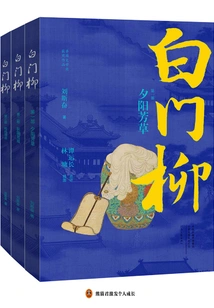
Baimenliu (all 3 Volumes)
General Fiction白门柳(全3册)
Liu Sifen
The winning works of the 4th Mao Dun Literature Award! Sixteen years of hard work to write about the Ming and Qing dynasties! In the chaotic world, conquest and resistance, despicability and sublimity, ambition and lust... High-spirited young scholars may leave or surrender, and Qinhuai can no longer have fun and have fun. In the fifteenth year of Chongzhen in the Ming Dynasty, after the Battle of Songshan, the Ming Dynasty was in a state of turmoil under the internal and external attacks of the Qing soldiers and Li Zicheng. The "Fushe" scholars and the "remnants of the eunuch party" in Jiangnan are still fighting endlessly. "Taicheng Liu is the most ruthless." Shi Kefa, Qian Qianyi, Liu Rushi, Dong Xiaoyuan... In the troubled times when the country was destroyed and the family was destroyed, countless stories of life and death, honor and disgrace were staged. The high-spirited young scholars either left or surrendered, and Qinhuai could no longer have fun for ten miles. This is a heart-wrenching elegy for the apocalypse, and a picture of one hundred social scenes of a dangerous city in the late Ming Dynasty.
The winning works of the 4th Mao Dun Literature Award! Sixteen years of hard work to write about the Ming and Qing dynasties! In the chaotic world, conquest and resistance, despicability and sublimity, ambition and lust... High-spirited young scholars may leave or surrender, and Qinhuai can no longer have fun and have fun. In the fifteenth year of Chongzhen in the Ming Dynasty, after the Battle of Songshan, the Ming Dynasty was in a state of turmoil under the internal and external attacks of the Qing soldiers and Li Zicheng. The "Fushe" scholars and the "remnants of the eunuch party" in Jiangnan are still fighting endlessly. "Taicheng Liu is the most ruthless." Shi Kefa, Qian Qianyi, Liu Rushi, Dong Xiaoyuan... In the troubled times when the country was destroyed and the family was destroyed, countless stories of life and death, honor and disgrace were staged. The high-spirited young scholars either left or surrendered, and Qinhuai could no longer have fun for ten miles. This is a heart-wrenching elegy for the apocalypse, and a picture of one hundred social scenes of a dangerous city in the late Ming Dynasty.
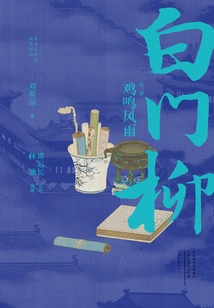
White Gate Willow (part 3): Rooster Crows, Wind and Rain
General Fiction白门柳(第三部):鸡鸣风雨
Liu Sifen
"Cockcrow, Storm" is the third part of the long historical novel "White Gate Willow". The fall of the Ming Dynasty was a foregone conclusion. Under the overthrow of the nest, no eggs could be left intact. The scholars were also faced with the dilemma of sacrificing their reputation to serve the new master, or giving up their future and sticking to their old ambitions. In a realistic style, this book reflects the tragic scenes of frequent wars and devastation in the late Ming Dynasty. The literati, brothel girls, martyrs, and Jianghu artists described by the author are all full of flesh and blood and lifelike. In the second year of Shunzhi, Gong Dingzi and other old officials of the Ming Dynasty shaved their heads, changed their clothes, and submitted to the Qing Dynasty. Huang Zongxi and others continued to train troops in the south of the Yangtze River, persisted in resisting the Qing Dynasty, and established the regime of King Lu. Hong Chengchou was appointed governor of Jiangnan and continued to attack the city southward. Liu Rushi had a falling out with Qian Qianyi because he opposed his defection to the Qing Dynasty, and insisted on staying in Nanjing. During this period, because of his resentment and loneliness, he secretly communicated with others, which caused a scandal in the local area. Qian Qianyi finally decided to resign and go home. His family captured Liu Rushi's lover and complained to him. Qian Qianyi forgave Liu Rushi after knowing the truth.
"Cockcrow, Storm" is the third part of the long historical novel "White Gate Willow". The fall of the Ming Dynasty was a foregone conclusion. Under the overthrow of the nest, no eggs could be left intact. The scholars were also faced with the dilemma of sacrificing their reputation to serve the new master, or giving up their future and sticking to their old ambitions. In a realistic style, this book reflects the tragic scenes of frequent wars and devastation in the late Ming Dynasty. The literati, brothel girls, martyrs, and Jianghu artists described by the author are all full of flesh and blood and lifelike. In the second year of Shunzhi, Gong Dingzi and other old officials of the Ming Dynasty shaved their heads, changed their clothes, and submitted to the Qing Dynasty. Huang Zongxi and others continued to train troops in the south of the Yangtze River, persisted in resisting the Qing Dynasty, and established the regime of King Lu. Hong Chengchou was appointed governor of Jiangnan and continued to attack the city southward. Liu Rushi had a falling out with Qian Qianyi because he opposed his defection to the Qing Dynasty, and insisted on staying in Nanjing. During this period, because of his resentment and loneliness, he secretly communicated with others, which caused a scandal in the local area. Qian Qianyi finally decided to resign and go home. His family captured Liu Rushi's lover and complained to him. Qian Qianyi forgave Liu Rushi after knowing the truth.
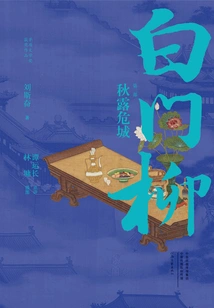
White Gate Willow (part 2): Autumn Dew Threatens the City
General Fiction白门柳(第二部):秋露危城
Liu Sifen
"Autumn Dew Dangerous City" is the second part of the long historical novel "White Gate Willow". After the collapse of the Ming Dynasty and the death of the emperor, facing the Qing army moving south, some of the scholars gathered in the Baimen fought to the death, while others were still keen on selfish interests. For a time, loyal ministers, treacherous ministers, literati, and talented women took turns to appear, performing a tragic comedy in Jinling. The author uses rich imagination and detailed historical facts as warp and weft to weave a clear-cut and fascinating picture of historical figures. In the seventeenth year of Chongzhen's reign, Huang Zongxi's younger brother was selected as a tribute student. He and his younger brother went to Shaoxing to visit their teacher Liu Zongzhou. At his home, they learned that the Qing army had conquered Beijing and that Emperor Chongzhen was dead. They tried their best to prevent the teacher from committing suicide and martyrdom for his country. The remaining capital in Nanjing was leaderless, and the power struggle was chaotic. The two factions supporting King Lu and those supporting King Fu were arguing endlessly. Qian Qianyi tried to persuade Lu Daqi and Lei Yanzuo to support King Lu, and walked in the city to publicize the "Seven Unables to Stand" against King Fu.
"Autumn Dew Dangerous City" is the second part of the long historical novel "White Gate Willow". After the collapse of the Ming Dynasty and the death of the emperor, facing the Qing army moving south, some of the scholars gathered in the Baimen fought to the death, while others were still keen on selfish interests. For a time, loyal ministers, treacherous ministers, literati, and talented women took turns to appear, performing a tragic comedy in Jinling. The author uses rich imagination and detailed historical facts as warp and weft to weave a clear-cut and fascinating picture of historical figures. In the seventeenth year of Chongzhen's reign, Huang Zongxi's younger brother was selected as a tribute student. He and his younger brother went to Shaoxing to visit their teacher Liu Zongzhou. At his home, they learned that the Qing army had conquered Beijing and that Emperor Chongzhen was dead. They tried their best to prevent the teacher from committing suicide and martyrdom for his country. The remaining capital in Nanjing was leaderless, and the power struggle was chaotic. The two factions supporting King Lu and those supporting King Fu were arguing endlessly. Qian Qianyi tried to persuade Lu Daqi and Lei Yanzuo to support King Lu, and walked in the city to publicize the "Seven Unables to Stand" against King Fu.
Baimenliu (complete Works)
General Fiction白门柳(全集)
Liu Sifen
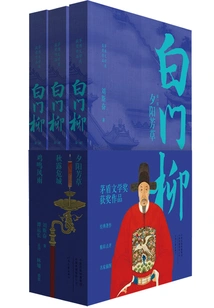
This book is a contemporary classic full-length historical novel. It has won the 4th Mao Dun Literature Award, the 4th National Book Award Nomination Award, and the 2nd, 4th, and 6th Guangdong Province Lu Xun Literary Awards. It avoids the convention of contemporary historical novels that usually take themes such as peasant uprisings and emperors' generals as clues, breaks through the historical biography narrative mode of most historical novels that focus on the historical achievements of characters, and focuses on the process of the emergence of early democratic ideas in China, interpreting the history of ideas in the form of a novel. The works focus on showing the pain and fission of traditional scholars in the crisis of traditional culture being impacted by foreign cultures during the transition from Ming to Qing Dynasty, and interpret the history of spiritual changes of a generation of literati. Compared with historical novels of the same period, it breaks through the horizon of political reflection and gradually moves toward cultural reflection, strengthening the cultural awareness in historical narratives. It has unique value and significance in terms of creation and literary history. This book was reviewed by the famous literary critic Mr. Tan Yunchang.
This book is a contemporary classic full-length historical novel. It has won the 4th Mao Dun Literature Award, the 4th National Book Award Nomination Award, and the 2nd, 4th, and 6th Guangdong Province Lu Xun Literary Awards. It avoids the convention of contemporary historical novels that usually take themes such as peasant uprisings and emperors' generals as clues, breaks through the historical biography narrative mode of most historical novels that focus on the historical achievements of characters, and focuses on the process of the emergence of early democratic ideas in China, interpreting the history of ideas in the form of a novel. The works focus on showing the pain and fission of traditional scholars in the crisis of traditional culture being impacted by foreign cultures during the transition from Ming to Qing Dynasty, and interpret the history of spiritual changes of a generation of literati. Compared with historical novels of the same period, it breaks through the horizon of political reflection and gradually moves toward cultural reflection, strengthening the cultural awareness in historical narratives. It has unique value and significance in terms of creation and literary history. This book was reviewed by the famous literary critic Mr. Tan Yunchang.
Liu Si Fen Ji
Literature刘斯奋集
Liu Sifen
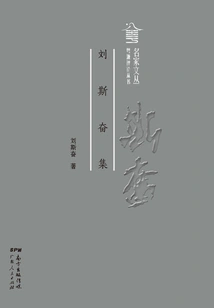
This book is one of the "Cantonese Commentaries" series. Liu Sifen, born in January 1944, is originally from Zhongshan City, Guangdong Province. He graduated from the Chinese Department of Sun Yat-sen University in 1967 and has been engaged in novel creation, academic research, painting and calligraphy creation for a long time. The long historical novel "White Gate Willow" won the 4th Mao Dun Literary Award of the Chinese Writers Association. In 2015, he won the second Guangdong Province Literature and Art Lifetime Achievement Award. There are also more than ten kinds of works such as "Selected Poems of Huang Jie", "Notes on Su Manshu's Poems", "Chen Yinke's Poems in His Later Years and Others", "Happy Bat", etc. This book is divided into three series: "Literary Language", "Picture Language" and "Interview", which collects the author's thoughts and research articles on literature, art and culture over the years. About 250,000 words.
This book is one of the "Cantonese Commentaries" series. Liu Sifen, born in January 1944, is originally from Zhongshan City, Guangdong Province. He graduated from the Chinese Department of Sun Yat-sen University in 1967 and has been engaged in novel creation, academic research, painting and calligraphy creation for a long time. The long historical novel "White Gate Willow" won the 4th Mao Dun Literary Award of the Chinese Writers Association. In 2015, he won the second Guangdong Province Literature and Art Lifetime Achievement Award. There are also more than ten kinds of works such as "Selected Poems of Huang Jie", "Notes on Su Manshu's Poems", "Chen Yinke's Poems in His Later Years and Others", "Happy Bat", etc. This book is divided into three series: "Literary Language", "Picture Language" and "Interview", which collects the author's thoughts and research articles on literature, art and culture over the years. About 250,000 words.
Baimenliu (complete Works)
General Fiction白门柳(全集)
Liu Sifen
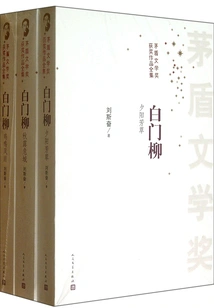
"White Gate Willow" consists of three parts: "Sunset Grass", "Autumn Dew Dangerous City" and "Cockcrow Storm". With grand scenes and detailed descriptions, it vividly reproduces the choices and fate of a group of scholars before and after the overthrow of the Ming Dynasty. The author does not simply tell the story of the scholars and literati during Wang Gang's unification of the button, but through such creation, expresses his own sigh for this group of people in the old days of China.
"White Gate Willow" consists of three parts: "Sunset Grass", "Autumn Dew Dangerous City" and "Cockcrow Storm". With grand scenes and detailed descriptions, it vividly reproduces the choices and fate of a group of scholars before and after the overthrow of the Ming Dynasty. The author does not simply tell the story of the scholars and literati during Wang Gang's unification of the button, but through such creation, expresses his own sigh for this group of people in the old days of China.
Baimenliu (all 3 Volumes)
General Fiction白门柳(全3册)
Liu Sifen
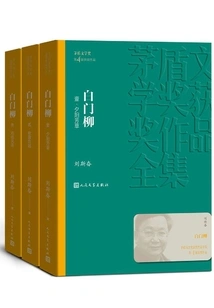
"White Gate Willow" consists of three volumes, the first volume is "Sunset Grass", the second volume is "Autumn Dew Dangerous City", and the third volume is "Cockcrow and Storm". It is a novel written by the famous writer Liu Sifen over a period of 16 years. It tells the story of the late Ming Dynasty. The story of the three famous prostitutes Liu Rushi, Li Shiniang, Dong Xiaowan and the celebrity Qian Qianyi in the "Eight Beauties of Qinhuai" in the early Qing Dynasty struggled with the times and destiny. Some commentators called it "an epic of the political chaos of traditional intellectuals in the old era."
"White Gate Willow" consists of three volumes, the first volume is "Sunset Grass", the second volume is "Autumn Dew Dangerous City", and the third volume is "Cockcrow and Storm". It is a novel written by the famous writer Liu Sifen over a period of 16 years. It tells the story of the late Ming Dynasty. The story of the three famous prostitutes Liu Rushi, Li Shiniang, Dong Xiaowan and the celebrity Qian Qianyi in the "Eight Beauties of Qinhuai" in the early Qing Dynasty struggled with the times and destiny. Some commentators called it "an epic of the political chaos of traditional intellectuals in the old era."