Library
Browse and search books
2 novels found
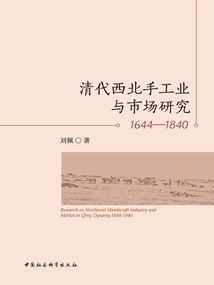
清代西北手工业与市场研究(1644—1840)
Liu Pei
This book focuses on the handicraft industry and handicraft product market in the northwest region during the Qing Dynasty. This book takes the handicraft industry as a clue and explains the industry development level of Shaanxi, Xinjiang, Gansu and other places from 1644 to 1840 from the fields of textile, food processing, mineral processing, wood processing and other handicraft industries. On the other hand, the market in this book specifically refers to the market for trading handicraft goods, which is part of the traditional market. Therefore, the scope of the market discussed in this book is smaller than that of the general market. From the perspective of discussion, it mainly starts from the two aspects of merchants and towns. This book summarizes the results of past discussions on the history of northwest handicraft industry in the early Qing Dynasty, and supplements and modifies some viewpoints to provide certain help for studying the economic history of northwest China in the Qing Dynasty, especially the history of handicraft industry.
This book focuses on the handicraft industry and handicraft product market in the northwest region during the Qing Dynasty. This book takes the handicraft industry as a clue and explains the industry development level of Shaanxi, Xinjiang, Gansu and other places from 1644 to 1840 from the fields of textile, food processing, mineral processing, wood processing and other handicraft industries. On the other hand, the market in this book specifically refers to the market for trading handicraft goods, which is part of the traditional market. Therefore, the scope of the market discussed in this book is smaller than that of the general market. From the perspective of discussion, it mainly starts from the two aspects of merchants and towns. This book summarizes the results of past discussions on the history of northwest handicraft industry in the early Qing Dynasty, and supplements and modifies some viewpoints to provide certain help for studying the economic history of northwest China in the Qing Dynasty, especially the history of handicraft industry.
宋代的学术文化与辞赋创作
Liu Pei
This book integrates the history of poetry and poetry with academic history, deeply outlines the development of Song Dynasty culture and the evolution process of turning inward, and has exploratory academic value in revealing the face of "modern" traditional China. Through the analysis of Ci Fu works, the author reveals the Song people's understanding of the "prosperous age" and the characteristics of national image creation, explores the efforts of the Song people in constructing the order of the universe and the spiritual order since the mid-Northern Song Dynasty, pursues the concept of farming and reading heirlooms and the life paradigm of rural China, and explores the development of the concept of the distinction between Hua and Yi and the national spirit, and the re-understanding and shaping of the Chinese tradition. These studies are of enlightening significance in "pre-current" current scholarship and making up for the shortcomings of academic research.
This book integrates the history of poetry and poetry with academic history, deeply outlines the development of Song Dynasty culture and the evolution process of turning inward, and has exploratory academic value in revealing the face of "modern" traditional China. Through the analysis of Ci Fu works, the author reveals the Song people's understanding of the "prosperous age" and the characteristics of national image creation, explores the efforts of the Song people in constructing the order of the universe and the spiritual order since the mid-Northern Song Dynasty, pursues the concept of farming and reading heirlooms and the life paradigm of rural China, and explores the development of the concept of the distinction between Hua and Yi and the national spirit, and the re-understanding and shaping of the Chinese tradition. These studies are of enlightening significance in "pre-current" current scholarship and making up for the shortcomings of academic research.