Library
Browse and search books
18 novels found
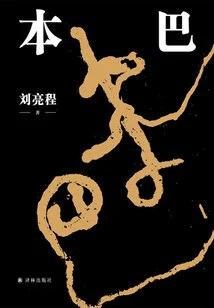
Bemba (work by Liu Liangcheng)
General Fiction本巴(刘亮程作品)
Liu Liangcheng
The Bemba place in Jianggar is a happy paradise on earth. People there are all twenty-five years old, and there is no aging or death. --The Mongolian heroic epic "Janggar". Where the epic stops, Bemba begins. Jiang Geer, who was intoxicated in the youthful feast of seventy-seven forty-nine days, received the challenge from the distant King Hari, and the young hero Hong Guer set off alone to fight. Helan, who did not want to be born, was forced to be born in order to rescue his brother Hong Guer. He used the moving game brought from the mother's womb to turn all the adults on the grassland into children in the game, and finally returned to the mother's womb. In order to find his missing brother, Hungul, who did not want to grow up, played a hide-and-seek game to let half of the people on the grassland hide while the other half went to search. King Hari, who was in charge of the Kingdom of Rama in his mother's womb, used the dream game to make all this his dream, and in his dream he allowed people to see the creator of Bemba in the real world: the epic rapper Qi. At first, these characters only had names. Later, in the stories told around the campfire on snowy nights, they were brought to life and had souls.
The Bemba place in Jianggar is a happy paradise on earth. People there are all twenty-five years old, and there is no aging or death. --The Mongolian heroic epic "Janggar". Where the epic stops, Bemba begins. Jiang Geer, who was intoxicated in the youthful feast of seventy-seven forty-nine days, received the challenge from the distant King Hari, and the young hero Hong Guer set off alone to fight. Helan, who did not want to be born, was forced to be born in order to rescue his brother Hong Guer. He used the moving game brought from the mother's womb to turn all the adults on the grassland into children in the game, and finally returned to the mother's womb. In order to find his missing brother, Hungul, who did not want to grow up, played a hide-and-seek game to let half of the people on the grassland hide while the other half went to search. King Hari, who was in charge of the Kingdom of Rama in his mother's womb, used the dream game to make all this his dream, and in his dream he allowed people to see the creator of Bemba in the real world: the epic rapper Qi. At first, these characters only had names. Later, in the stories told around the campfire on snowy nights, they were brought to life and had souls.
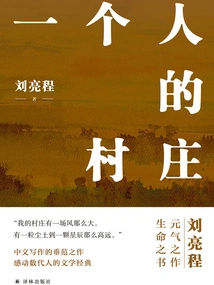
A Village of One Person (work by Liu Liangcheng)
General Fiction一个人的村庄(刘亮程作品)
Liu Liangcheng
In Huangshaliang, a village where humans and animals cohabitate, Liu Er's greatest pleasure is wandering around the village: he plays with insects, watches other people working, greets the birds on the branches, and appreciates the smile of a flower; he understands the hardships of mice, feels the power of cows and horses, watches the wind tilt the shadows, and measures the distance of a wind. He never opens the door when he goes to a house. He waits for the wind to blow the door open, then goes in, and the wind closes the door again. The biggest thing every day is to stand at the head of the village in the morning and welcome the sunrise alone. He understood the impermanence of life and death from the withering glory of a tree, and associated the fate of his ancestors from the cry of a bird. Liu Liangcheng drew on thousands of years of oriental poetic tradition, opened up a kingdom of words that is a spiritual habitat, and created an unparalleled Chinese classic so far.
In Huangshaliang, a village where humans and animals cohabitate, Liu Er's greatest pleasure is wandering around the village: he plays with insects, watches other people working, greets the birds on the branches, and appreciates the smile of a flower; he understands the hardships of mice, feels the power of cows and horses, watches the wind tilt the shadows, and measures the distance of a wind. He never opens the door when he goes to a house. He waits for the wind to blow the door open, then goes in, and the wind closes the door again. The biggest thing every day is to stand at the head of the village in the morning and welcome the sunrise alone. He understood the impermanence of life and death from the withering glory of a tree, and associated the fate of his ancestors from the cry of a bird. Liu Liangcheng drew on thousands of years of oriental poetic tradition, opened up a kingdom of words that is a spiritual habitat, and created an unparalleled Chinese classic so far.
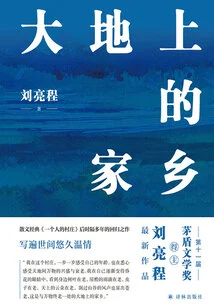
大地上的家乡(刘亮程作品)
Liu Liangcheng
"The years here are clearly countable, allowing you to live so clearly and peacefully. In this village, I feel my own age year by year, and I also feel the prosperity and aging of all things in the world. In my eyes that are gradually becoming dim, I see the leaves around me getting older, the raindrops on the eaves getting older, the insects getting older, the clouds in the sky getting older, and the sound of the wind blowing through the valley also becomes clearer. "Out of old age, this is the hometown on the earth where everything will grow old." Caizigou Village is full of stories: waking up to the crow of the cock, working at sunrise, plowing and reading, talking about earthly things to the sky; watching the crows having a meeting in the tree, waiting for a mouse to die of old age, the smell of dreams being smelled by a dog; imagining a hillside full of windows, caring about food and harvest, and growing old slowly under a big tree. These stories floating in the air and ignored by others are all major events in his life. The world is also a bigger Caizigou Village. The Xinjiang rice on the long journey soothes the tired mind and body of the traveler; a more than 300 kilometers of cattle and sheep transition road, millions of livestock walk along it every year, stretching for thousands of years; all the etiquette in life, borrowed from unknown old people, seems to be a rehearsal for the final grand funeral... Peace of mind is home, flowers bloom and fall, life and death are busy, we will eventually live as our own hometown.
"The years here are clearly countable, allowing you to live so clearly and peacefully. In this village, I feel my own age year by year, and I also feel the prosperity and aging of all things in the world. In my eyes that are gradually becoming dim, I see the leaves around me getting older, the raindrops on the eaves getting older, the insects getting older, the clouds in the sky getting older, and the sound of the wind blowing through the valley also becomes clearer. "Out of old age, this is the hometown on the earth where everything will grow old." Caizigou Village is full of stories: waking up to the crow of the cock, working at sunrise, plowing and reading, talking about earthly things to the sky; watching the crows having a meeting in the tree, waiting for a mouse to die of old age, the smell of dreams being smelled by a dog; imagining a hillside full of windows, caring about food and harvest, and growing old slowly under a big tree. These stories floating in the air and ignored by others are all major events in his life. The world is also a bigger Caizigou Village. The Xinjiang rice on the long journey soothes the tired mind and body of the traveler; a more than 300 kilometers of cattle and sheep transition road, millions of livestock walk along it every year, stretching for thousands of years; all the etiquette in life, borrowed from unknown old people, seems to be a rehearsal for the final grand funeral... Peace of mind is home, flowers bloom and fall, life and death are busy, we will eventually live as our own hometown.
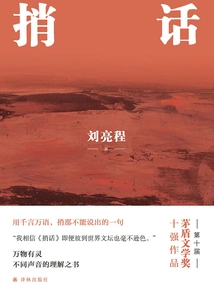
A Message (work by Liu Liangcheng)
General Fiction捎话(刘亮程作品)
Liu Liangcheng
The Bisha Kingdom in the east and the Helle Kingdom in the west were at odds with each other and started a decades-long war. Letters between the two countries were cut off, and folk messengers became a secret profession, playing an important role in conveying information between the two places. Ku, a folk messenger and a well-known translator in the Bisha Kingdom, was proficient in dozens of languages. He was entrusted to carry a little female donkey Xie from the Bisha Kingdom to the Helle Kingdom. Xie, a little female donkey with scriptures engraved on her body and about to be sent to the enemy as a sentence, can hear ghosts speak, can see the shapes and colors of all sounds, knows how to serve others and how to guess people's hearts. In this way, one person and one donkey, carrying the task of "passing a message", traveled across the battlefield and witnessed many life, death and incredible things...
The Bisha Kingdom in the east and the Helle Kingdom in the west were at odds with each other and started a decades-long war. Letters between the two countries were cut off, and folk messengers became a secret profession, playing an important role in conveying information between the two places. Ku, a folk messenger and a well-known translator in the Bisha Kingdom, was proficient in dozens of languages. He was entrusted to carry a little female donkey Xie from the Bisha Kingdom to the Helle Kingdom. Xie, a little female donkey with scriptures engraved on her body and about to be sent to the enemy as a sentence, can hear ghosts speak, can see the shapes and colors of all sounds, knows how to serve others and how to guess people's hearts. In this way, one person and one donkey, carrying the task of "passing a message", traveled across the battlefield and witnessed many life, death and incredible things...
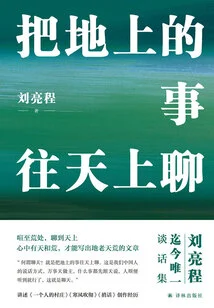
把地上的事往天上聊(刘亮程作品)
Liu Liangcheng
What is chatting? Just talk about things on earth to heaven. From the early days in the village called Huangshaliang, I began to understand and experience the world, and feel the sleeping and waking up on the land. Now, when I built the Mulei Academy in Caizigou, I still regard the donkey as my confidant and watch the time from dawn to dusk. In his writing career of nearly thirty years, Liu Liangcheng has been committed to being an idler and creating a language system to communicate with all things in the world. And the words in his writing that are like wings carry the fear, suffering, joy, and heaviness of the land, dragging the dust with them, flying into the sky, and leading us to look up at the leaves and dust. In this book, Liu Liangcheng talks about his creative experiences such as "One Man's Village", "Cold Wind Blowing Through" and "The Message". He looks back at the spiritual origin of his literary world, tells his emotions about his hometown and homeland, and shares the wisdom he gained from daily chores and his understanding and thinking about prose writing... These detailed conversations are like the hustle and bustle that happens in folk walls and courtyards again and again. Noisy to the wilderness, chatting to the sky, only with the sky and the wilderness in your heart can you write an article about the end of the world. Talking about things on earth to heaven is not just prose, but also the highest expression pursued by all literature and art.
What is chatting? Just talk about things on earth to heaven. From the early days in the village called Huangshaliang, I began to understand and experience the world, and feel the sleeping and waking up on the land. Now, when I built the Mulei Academy in Caizigou, I still regard the donkey as my confidant and watch the time from dawn to dusk. In his writing career of nearly thirty years, Liu Liangcheng has been committed to being an idler and creating a language system to communicate with all things in the world. And the words in his writing that are like wings carry the fear, suffering, joy, and heaviness of the land, dragging the dust with them, flying into the sky, and leading us to look up at the leaves and dust. In this book, Liu Liangcheng talks about his creative experiences such as "One Man's Village", "Cold Wind Blowing Through" and "The Message". He looks back at the spiritual origin of his literary world, tells his emotions about his hometown and homeland, and shares the wisdom he gained from daily chores and his understanding and thinking about prose writing... These detailed conversations are like the hustle and bustle that happens in folk walls and courtyards again and again. Noisy to the wilderness, chatting to the sky, only with the sky and the wilderness in your heart can you write an article about the end of the world. Talking about things on earth to heaven is not just prose, but also the highest expression pursued by all literature and art.
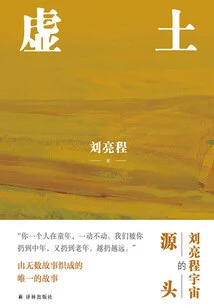
Virtual Earth (work by Liu Liangcheng)
General Fiction虚土(刘亮程作品)
Liu Liangcheng
In the morning, on Xutuliang, a five-year-old child was awakened by the sound of the door opening and saw people in the village rushing to go on a long trip. At the age of five, he was short and could only see the feet of many people and the legs of horses, but not their eyes. Suddenly, he recognized a thin and small person in the crowd. He sat on the carriage, tilting his head and facing backward as he watched the village disappear. After that morning, the people in the village never saw morning again. They always woke up at noon. And the five-year-old child no longer grows up and is just dreaming. When he woke up, everyone in the village was old. They gathered around him and asked him to tell him where they had been that morning.
In the morning, on Xutuliang, a five-year-old child was awakened by the sound of the door opening and saw people in the village rushing to go on a long trip. At the age of five, he was short and could only see the feet of many people and the legs of horses, but not their eyes. Suddenly, he recognized a thin and small person in the crowd. He sat on the carriage, tilting his head and facing backward as he watched the village disappear. After that morning, the people in the village never saw morning again. They always woke up at noon. And the five-year-old child no longer grows up and is just dreaming. When he woke up, everyone in the village was old. They gathered around him and asked him to tell him where they had been that morning.
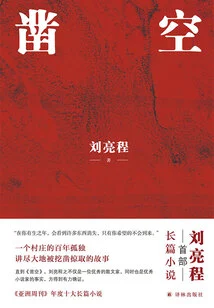
Hollowed Out (work by Liu Liangcheng)
General Fiction凿空(刘亮程作品)
Liu Liangcheng
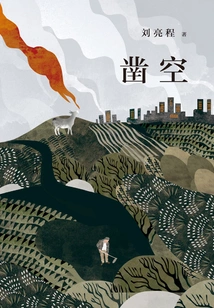
In the ancient Abudan Village, a large-scale excavation event is taking place: Underground, two lonely diggers have their own concerns and are walking toward each other. Zhang Wangcai fled from other places and came to Abudan. Far away from the village, he burrowed underground like a mouse, building a dark palace one by one. Yu Sufu, the contractor, was the first person to leave Abudan. He retreated to the village and managed the underground world in an orderly manner, step by step... Almost everyone in the village was aware of the secret of the underground cave, but no one could tell it. On the ground, oil derricks are rising, and excavations are happening everywhere, almost completely hollowing out Abudan Village and its ancient way of life. The earth is dug into an empty shell, and the village is elevated above the void. It is said that the "big job" of digging trenches for oil pipelines, which has been going on for more than a year, has arrived. The whole village is waiting with their kantuman on their shoulders, and the donkeys are also waiting. "There's always something to do in Kantuman." This is a village's Hundred Years of Solitude, telling the story of the years when two diggers had no shadows underground, and the life of people who are busy in vain and waiting forever. "In your lifetime, you will see many things disappear, only the things you hope for will not come."
In the ancient Abudan Village, a large-scale excavation event is taking place: Underground, two lonely diggers have their own concerns and are walking toward each other. Zhang Wangcai fled from other places and came to Abudan. Far away from the village, he burrowed underground like a mouse, building a dark palace one by one. Yu Sufu, the contractor, was the first person to leave Abudan. He retreated to the village and managed the underground world in an orderly manner, step by step... Almost everyone in the village was aware of the secret of the underground cave, but no one could tell it. On the ground, oil derricks are rising, and excavations are happening everywhere, almost completely hollowing out Abudan Village and its ancient way of life. The earth is dug into an empty shell, and the village is elevated above the void. It is said that the "big job" of digging trenches for oil pipelines, which has been going on for more than a year, has arrived. The whole village is waiting with their kantuman on their shoulders, and the donkeys are also waiting. "There's always something to do in Kantuman." This is a village's Hundred Years of Solitude, telling the story of the years when two diggers had no shadows underground, and the life of people who are busy in vain and waiting forever. "In your lifetime, you will see many things disappear, only the things you hope for will not come."
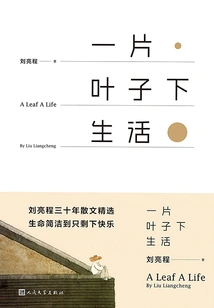
Life under a Leaf
Literature一片叶子下生活
Liu Liangcheng
This book selects 36 prose works by Liu Liangcheng. Liu Liangcheng observes the home he lives in from his own unique perspective and way. Everything around him, including bugs, birds, ants, dogs, trees, sunshine, wind, earth walls... And people, are all extraordinary existences in his writings. He writes about the things in his life, the people around him, and the state of life. His writing is simple and rational, full of philosophical thoughts but not rigid and serious. Seemingly ordinary things contain deep meanings. It's an impressive and memorable read.
This book selects 36 prose works by Liu Liangcheng. Liu Liangcheng observes the home he lives in from his own unique perspective and way. Everything around him, including bugs, birds, ants, dogs, trees, sunshine, wind, earth walls... And people, are all extraordinary existences in his writings. He writes about the things in his life, the people around him, and the state of life. His writing is simple and rational, full of philosophical thoughts but not rigid and serious. Seemingly ordinary things contain deep meanings. It's an impressive and memorable read.
When Poetry Forgets Us
Literature当诗歌忘记我们
Liu Liangcheng
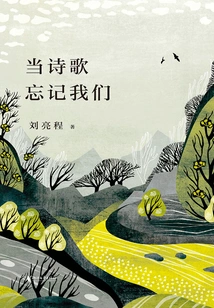
"When Poetry Forgets Us" is a collection of pastoral poems by Liu Liangcheng, a master of natural literature, for thirty years. It is also the starting point of his literary career. The 88 poems in "When Poetry Forgets Us" slowly describe this nostalgia, describing the life, roads, wheat fields and birds of the ancient homeland. These images are symbols of the leisurely and slow pastoral life, reflecting the author Liu Liangcheng's thinking about life, his calm, slowed-down gaze and caress of life. Reading "When Poetry Forgets Us", readers will instantly return to a calm and slow artistic conception, rest their souls, and gain a similar understanding of life as the poet in the vast nature. "Poetry is the art of teaching people to fly. I learned to write poetry at an age when my soul could grow wings. Every sentence of mine has wings, and from one or two small things that weigh heavy on the earth, I instantly gain the power to soar. I use these flying words to carry the spirit of the earth and soar into the sky." - Liu Liangcheng
"When Poetry Forgets Us" is a collection of pastoral poems by Liu Liangcheng, a master of natural literature, for thirty years. It is also the starting point of his literary career. The 88 poems in "When Poetry Forgets Us" slowly describe this nostalgia, describing the life, roads, wheat fields and birds of the ancient homeland. These images are symbols of the leisurely and slow pastoral life, reflecting the author Liu Liangcheng's thinking about life, his calm, slowed-down gaze and caress of life. Reading "When Poetry Forgets Us", readers will instantly return to a calm and slow artistic conception, rest their souls, and gain a similar understanding of life as the poet in the vast nature. "Poetry is the art of teaching people to fly. I learned to write poetry at an age when my soul could grow wings. Every sentence of mine has wings, and from one or two small things that weigh heavy on the earth, I instantly gain the power to soar. I use these flying words to carry the spirit of the earth and soar into the sky." - Liu Liangcheng
Hollow Out
General Fiction凿空
Liu Liangcheng
"Hollowing Out" is an absurd and true story that allows people to fully understand the world at this moment: Under a seemingly dead ancient village, a large-scale excavation event is taking place. Villager Zhang Wangcai spent more than 20 years drilling holes underground alone; contractor Yu Sufu greedily dug out another village underground; the development of modern cities and the rise of oil derricks have almost Abudan Village, along with the ancient way of life here, was completely hollowed out... The earth was almost carved into a hollow shell, and the village was above the void. "Hollowed Out" uses a "scattered" prose style to describe in detail the gradual disintegration of rural order under the invasion of modern industrial civilization, and the collapse of spiritual habitats. People are panicked and even go to primitive, dark caves to find long-lost peace. The author truly and absurdly describes the entanglement and collision between tradition and modernity, as well as the emptiness of people's spiritual home. The whole book is full of philosophical thoughts.
"Hollowing Out" is an absurd and true story that allows people to fully understand the world at this moment: Under a seemingly dead ancient village, a large-scale excavation event is taking place. Villager Zhang Wangcai spent more than 20 years drilling holes underground alone; contractor Yu Sufu greedily dug out another village underground; the development of modern cities and the rise of oil derricks have almost Abudan Village, along with the ancient way of life here, was completely hollowed out... The earth was almost carved into a hollow shell, and the village was above the void. "Hollowed Out" uses a "scattered" prose style to describe in detail the gradual disintegration of rural order under the invasion of modern industrial civilization, and the collapse of spiritual habitats. People are panicked and even go to primitive, dark caves to find long-lost peace. The author truly and absurdly describes the entanglement and collision between tradition and modernity, as well as the emptiness of people's spiritual home. The whole book is full of philosophical thoughts.
一个人的村庄(典藏本)
Liu Liangcheng
Since its publication in 1998, "One Man's Village" has aroused great repercussions across the country. It is a must-read for understanding the customs and culture of Xinjiang. It has become a classic for teenagers and contemporary famous prose readers. As the writer Li Rui said: "It is rare to read such simple, calm, broad and rich words. I am really surprised how the author gained such a profound experience of life and language in the wilderness of rolling yellow sand. In this desert full of garbage, spiritual corruption and mutual duplication, this set of essays about the farmer Liu Liangcheng really gives me the joy and comfort of coming to an oasis."
Since its publication in 1998, "One Man's Village" has aroused great repercussions across the country. It is a must-read for understanding the customs and culture of Xinjiang. It has become a classic for teenagers and contemporary famous prose readers. As the writer Li Rui said: "It is rare to read such simple, calm, broad and rich words. I am really surprised how the author gained such a profound experience of life and language in the wilderness of rolling yellow sand. In this desert full of garbage, spiritual corruption and mutual duplication, this set of essays about the farmer Liu Liangcheng really gives me the joy and comfort of coming to an oasis."
In Xinjiang
Literature在新疆
Liu Liangcheng
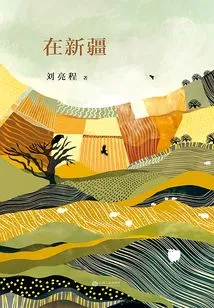
"In Xinjiang" is a long song dedicated to homeland. In Liu Liangcheng's writings, Xinjiang is "our land and our people" inherent in our lives. He gazed affectionately at the mountains, rivers and people on the vast land. Reality and dreams, today and yesterday, concrete and abstract, blended together in his narrative, flowing with the emotional power that fundamentally connects people of all ethnic groups. In the unique personal experience, the people, objects and things around me have gained full and grand life. The clear and simple language may seem calm, but it is deeply cherished and respected.
"In Xinjiang" is a long song dedicated to homeland. In Liu Liangcheng's writings, Xinjiang is "our land and our people" inherent in our lives. He gazed affectionately at the mountains, rivers and people on the vast land. Reality and dreams, today and yesterday, concrete and abstract, blended together in his narrative, flowing with the emotional power that fundamentally connects people of all ethnic groups. In the unique personal experience, the people, objects and things around me have gained full and grand life. The clear and simple language may seem calm, but it is deeply cherished and respected.
Liu Liangcheng's Prose
Literature刘亮程散文
Liu Liangcheng
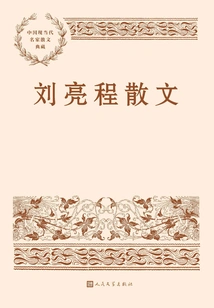
Liu Liangcheng is a prose writer who entered the literary world in the 1990s. Through his unique rural writing of reconstructing his own village in his memories, he launched the essay collection "A Village of One Person", which caused an uproar in the literary world at that time. Liu Liangcheng's prose is permeated with nature and spirituality, reflecting thoughts on loneliness and eternity. He is known as "China's last essayist in the 20th century" and "rural philosopher". This book selects Liu Liangcheng's early masterpieces from the village series "The Runaway Horse", "A Dog's Life", "The Cold Wind Blows Through", "How Far is Spring", etc.; As well as the Xinjiang customs series "The Last Blacksmith", "Night in Ag Village", "Morning in Restan Lane", etc.; Mature works such as "Life Under a Leaf" and "The Thief in the Moonlight". , Accompanied by 15 photos of the author from different periods, with both pictures and text, giving readers a new reading experience.
Liu Liangcheng is a prose writer who entered the literary world in the 1990s. Through his unique rural writing of reconstructing his own village in his memories, he launched the essay collection "A Village of One Person", which caused an uproar in the literary world at that time. Liu Liangcheng's prose is permeated with nature and spirituality, reflecting thoughts on loneliness and eternity. He is known as "China's last essayist in the 20th century" and "rural philosopher". This book selects Liu Liangcheng's early masterpieces from the village series "The Runaway Horse", "A Dog's Life", "The Cold Wind Blows Through", "How Far is Spring", etc.; As well as the Xinjiang customs series "The Last Blacksmith", "Night in Ag Village", "Morning in Restan Lane", etc.; Mature works such as "Life Under a Leaf" and "The Thief in the Moonlight". , Accompanied by 15 photos of the author from different periods, with both pictures and text, giving readers a new reading experience.
Life under a Leaf
Literature一片叶子下生活
Liu Liangcheng
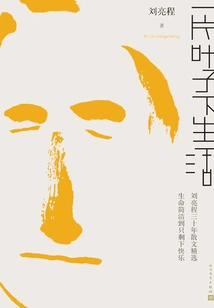
A selection of Liu Liangcheng's thirty-year prose works, including thirty-six classics such as "The First Father", "The Later Father", "The Evidence of This Life" and "The Cold Wind Blows Through", which condenses the essence of Liu Liangcheng's natural literature writing. Liu Liangcheng writes about his rural homeland with a unique perspective and method. Everything around him, no matter how ordinary, is a unique existence full of profound meaning. With his simple and smart writing, he constructed a picture of life in which humans and everything in the world are in harmony, which is endlessly memorable to read.
A selection of Liu Liangcheng's thirty-year prose works, including thirty-six classics such as "The First Father", "The Later Father", "The Evidence of This Life" and "The Cold Wind Blows Through", which condenses the essence of Liu Liangcheng's natural literature writing. Liu Liangcheng writes about his rural homeland with a unique perspective and method. Everything around him, no matter how ordinary, is a unique existence full of profound meaning. With his simple and smart writing, he constructed a picture of life in which humans and everything in the world are in harmony, which is endlessly memorable to read.
One Person Village
Literature一个人的村庄
Liu Liangcheng
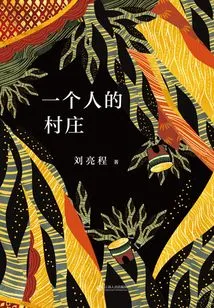
Liu Liangcheng, a master of natural literature, uses words as powerful as witchcraft to bring everyone back to nature and claim their hometown; "A person who listens to the hustle and bustle of the city would be so happy to lie in the fields and listen to the chirping of insects." The natural philosophy is not inferior to "Walden Pond", and the magical temperament is comparable to Marquez. Chinese natural literature classic.
Liu Liangcheng, a master of natural literature, uses words as powerful as witchcraft to bring everyone back to nature and claim their hometown; "A person who listens to the hustle and bustle of the city would be so happy to lie in the fields and listen to the chirping of insects." The natural philosophy is not inferior to "Walden Pond", and the magical temperament is comparable to Marquez. Chinese natural literature classic.
Empty Soil
Literature虚土
Liu Liangcheng
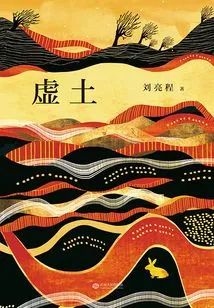
"Void Earth" can be regarded as a novel, or it can be regarded as a long prose or poem, like "Roadside Picnic" is to an ordinary movie. Liu Liangcheng, a master of natural literature and a writer nominated for the Contradiction Literature Award, uses emotion into words and brilliant imagination to weave a life story that is difficult to distinguish between illusion and reality. He tells this story: Everyone lives in their own childhood, which is our hometown.
"Void Earth" can be regarded as a novel, or it can be regarded as a long prose or poem, like "Roadside Picnic" is to an ordinary movie. Liu Liangcheng, a master of natural literature and a writer nominated for the Contradiction Literature Award, uses emotion into words and brilliant imagination to weave a life story that is difficult to distinguish between illusion and reality. He tells this story: Everyone lives in their own childhood, which is our hometown.
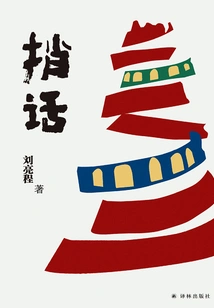
捎话(第十届茅盾文学奖入围作品)
Liu Liangcheng
Shortlisted for the 10th Mao Dun Literary Award, "A Village of One Man" is a new novel written by Liu Liangcheng for many years. It is a text with unique charm and an unprecedented reading adventure. The Bisha Kingdom in the east and the Helle Kingdom in the west were at odds with each other and started a decades-long war. Letters between the two countries were cut off, and folk messengers became a secret profession, playing an important role in conveying information between the two places. The messenger in the novel is Ku, a famous translator from the Bisha Kingdom who speaks dozens of languages. He is entrusted to carry a little female donkey from Bisha to Helle as a "message". Ku said, I only carry messages, not donkeys. The client said that donkey also has a word. This is how the story begins... In the sound world where humans and all things coexist, the sound of wind, the braying of donkeys, human voices, cooking smoke, the crowing of cocks and the barking of dogs are all conveying words to the distance. During the time when various languages passed silently, no one was aware of it, but both gods and ghosts appeared. The little female donkey Xie can hear ghosts speak, can see the shapes and colors of all sounds, knows how to serve others and how to guess people's hearts. So, one person and one donkey, carrying the task of "passing a message", crossed the battlefield, crossed the desert between languages, and witnessed many life, death and incredible things.
Shortlisted for the 10th Mao Dun Literary Award, "A Village of One Man" is a new novel written by Liu Liangcheng for many years. It is a text with unique charm and an unprecedented reading adventure. The Bisha Kingdom in the east and the Helle Kingdom in the west were at odds with each other and started a decades-long war. Letters between the two countries were cut off, and folk messengers became a secret profession, playing an important role in conveying information between the two places. The messenger in the novel is Ku, a famous translator from the Bisha Kingdom who speaks dozens of languages. He is entrusted to carry a little female donkey from Bisha to Helle as a "message". Ku said, I only carry messages, not donkeys. The client said that donkey also has a word. This is how the story begins... In the sound world where humans and all things coexist, the sound of wind, the braying of donkeys, human voices, cooking smoke, the crowing of cocks and the barking of dogs are all conveying words to the distance. During the time when various languages passed silently, no one was aware of it, but both gods and ghosts appeared. The little female donkey Xie can hear ghosts speak, can see the shapes and colors of all sounds, knows how to serve others and how to guess people's hearts. So, one person and one donkey, carrying the task of "passing a message", crossed the battlefield, crossed the desert between languages, and witnessed many life, death and incredible things.
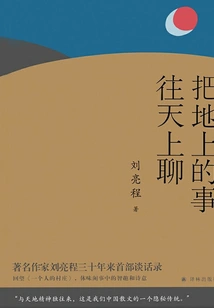
Talk About Things on Earth to Heaven
Literature把地上的事往天上聊
Liu Liangcheng
From his early years in the village called Huangshaliang, he began to understand and experience the world, and feel the sleeping and waking up on the land. Now he has built Mulei Academy in Caizigou. He still regards the donkey as his confidant and sees the time from dawn to dusk. In his writing career of nearly thirty years, Liu Liangcheng has been committed to being an idler and creating a language system to communicate with all things in the world. And the words in his writing that are like wings carry the fear, suffering, joy, and heaviness of the land, dragging the dust with them, flying into the sky, and leading us to look up at the leaves and dust. In this book, Liu Liangcheng looks back at the spiritual origins of his literary world, tells his emotions about his hometown and homeland, and shares the wisdom he gained from daily chores and his understanding and thinking about prose writing... These detailed conversations are like the noise that occurs in folk walls and courtyards again and again. When the conversation is hearty, the language begins to break away from trivial matters and takes on an upward trend, as if it can fly. The noise reaches the deserted place and the chat reaches the sky. It is already the end of the language, but it seems to be the beginning of another sentence.
From his early years in the village called Huangshaliang, he began to understand and experience the world, and feel the sleeping and waking up on the land. Now he has built Mulei Academy in Caizigou. He still regards the donkey as his confidant and sees the time from dawn to dusk. In his writing career of nearly thirty years, Liu Liangcheng has been committed to being an idler and creating a language system to communicate with all things in the world. And the words in his writing that are like wings carry the fear, suffering, joy, and heaviness of the land, dragging the dust with them, flying into the sky, and leading us to look up at the leaves and dust. In this book, Liu Liangcheng looks back at the spiritual origins of his literary world, tells his emotions about his hometown and homeland, and shares the wisdom he gained from daily chores and his understanding and thinking about prose writing... These detailed conversations are like the noise that occurs in folk walls and courtyards again and again. When the conversation is hearty, the language begins to break away from trivial matters and takes on an upward trend, as if it can fly. The noise reaches the deserted place and the chat reaches the sky. It is already the end of the language, but it seems to be the beginning of another sentence.