Library
Browse and search books
2 novels found
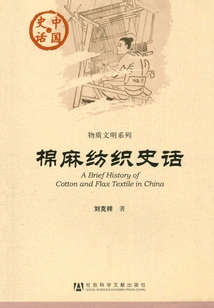
棉麻纺织史话
Liu Kexiang
The first textiles to appear in China were hemp and kudzu. My country is the hometown of hemp. Before cotton cultivation was widely promoted in the Yuan and Ming dynasties, hemp fabrics were the most important clothing materials for ordinary people. Cotton spinning and artificial cultivation of cotton were first developed in the ethnic minority areas in South China, Southwest and Northwest my country. . Cotton and linen textiles are an important part of my country's ancient civilization. This book systematically describes the origin and development of cotton and linen cultivation and textiles in my country, and gives a detailed introduction to the historical cotton and linen textile production conditions, including distribution of production areas, product structure, production methods, production tools, production development, process technology, business scope, business methods, etc. It focuses on the major inventions and innovative achievements of working people in the past generations in cotton and linen cultivation, textiles, weaving, printing and dyeing, so that readers can have a detailed understanding of the development of my country's cotton and linen cultivation and textile history. It is a good informative book suitable for the public.
The first textiles to appear in China were hemp and kudzu. My country is the hometown of hemp. Before cotton cultivation was widely promoted in the Yuan and Ming dynasties, hemp fabrics were the most important clothing materials for ordinary people. Cotton spinning and artificial cultivation of cotton were first developed in the ethnic minority areas in South China, Southwest and Northwest my country. . Cotton and linen textiles are an important part of my country's ancient civilization. This book systematically describes the origin and development of cotton and linen cultivation and textiles in my country, and gives a detailed introduction to the historical cotton and linen textile production conditions, including distribution of production areas, product structure, production methods, production tools, production development, process technology, business scope, business methods, etc. It focuses on the major inventions and innovative achievements of working people in the past generations in cotton and linen cultivation, textiles, weaving, printing and dyeing, so that readers can have a detailed understanding of the development of my country's cotton and linen cultivation and textile history. It is a good informative book suitable for the public.
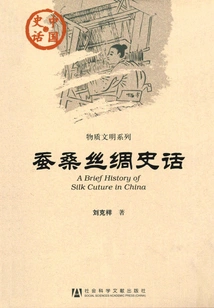
蚕桑丝绸史话
Liu Kexiang
China is the birthplace of the sericulture and silk industry and the motherland of silk. In ancient times, China was called the "Silk Country" by the West. The Chinese nation has many major inventions, and planting mulberry, raising silkworms, and reeling and weaving silk are among the earliest and greatest inventions. Silk and satin not only enriched people's clothing materials and beautified people's lives, but also served as civilized messengers in China's early exchanges with neighboring countries and Western countries. The unique "Silk Road" was the ancient transportation artery between China and the West across the Eurasian continent. Silk trade had a profound impact on ancient commerce, transportation and cultural exchanges, and even on the economic, political and cultural development of ancient Chinese and Western countries. This book succinctly describes the origin and development process of China's sericulture and silk industry from ancient times to modern times, focusing on the relevant situations of ancient mulberry planting, sericulture, silk reeling, silk weaving, scouring and bleaching, and printing and dyeing production, including production relations, management methods, production area distribution, production technology and technology development and changes, as well as the development and changes of silk trade and sericulture and silk weaving technology, and the external dissemination of silk trade and sericulture and silk weaving technology. From this we can not only feel the wisdom of our ancestors, but also feel glorious and proud of the ancient civilization of the Chinese nation.
China is the birthplace of the sericulture and silk industry and the motherland of silk. In ancient times, China was called the "Silk Country" by the West. The Chinese nation has many major inventions, and planting mulberry, raising silkworms, and reeling and weaving silk are among the earliest and greatest inventions. Silk and satin not only enriched people's clothing materials and beautified people's lives, but also served as civilized messengers in China's early exchanges with neighboring countries and Western countries. The unique "Silk Road" was the ancient transportation artery between China and the West across the Eurasian continent. Silk trade had a profound impact on ancient commerce, transportation and cultural exchanges, and even on the economic, political and cultural development of ancient Chinese and Western countries. This book succinctly describes the origin and development process of China's sericulture and silk industry from ancient times to modern times, focusing on the relevant situations of ancient mulberry planting, sericulture, silk reeling, silk weaving, scouring and bleaching, and printing and dyeing production, including production relations, management methods, production area distribution, production technology and technology development and changes, as well as the development and changes of silk trade and sericulture and silk weaving technology, and the external dissemination of silk trade and sericulture and silk weaving technology. From this we can not only feel the wisdom of our ancestors, but also feel glorious and proud of the ancient civilization of the Chinese nation.