Library
Browse and search books
2 novels found
明代九边史地研究
Liu Jingchun
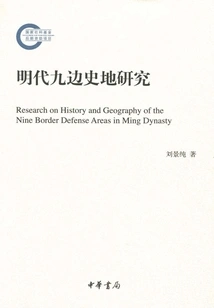
This book has a total of 12 chapters. In the form of special research, it studies the military defense, economy, female morality, education, etc. Of the Jiubian in the Ming Dynasty, and focuses on the formation, evolution, role, food and salary supply of the four towns in Shaanxi. The three appendices are useful supplements to the main text. The statistical table of the war in the four towns of Shaanxi is clear and intuitive, which shows the author's efforts.
This book has a total of 12 chapters. In the form of special research, it studies the military defense, economy, female morality, education, etc. Of the Jiubian in the Ming Dynasty, and focuses on the formation, evolution, role, food and salary supply of the four towns in Shaanxi. The three appendices are useful supplements to the main text. The statistical table of the war in the four towns of Shaanxi is clear and intuitive, which shows the author's efforts.
秦国历史与北方历史地理研究
Liu Jingchun
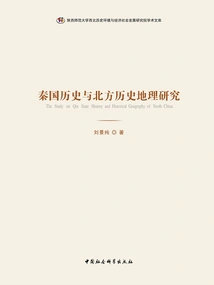
This book is part of the author's study and research on Chinese historical geography and Qin history and culture. The main content is divided into four parts: (1) Research on the history and culture of the Qin State, including 9 papers, which mainly studies the regional development of the Qin State and its cultural spirit, the development of the Qin State's industry and commerce, the Qin State's Eastern Expedition, and the political characteristics of the Qin Zhao Dynasty. (2) Research on "Shui Jing Zhu", including 4 papers and notes, mainly discussing issues such as the writing of "Shui Jing Zhu" and the significance of the temples and regional descriptions contained in "Shui Jing Zhu". (3) Research on historical towns and settlements, including 12 papers, mainly discussing the concept of unifying Wancheng, the Ming Dynasty's capital building, and the urban geography and culture of the Loess Plateau in the Qing Dynasty; (4) Research on other issues in historical geography, including 4 papers and interviews and questions, mainly discussing Yansui Town, Shaanxi Weaving Bureau, Money Making Bureau, and the history of Ming Dynasty The main ideas and practices of Nianhai's historical geography, as well as the basic views on historical military geography and its research: The above parts record the author's study and research on historical geography and Qin history and culture, and reflect the author's basic attitude, path and partial thinking in learning and engaging in related academic research.
This book is part of the author's study and research on Chinese historical geography and Qin history and culture. The main content is divided into four parts: (1) Research on the history and culture of the Qin State, including 9 papers, which mainly studies the regional development of the Qin State and its cultural spirit, the development of the Qin State's industry and commerce, the Qin State's Eastern Expedition, and the political characteristics of the Qin Zhao Dynasty. (2) Research on "Shui Jing Zhu", including 4 papers and notes, mainly discussing issues such as the writing of "Shui Jing Zhu" and the significance of the temples and regional descriptions contained in "Shui Jing Zhu". (3) Research on historical towns and settlements, including 12 papers, mainly discussing the concept of unifying Wancheng, the Ming Dynasty's capital building, and the urban geography and culture of the Loess Plateau in the Qing Dynasty; (4) Research on other issues in historical geography, including 4 papers and interviews and questions, mainly discussing Yansui Town, Shaanxi Weaving Bureau, Money Making Bureau, and the history of Ming Dynasty The main ideas and practices of Nianhai's historical geography, as well as the basic views on historical military geography and its research: The above parts record the author's study and research on historical geography and Qin history and culture, and reflect the author's basic attitude, path and partial thinking in learning and engaging in related academic research.