Library
Browse and search books
4 novels found
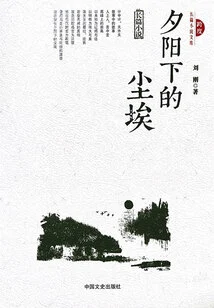
Dust in the Sunset
General Fiction夕阳下的尘埃
Liu Gang
"Dust in the Sunset" is a novel. The story revolves around the fight between the police and the gangsters for the Yinzhu account book. The two sides staged a life-and-death battle between the two sides. Xu Xiangdong has been ill for some time. He decided to visit his ex-wife and son, but on the way to Wang Xiaodie's house, he found someone following him. He suspected that these people should be related to the "Yinzhu Ledger". Lao Xu found policeman Wang Zhi, and the two started a battle with the gangsters. The powerful enemy has completely grasped their movements, and they have been pursued and escaped countless times. Dozens of members of the 528 Major Crime Team watered the tree of justice with their blood.
"Dust in the Sunset" is a novel. The story revolves around the fight between the police and the gangsters for the Yinzhu account book. The two sides staged a life-and-death battle between the two sides. Xu Xiangdong has been ill for some time. He decided to visit his ex-wife and son, but on the way to Wang Xiaodie's house, he found someone following him. He suspected that these people should be related to the "Yinzhu Ledger". Lao Xu found policeman Wang Zhi, and the two started a battle with the gangsters. The powerful enemy has completely grasped their movements, and they have been pursued and escaped countless times. Dozens of members of the 528 Major Crime Team watered the tree of justice with their blood.
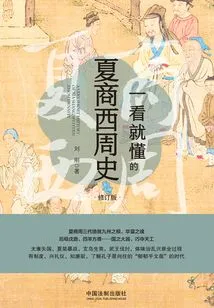
一看就懂的夏商西周史(修订版)
Liu Gang
Xia, Shang, and Zhou are collectively called the "Three Dynasties" because they cannot be counted as a "dynasty". The term "chao" refers to the Qin Dynasty and later. The main difference is whether there is a strong and powerful central government that governs the country. This was the case in Qin and beyond, but it was different in Xia, Shang, and Zhou. At best, they could be regarded as tribal alliances, tribal-state alliances, or state-state alliances. Their so-called central power is only based on the land of "China", which is the center of the world in their perception. However, their control over all parts of the country and the princes is very weak and unreliable. This is different from the Qin and Han Dynasties and beyond.
Xia, Shang, and Zhou are collectively called the "Three Dynasties" because they cannot be counted as a "dynasty". The term "chao" refers to the Qin Dynasty and later. The main difference is whether there is a strong and powerful central government that governs the country. This was the case in Qin and beyond, but it was different in Xia, Shang, and Zhou. At best, they could be regarded as tribal alliances, tribal-state alliances, or state-state alliances. Their so-called central power is only based on the land of "China", which is the center of the world in their perception. However, their control over all parts of the country and the princes is very weak and unreliable. This is different from the Qin and Han Dynasties and beyond.
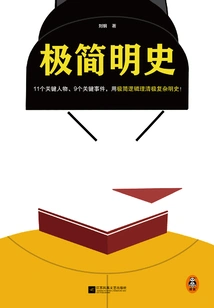
A Very Concise History
History极简明史
Liu Gang
In chronological order, through vivid stories and detailed historical facts, the author of this book selects 11 historical figures such as Zhu Yuanzhang, Zhang Juzheng, and Wei Zhongxian, as well as 9 historical events such as the Battle of Jingnan, Zheng He's voyages to the West, and the Tumubao Incident, and clarifies the history of the Ming Dynasty by narrating the key figures and key events from the founding of the Ming Dynasty by Zhu Yuanzhang to the demise of the Ming Dynasty.
In chronological order, through vivid stories and detailed historical facts, the author of this book selects 11 historical figures such as Zhu Yuanzhang, Zhang Juzheng, and Wei Zhongxian, as well as 9 historical events such as the Battle of Jingnan, Zheng He's voyages to the West, and the Tumubao Incident, and clarifies the history of the Ming Dynasty by narrating the key figures and key events from the founding of the Ming Dynasty by Zhu Yuanzhang to the demise of the Ming Dynasty.
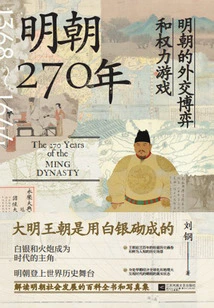
明朝270年:明朝的外交博弈和权力游戏
Liu Gang
This is not a history of emperors and generals, nor a chronological history book, but a written account of the Ming Dynasty's shipping, trade, diplomacy and other matters that are not often focused on. The focus of this book is not within the palace walls. The Ming Dynasty was the era when China truly began to open its eyes to the world. Observing the performance of the Ming Dynasty during the period of geographical discovery and the process of economic globalization is also an important part of understanding the 276 years of the Ming Dynasty. In this book, the court is not the main plot. Smugglers, big pirates, progressive scholars, and thinkers occupy a lot of space. This book can give readers a more three-dimensional and multi-dimensional understanding of the Ming Dynasty. You can see the exchanges and wars between China and North Korea, Japan, Spain, Portugal, the Netherlands and other countries, as well as the prosperous and developing Ming Dynasty society and the undercurrent of ideological movements. This empire built of silver is both advanced and conservative, rich and poor. When future generations look at it, they can't help but sigh.
This is not a history of emperors and generals, nor a chronological history book, but a written account of the Ming Dynasty's shipping, trade, diplomacy and other matters that are not often focused on. The focus of this book is not within the palace walls. The Ming Dynasty was the era when China truly began to open its eyes to the world. Observing the performance of the Ming Dynasty during the period of geographical discovery and the process of economic globalization is also an important part of understanding the 276 years of the Ming Dynasty. In this book, the court is not the main plot. Smugglers, big pirates, progressive scholars, and thinkers occupy a lot of space. This book can give readers a more three-dimensional and multi-dimensional understanding of the Ming Dynasty. You can see the exchanges and wars between China and North Korea, Japan, Spain, Portugal, the Netherlands and other countries, as well as the prosperous and developing Ming Dynasty society and the undercurrent of ideological movements. This empire built of silver is both advanced and conservative, rich and poor. When future generations look at it, they can't help but sigh.