Library
Browse and search books
3 novels found
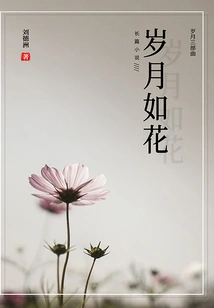
Time is Like Flowers (Part 2 of the Time Trilogy)
General Fiction岁月如花(岁月三部曲之二)
Liu Dezhou
This is a novel that reflects work and life in the modern workplace. It is the second part of the "Times Trilogy" series after "Times Are Like a Song". The work takes as its main line the incident in which the mayor of Xiakou Town was suddenly pulled away by a procuratorate vehicle just after the May Day holiday. It describes the different ideas and approaches of everyone facing the sudden situation, and profoundly reveals people's impetuous psychology and various aspects of life in the tide of reform. The story of the work is compact, the plot has twists and turns, the content is ups and downs, the language is vivid and vivid, the suspense is gripping, and it has strong artistic appeal.
This is a novel that reflects work and life in the modern workplace. It is the second part of the "Times Trilogy" series after "Times Are Like a Song". The work takes as its main line the incident in which the mayor of Xiakou Town was suddenly pulled away by a procuratorate vehicle just after the May Day holiday. It describes the different ideas and approaches of everyone facing the sudden situation, and profoundly reveals people's impetuous psychology and various aspects of life in the tide of reform. The story of the work is compact, the plot has twists and turns, the content is ups and downs, the language is vivid and vivid, the suspense is gripping, and it has strong artistic appeal.
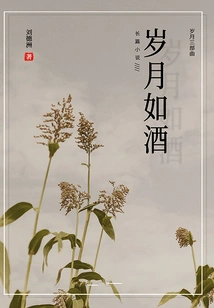
Time is Like Wine (Part 3 of the Time Trilogy)
General Fiction岁月如酒(岁月三部曲之三)
Liu Dezhou
This is a full-length novel that reflects work and life in the modern workplace. It is the third part of the "Times Trilogy" series after "Times Like a Song" and the second "Times Like Flowers". The work is about a county party committee sending a village party branch secretary to work at the grassroots level to increase farmers' income, develop a local economy, and highlight rural revitalization as the main line. They try every means to unite people's hearts, enhance the combat effectiveness and centripetal force of the party branch, and unite and lead the entire village cadres on the road to prosperity. Through arduous and unremitting efforts, a weak and scattered grassroots organization was finally transformed into a battle fortress capable of fighting big battles and daring to fight tough battles. The work is cleverly laid out, full of twists and turns, ups and downs, fascinating, and has strong ideological, artistic and readability.
This is a full-length novel that reflects work and life in the modern workplace. It is the third part of the "Times Trilogy" series after "Times Like a Song" and the second "Times Like Flowers". The work is about a county party committee sending a village party branch secretary to work at the grassroots level to increase farmers' income, develop a local economy, and highlight rural revitalization as the main line. They try every means to unite people's hearts, enhance the combat effectiveness and centripetal force of the party branch, and unite and lead the entire village cadres on the road to prosperity. Through arduous and unremitting efforts, a weak and scattered grassroots organization was finally transformed into a battle fortress capable of fighting big battles and daring to fight tough battles. The work is cleverly laid out, full of twists and turns, ups and downs, fascinating, and has strong ideological, artistic and readability.
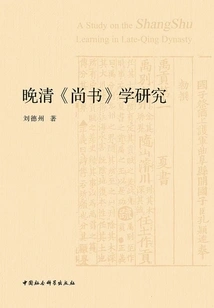
晚清《尚书》学研究
Liu Dezhou
The research object of this book is mainly Shangshu scholars and their works from Daoguang to the late Qing Dynasty. It not only focuses on case studies of special persons and books, but also strives to grasp the evolution of Shangshu studies and the overall characteristics of the academic era. "Shangshu" was a hot topic in the study of Confucian classics in the Qing Dynasty. In the middle and early Qing Dynasty, Yan Ruochu, Jiang Sheng, Duan Yucai, Sun Xingyan and others used textual research and method to govern "Shangshu" and achieved significant results. Since the reign of Jia and Dao, and with the changes in the world's fortunes and trends, the study of "Shangshu" has gained new content and presented new characteristics. Although it is not as good as the general emergence of famous figures and fruitful achievements in the middle and early periods, it is still an issue worthy of attention in the history of "Shangshu" study and requires systematic research. At the same time, these new contents and new features clearly reflected the characteristics of the times at that time, and discussing them will help to fully grasp the academic trends at that time.
The research object of this book is mainly Shangshu scholars and their works from Daoguang to the late Qing Dynasty. It not only focuses on case studies of special persons and books, but also strives to grasp the evolution of Shangshu studies and the overall characteristics of the academic era. "Shangshu" was a hot topic in the study of Confucian classics in the Qing Dynasty. In the middle and early Qing Dynasty, Yan Ruochu, Jiang Sheng, Duan Yucai, Sun Xingyan and others used textual research and method to govern "Shangshu" and achieved significant results. Since the reign of Jia and Dao, and with the changes in the world's fortunes and trends, the study of "Shangshu" has gained new content and presented new characteristics. Although it is not as good as the general emergence of famous figures and fruitful achievements in the middle and early periods, it is still an issue worthy of attention in the history of "Shangshu" study and requires systematic research. At the same time, these new contents and new features clearly reflected the characteristics of the times at that time, and discussing them will help to fully grasp the academic trends at that time.