Library
Browse and search novels
1 novel found
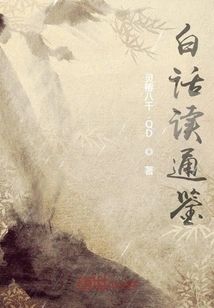
Vernacular Reading Guide
History白话读通鉴
Lingchun Eight Thousand. Qd
"Zi Zhi Tong Jian" is named after Song Shenzong's annotation "In view of the past, it is qualified to govern the Tao", which means that taking the events of the ancients as a lesson for today will help govern the world. (Jian is a mirror. People look in the mirror to check their own beauty and ugliness, and read history to know the gains and losses of good and evil.) Therefore, "Zi Zhi Tong Jian" has been called the knowledge of emperors in all dynasties. It is different from ordinary history books in that the recorded history lasts for thousands of years. Sima Guang himself wanted to imitate Confucius in the Spring and Autumn Period, so as to distinguish right from wrong, establish the moral order of the world, and serve as a warning and education for future generations. Among the four Confucian "Jingshi Ziji", History is second only to Jingbu. Confucians believe that Classics is a text that contains Tao, while History is the key to recording events. When Hu Sansheng annotated "Zizhi Tongjian", he said that "Tao is everywhere, scattered among things, and caused by things." The gains and losses, successes and failures can be known through the ages, and history is a must!" That is to say, the Tao is intangible. Although it can be understood through scriptures, it can only be concretely reflected in the world. Therefore, those who want to understand the Tao must not know the history. Thousands of years have passed, and Zizhi Tongjian is actually a Chinese epic. The plain and straightforward text shows its grandeur. Such an epic is worth seeing.
"Zi Zhi Tong Jian" is named after Song Shenzong's annotation "In view of the past, it is qualified to govern the Tao", which means that taking the events of the ancients as a lesson for today will help govern the world. (Jian is a mirror. People look in the mirror to check their own beauty and ugliness, and read history to know the gains and losses of good and evil.) Therefore, "Zi Zhi Tong Jian" has been called the knowledge of emperors in all dynasties. It is different from ordinary history books in that the recorded history lasts for thousands of years. Sima Guang himself wanted to imitate Confucius in the Spring and Autumn Period, so as to distinguish right from wrong, establish the moral order of the world, and serve as a warning and education for future generations. Among the four Confucian "Jingshi Ziji", History is second only to Jingbu. Confucians believe that Classics is a text that contains Tao, while History is the key to recording events. When Hu Sansheng annotated "Zizhi Tongjian", he said that "Tao is everywhere, scattered among things, and caused by things." The gains and losses, successes and failures can be known through the ages, and history is a must!" That is to say, the Tao is intangible. Although it can be understood through scriptures, it can only be concretely reflected in the world. Therefore, those who want to understand the Tao must not know the history. Thousands of years have passed, and Zizhi Tongjian is actually a Chinese epic. The plain and straightforward text shows its grandeur. Such an epic is worth seeing.