Library
Browse and search books
14 novels found
Tears and Laughter
Literature泪与笑
Liang Yuchun
"Tears and Laughter" is the posthumous work of modern prose writer Liang Yuchun, which collects twenty-two of his prose works.
"Tears and Laughter" is the posthumous work of modern prose writer Liang Yuchun, which collects twenty-two of his prose works.
Overseas Literature Talk
Literature海外文学谈
Liang Yuchun
It was one summer three years ago. I was in the library of the First Campus of Peking University, browsing "Luoyang Jialan Ji" boredly, and accidentally saw the following paragraph: Liu Bai was good at making wine, and the drink was so delicious that he did not wake up during menstruation. Mao Hongbin, the governor of Qingzhou, drank wine from his vassal. He encountered thieves on the road and became drunk after drinking. They were all captured. A knight-errant said: "I am not afraid of bowing and drawing swords, but I am afraid of falling into the spring mash."
It was one summer three years ago. I was in the library of the First Campus of Peking University, browsing "Luoyang Jialan Ji" boredly, and accidentally saw the following paragraph: Liu Bai was good at making wine, and the drink was so delicious that he did not wake up during menstruation. Mao Hongbin, the governor of Qingzhou, drank wine from his vassal. He encountered thieves on the road and became drunk after drinking. They were all captured. A knight-errant said: "I am not afraid of bowing and drawing swords, but I am afraid of falling into the spring mash."
天真与经验:梁遇春散文
Liang Yuchun
Modern writer Fei Ming commented on Liang Yuchun's exquisite and colorful prose, saying that he "has brewed a good momentum" and "there will be a tree with good flowers blooming" ("(Tears and Laughter) Preface 1"), which is quite beautiful, quite appropriate, and tepid. This book contains many exquisite prose works by Liang Yuchun. According to their different contents, they are divided into four parts: "Literary Essays", "Essays and Interesting Talks", "Master's Essays" and "Overseas Letters".
Modern writer Fei Ming commented on Liang Yuchun's exquisite and colorful prose, saying that he "has brewed a good momentum" and "there will be a tree with good flowers blooming" ("(Tears and Laughter) Preface 1"), which is quite beautiful, quite appropriate, and tepid. This book contains many exquisite prose works by Liang Yuchun. According to their different contents, they are divided into four parts: "Literary Essays", "Essays and Interesting Talks", "Master's Essays" and "Overseas Letters".
梁遇春作品集:泪与笑
Liang Yuchun
"Tears and Laughter" is the posthumous work of modern prose writer Liang Yuchun. It contains two essays, 13 episodic chapters and five prefaces. His prose captures the essence of British sketches, and his techniques and emotions are similar to those of the 18th-century British prose master Charles Lamb. He inherits a kind of tragic humor and is rooted in the soil of Chinese classical literature, drawing nutrients from it, thus forming his own unique artistic style. Among Liang Yuchun's essays, "Talking about "Tramps"" is the longer one, and it is also the one that people prefer. Liang Yuchun made no secret of his praise and yearning for the homeless spirit in this article, which is exciting to read. Reading Liang Yuchun's prose, whether it is the early youthful impulse and youthful spirit, or the later heaviness and vicissitudes of life, people will not feel as plain as water. He is a wanderer on the journey of life, raising his glass to the moon and dancing into the fire.
"Tears and Laughter" is the posthumous work of modern prose writer Liang Yuchun. It contains two essays, 13 episodic chapters and five prefaces. His prose captures the essence of British sketches, and his techniques and emotions are similar to those of the 18th-century British prose master Charles Lamb. He inherits a kind of tragic humor and is rooted in the soil of Chinese classical literature, drawing nutrients from it, thus forming his own unique artistic style. Among Liang Yuchun's essays, "Talking about "Tramps"" is the longer one, and it is also the one that people prefer. Liang Yuchun made no secret of his praise and yearning for the homeless spirit in this article, which is exciting to read. Reading Liang Yuchun's prose, whether it is the early youthful impulse and youthful spirit, or the later heaviness and vicissitudes of life, people will not feel as plain as water. He is a wanderer on the journey of life, raising his glass to the moon and dancing into the fire.
Kiss Fire
Literature吻火
Liang Yuchun
More exciting than Sanzhongmen, more masculine than Guo Jingming. The stories that happen during the flower blooming season are destined to be the most beautiful memories in our lives...
More exciting than Sanzhongmen, more masculine than Guo Jingming. The stories that happen during the flower blooming season are destined to be the most beautiful memories in our lives...
Spring Mash Collection
Literature春醪集
Liang Yuchun
"Spring Mash Collection" is a collection of essays by Liang Yuchun, a talented scholar in the Republic of China. Liang Yuchun's articles capture the essence of British sketches, have tragic humor, and draw on the nutrients of Chinese classical literature. His style is unique and highly sought after. Readers who like Liang Yuchun's prose should not miss this book. Liang Yuchun began to publish essays in 1926 in "Yu Si", "Run Liu", "Camel Grass", "Modern Literature", "Crescent" and other publications. These essays are collected into "Spring Mash Collection". First published by Shanghai Beixin Book Company in March 1930, it includes articles such as "Letter to a Broken Lover", "Talking in Drunk Dreams", "View on Life and Death", "Literature and Life", and "Miscellaneous Essays on Literature and Art". "Spring Mash Collection" is the spring mash brewed by the author with his emotions, knowledge and thoughts. Fei Mingpu once said: "His literary thoughts are like stars in the sky, fleeting." In the article, he talks about reading, learning, love, friends, and quoting scriptures without being pedantic. It is a purely literary discussion and a conversation among literati.
"Spring Mash Collection" is a collection of essays by Liang Yuchun, a talented scholar in the Republic of China. Liang Yuchun's articles capture the essence of British sketches, have tragic humor, and draw on the nutrients of Chinese classical literature. His style is unique and highly sought after. Readers who like Liang Yuchun's prose should not miss this book. Liang Yuchun began to publish essays in 1926 in "Yu Si", "Run Liu", "Camel Grass", "Modern Literature", "Crescent" and other publications. These essays are collected into "Spring Mash Collection". First published by Shanghai Beixin Book Company in March 1930, it includes articles such as "Letter to a Broken Lover", "Talking in Drunk Dreams", "View on Life and Death", "Literature and Life", and "Miscellaneous Essays on Literature and Art". "Spring Mash Collection" is the spring mash brewed by the author with his emotions, knowledge and thoughts. Fei Mingpu once said: "His literary thoughts are like stars in the sky, fleeting." In the article, he talks about reading, learning, love, friends, and quoting scriptures without being pedantic. It is a purely literary discussion and a conversation among literati.
Liang Yuchun's Exquisite Prose
Literature梁遇春散文精品
Liang Yuchun
This book is divided into three volumes, mainly collecting Liang Yuchun's prose works. This book mainly includes Liang Yuchun's prose works. The total number of Liang Yuchun's essays is only 50, but he is unique and has an irreplaceable position in the history of modern prose.
This book is divided into three volumes, mainly collecting Liang Yuchun's prose works. This book mainly includes Liang Yuchun's prose works. The total number of Liang Yuchun's essays is only 50, but he is unique and has an irreplaceable position in the history of modern prose.
Prose by Liang Yuchun
Literature梁遇春散文
Liang Yuchun
In 1926, the author began to publish his works in such publications as "Threads", "Rush", "Camel Grass" and "Crescent". In 1930, Shanghai Beixin Bookstore published his first collection of essays, "Spring Mash Collection", and in 1934, Shanghai Kaiming Bookstore published his second collection of essays, "Tears and Laughter." Liang Yuchun talked about reading, knowledge, love, friends, and quotations from classics, without being pedantic or nagging. It was the talk of a literati. Fei Ming said: "His literary thoughts are like stars in the sky, fleeting." This edition of "Liang Yuchun Prose" contains about 200,000 words of prose selected by the author, divided into two volumes: Spring Mash and Laughter and Tears. It has become a variety in the collection of prose by famous modern and contemporary Chinese writers and provides readers with a different prose writing paradigm.
In 1926, the author began to publish his works in such publications as "Threads", "Rush", "Camel Grass" and "Crescent". In 1930, Shanghai Beixin Bookstore published his first collection of essays, "Spring Mash Collection", and in 1934, Shanghai Kaiming Bookstore published his second collection of essays, "Tears and Laughter." Liang Yuchun talked about reading, knowledge, love, friends, and quotations from classics, without being pedantic or nagging. It was the talk of a literati. Fei Ming said: "His literary thoughts are like stars in the sky, fleeting." This edition of "Liang Yuchun Prose" contains about 200,000 words of prose selected by the author, divided into two volumes: Spring Mash and Laughter and Tears. It has become a variety in the collection of prose by famous modern and contemporary Chinese writers and provides readers with a different prose writing paradigm.
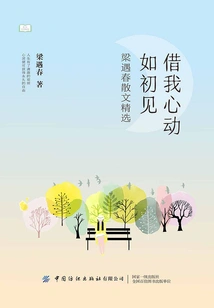
借我心动如初见:梁遇春散文精选
Liang Yuchun
"Borrow My Heart Is Like the First Meeting" is a collection of essays by the essayist Liang Yuchun. It includes content about reading, learning, love, friends, etc. Liang Yuchun is known as "China's Ilya". His prose has captured the essence of British sketches and is rooted in Chinese classical literature, thus forming his own artistic style. In his short life, he left behind few prose works, most of which are masterpieces handed down from generation to generation. His friend Feng Zhi said that he was comparable to Li He of the Tang Dynasty in China, John Keats in England, and Novalis in Germany; Hu Shi believed that he was "a young writer with great literary interest and genius." As Liang Yuchun said: As long as we have a clear view of life, the honor, disgrace, misfortune and blessings in the world will not be able to disturb the inner peace, so our souls can gain long-term freedom. This is the charm of this book.
"Borrow My Heart Is Like the First Meeting" is a collection of essays by the essayist Liang Yuchun. It includes content about reading, learning, love, friends, etc. Liang Yuchun is known as "China's Ilya". His prose has captured the essence of British sketches and is rooted in Chinese classical literature, thus forming his own artistic style. In his short life, he left behind few prose works, most of which are masterpieces handed down from generation to generation. His friend Feng Zhi said that he was comparable to Li He of the Tang Dynasty in China, John Keats in England, and Novalis in Germany; Hu Shi believed that he was "a young writer with great literary interest and genius." As Liang Yuchun said: As long as we have a clear view of life, the honor, disgrace, misfortune and blessings in the world will not be able to disturb the inner peace, so our souls can gain long-term freedom. This is the charm of this book.
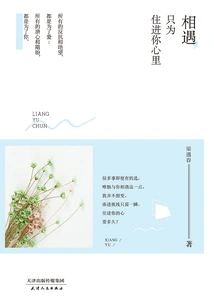
We Meet Just to Live in Your Heart
Literature相遇,只为住进你心里
Liang Yuchun
"Meet Me Just to Live in Your Heart" - a collection of Liang Yuchun's selected essays, which are divided into three parts: "Zhuang Sheng Dreams of Butterflies", "Drunken Dream Talk" and "Belated West Wind". Liang Yuchun's works have a unique style. For things that are fleeting but gorgeous and charming, such as spring and flames, there is a kind of worry and sadness of an idealist's disillusionment. But at the same time, he is extremely passionate about life, has a youthful energy and frankness, pays attention to the contradictions and sensitivity of human nature, is willful, and is light and casual.
"Meet Me Just to Live in Your Heart" - a collection of Liang Yuchun's selected essays, which are divided into three parts: "Zhuang Sheng Dreams of Butterflies", "Drunken Dream Talk" and "Belated West Wind". Liang Yuchun's works have a unique style. For things that are fleeting but gorgeous and charming, such as spring and flames, there is a kind of worry and sadness of an idealist's disillusionment. But at the same time, he is extremely passionate about life, has a youthful energy and frankness, pays attention to the contradictions and sensitivity of human nature, is willful, and is light and casual.
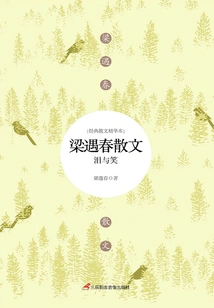
梁遇春散文:泪与笑
Liang Yuchun
Liang Yuchun's prose writes about trivial matters, but there is temperament and wisdom in the trivial matters; although the talk is messy, there is context and structure in the mess. The modern writer Fei Ming commented on Liang Yuchun's exquisite and varied prose, saying that he "breeded a good momentum" and his words were quite beautiful, quite appropriate, and tepid. This book contains many exquisite essays by Liang Yuchun, showing his life as brilliant as an epiphyllum. It has high artistic quality, readability and collection value.
Liang Yuchun's prose writes about trivial matters, but there is temperament and wisdom in the trivial matters; although the talk is messy, there is context and structure in the mess. The modern writer Fei Ming commented on Liang Yuchun's exquisite and varied prose, saying that he "breeded a good momentum" and his words were quite beautiful, quite appropriate, and tepid. This book contains many exquisite essays by Liang Yuchun, showing his life as brilliant as an epiphyllum. It has high artistic quality, readability and collection value.
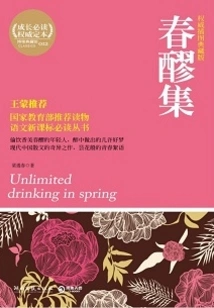
Spring Mash Collection
Literature春醪集
Liang Yuchun
This book is a collector's edition of prose collections by the talented writer Liang Yuchun. It includes "Spring Mash Collection" and "Tears and Laughter" as well as epigraphs and letters. It is the rich culmination of Liang Yuchun's short 26 years. Recommended by Wang Meng, the reading recommended by the Ministry of Education, "Must-Read Series for the New Chinese Curriculum Standards", a strange work of modern Chinese prose, the short-lived youthful whispers of "China's Lamb".
This book is a collector's edition of prose collections by the talented writer Liang Yuchun. It includes "Spring Mash Collection" and "Tears and Laughter" as well as epigraphs and letters. It is the rich culmination of Liang Yuchun's short 26 years. Recommended by Wang Meng, the reading recommended by the Ministry of Education, "Must-Read Series for the New Chinese Curriculum Standards", a strange work of modern Chinese prose, the short-lived youthful whispers of "China's Lamb".
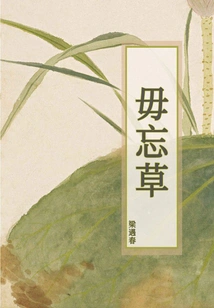
Don't Forget Grass
Literature毋忘草
Liang Yuchun
"Not Forgetting Grass" is a collection of Liang Yuchun's prose works, which mainly includes the author's important representative prose works. Liang Yuchun was one of the early experimenters, practitioners and pioneers in the history of modern vernacular prose. The overall tone of his literary works can be summarized as "laughing with tears, crying with laughter". Xin Qiji, a poet in the Southern Song Dynasty, once said: Young people write "to express sorrow in order to compose new words", and pretending to be confused and sentimental is their "common problem".
"Not Forgetting Grass" is a collection of Liang Yuchun's prose works, which mainly includes the author's important representative prose works. Liang Yuchun was one of the early experimenters, practitioners and pioneers in the history of modern vernacular prose. The overall tone of his literary works can be summarized as "laughing with tears, crying with laughter". Xin Qiji, a poet in the Southern Song Dynasty, once said: Young people write "to express sorrow in order to compose new words", and pretending to be confused and sentimental is their "common problem".
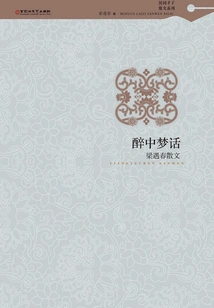
梁遇春散文:醉中梦话
Liang Yuchun
The content of this book includes "Watching Fire", "On the Way", "Wry Smile", "Break of Dawn", "Darkness", "Another Spring Green Grass", "Good Words", "Lectures", "Going to Fight the Fire", "View of Life and Death", etc.
The content of this book includes "Watching Fire", "On the Way", "Wry Smile", "Break of Dawn", "Darkness", "Another Spring Green Grass", "Good Words", "Lectures", "Going to Fight the Fire", "View of Life and Death", etc.