Library
Browse and search books
19 novels found
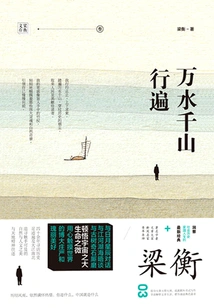
万水千山行遍
Liang Heng
This book is the third volume of Mr. Liang Heng's first collection of "Liang Heng's Wen Cun", which contains more than 80 of the author's latest creations and classic travel essays. It mainly reflects the author's thoughts and feelings after walking through mountains, rivers, sights and historic sites, and observing folk customs. The ingenious writing angle, emotional and rational narrative style, graceful and elegant writing style, rich and vivid imagination, and profound connotation of literary, cultural and scientific knowledge will make readers unable to put it down.
This book is the third volume of Mr. Liang Heng's first collection of "Liang Heng's Wen Cun", which contains more than 80 of the author's latest creations and classic travel essays. It mainly reflects the author's thoughts and feelings after walking through mountains, rivers, sights and historic sites, and observing folk customs. The ingenious writing angle, emotional and rational narrative style, graceful and elegant writing style, rich and vivid imagination, and profound connotation of literary, cultural and scientific knowledge will make readers unable to put it down.
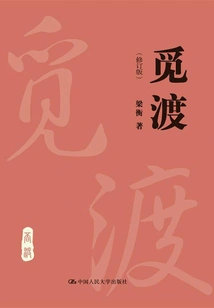
Midu (revised Version)
Literature觅渡(修订版)
Liang Heng
This book is a revised version of the famous collection "Medu" by Mr. Liang Heng, a contemporary essayist. "Medu" has been well received by readers since its publication in 2004. It has been reprinted 16 times and has received everlasting social response. It has been supplemented with some of the prose and essays published by Mr. Liang Heng after "Medu", following the style of the previous book, divided into "Great Love and Dali", "Qing History is Like a Mirror", "Mountains and Rivers Are Like Me", "Rational Life", "Outside the Territory" In six parts, including "Wind and Snow" and "For Art and Literature", the article inherits the consistent style of Liang's prose, talking about big things, big feelings, and principles, and reveals a kind of sincere, compassionate and compassionate feeling in the tranquility and remoteness.
This book is a revised version of the famous collection "Medu" by Mr. Liang Heng, a contemporary essayist. "Medu" has been well received by readers since its publication in 2004. It has been reprinted 16 times and has received everlasting social response. It has been supplemented with some of the prose and essays published by Mr. Liang Heng after "Medu", following the style of the previous book, divided into "Great Love and Dali", "Qing History is Like a Mirror", "Mountains and Rivers Are Like Me", "Rational Life", "Outside the Territory" In six parts, including "Wind and Snow" and "For Art and Literature", the article inherits the consistent style of Liang's prose, talking about big things, big feelings, and principles, and reveals a kind of sincere, compassionate and compassionate feeling in the tranquility and remoteness.
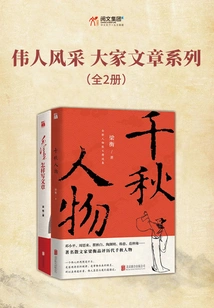
伟人风采 大家文章系列(全2册)
Liang Heng
Liang Heng, born in 1946, is from Huozhou, Shanxi. Graduated from Renmin University of China in 1968. This set includes "Thousands of Characters" + "How Mao Zedong Writes Articles".
Liang Heng, born in 1946, is from Huozhou, Shanxi. Graduated from Renmin University of China in 1968. This set includes "Thousands of Characters" + "How Mao Zedong Writes Articles".
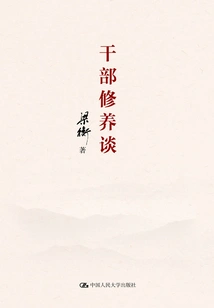
Talk About the Cultivation of Cadres
Literature干部修养谈
Liang Heng
This book is a collection of political commentaries and commentaries by the famous essayist Liang Heng. It selects classic and latest masterpieces in the field of political commentaries by Liang Heng. In particular, his political essays are published in a collection for the first time in the past ten years. Liang Heng's political essays are easy to understand and explain the profound things in a simple way. They are not simple preaching, but vivid and clear analysis. His metaphors are often philosophical and his arguments are full of new things. They are deeply loved by readers. Many of the articles have been timeless and still provide guidance on current hot political issues. The commentaries at that time were both vertical and horizontal, criticizing the current shortcomings. They not only included insights into the ways of being an official, but also included criticisms and suggestions on specific political affairs, which were thought-provoking. The book's argumentation is superb, its writing style is sharp, it speaks directly to people's hearts, and it is highly readable. It will help the majority of party members and cadres improve their moral and political literacy, strengthen their ideals and beliefs, and strengthen party history education. This book can be used not only as a training material for party members and civil servants, but also as a general reading material for party members and the public.
This book is a collection of political commentaries and commentaries by the famous essayist Liang Heng. It selects classic and latest masterpieces in the field of political commentaries by Liang Heng. In particular, his political essays are published in a collection for the first time in the past ten years. Liang Heng's political essays are easy to understand and explain the profound things in a simple way. They are not simple preaching, but vivid and clear analysis. His metaphors are often philosophical and his arguments are full of new things. They are deeply loved by readers. Many of the articles have been timeless and still provide guidance on current hot political issues. The commentaries at that time were both vertical and horizontal, criticizing the current shortcomings. They not only included insights into the ways of being an official, but also included criticisms and suggestions on specific political affairs, which were thought-provoking. The book's argumentation is superb, its writing style is sharp, it speaks directly to people's hearts, and it is highly readable. It will help the majority of party members and cadres improve their moral and political literacy, strengthen their ideals and beliefs, and strengthen party history education. This book can be used not only as a training material for party members and civil servants, but also as a general reading material for party members and the public.
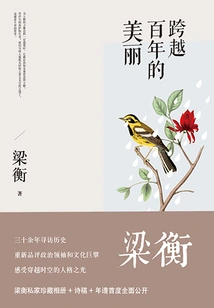
Beauty That Spans Centuries
Literature跨越百年的美丽
Liang Heng
This book is the first volume of Mr. Liang Heng's first collection of "Liang Heng's Wencun", which contains more than 60 new works and classic biographies by the author. It can be called the authoritative text reflecting the creation of Mr. Liang Heng's biographies so far. The book is divided into seven parts, including reviews of historical and cultural celebrities, reinterpretations of leaders, telling warm and heartwarming stories, life essays and creative insights, etc. Some of the chapters are popular, such as "Beauty spanning a hundred years", "Photographing the Railings All Over", "There is no great thing but Zhou Enlai", etc. Mr. Liang Heng's creations have Sima Qian's style of historical writing and Zwei's style of compassion, writing about great emotions, events and principles. Among them, more than 60 articles such as "Jin Temple", "Xia Gan", "Looking for a Ferry, Looking for a Ferry, Where to Ferry" and "Green Mountains Are Not Old" have been selected into the textbooks of universities, middle schools and primary schools, and can be regarded as model chapters for students to read.
This book is the first volume of Mr. Liang Heng's first collection of "Liang Heng's Wencun", which contains more than 60 new works and classic biographies by the author. It can be called the authoritative text reflecting the creation of Mr. Liang Heng's biographies so far. The book is divided into seven parts, including reviews of historical and cultural celebrities, reinterpretations of leaders, telling warm and heartwarming stories, life essays and creative insights, etc. Some of the chapters are popular, such as "Beauty spanning a hundred years", "Photographing the Railings All Over", "There is no great thing but Zhou Enlai", etc. Mr. Liang Heng's creations have Sima Qian's style of historical writing and Zwei's style of compassion, writing about great emotions, events and principles. Among them, more than 60 articles such as "Jin Temple", "Xia Gan", "Looking for a Ferry, Looking for a Ferry, Where to Ferry" and "Green Mountains Are Not Old" have been selected into the textbooks of universities, middle schools and primary schools, and can be regarded as model chapters for students to read.
Midu Midu
Literature觅渡觅渡
Liang Heng
Mr. Liang Heng is a famous essayist, and many of his famous essays have been selected into Chinese textbooks in middle schools and universities. Seven years ago, Liang Heng published a collection of essays called "Looking for a Crossing", which was published by Renmin University Press and has been widely praised since its publication. This book is the longer version of "Meidu" and contains Mr. Liang Heng's most representative essays, comments and writing experiences. The book is divided into six parts: "Great men are like mountains", "Green history is like a mirror", "Mountains and rivers are like me", "Beauty of life", "Style from outside the country" and "The way of writing", almost including his most representative prose, essays and research. In particular, while retaining the essence of the old edition, it also includes many of his newly published essays in the past seven years that have aroused repercussions across the country. This book is not only suitable for literature lovers to read, but also a guide for college and middle school students to improve their literary literacy and writing skills.
Mr. Liang Heng is a famous essayist, and many of his famous essays have been selected into Chinese textbooks in middle schools and universities. Seven years ago, Liang Heng published a collection of essays called "Looking for a Crossing", which was published by Renmin University Press and has been widely praised since its publication. This book is the longer version of "Meidu" and contains Mr. Liang Heng's most representative essays, comments and writing experiences. The book is divided into six parts: "Great men are like mountains", "Green history is like a mirror", "Mountains and rivers are like me", "Beauty of life", "Style from outside the country" and "The way of writing", almost including his most representative prose, essays and research. In particular, while retaining the essence of the old edition, it also includes many of his newly published essays in the past seven years that have aroused repercussions across the country. This book is not only suitable for literature lovers to read, but also a guide for college and middle school students to improve their literary literacy and writing skills.
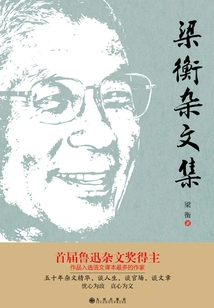
Liang Heng's Essay Collection
Literature梁衡杂文集
Liang Heng
This book is the essence of Liang Heng's fifty years of essays. It is divided into six parts: "life, officialdom, knowledge, articles, art, and society." No matter how broad and complex it is, it will eventually be harvested, all put into the furnace of thought, and carefully refined. Shoot a beam of red light to illuminate narrow gaps and dark corners that ordinary people don't notice; wave a sharp sword to lift veils and coverings. Collect thousands of things on the paper, condense a thought on the tip of the pen, and feel as if you are watching a fire, which is deafening and enlightening. Some are worried about the country and the people, or are sad about the times, trying to strengthen the righteousness and eliminate the evil, and explore the subtleties to understand. This book is not only suitable for literature lovers to read, but also a guide for college and middle school students to improve their literary literacy and writing skills.
This book is the essence of Liang Heng's fifty years of essays. It is divided into six parts: "life, officialdom, knowledge, articles, art, and society." No matter how broad and complex it is, it will eventually be harvested, all put into the furnace of thought, and carefully refined. Shoot a beam of red light to illuminate narrow gaps and dark corners that ordinary people don't notice; wave a sharp sword to lift veils and coverings. Collect thousands of things on the paper, condense a thought on the tip of the pen, and feel as if you are watching a fire, which is deafening and enlightening. Some are worried about the country and the people, or are sad about the times, trying to strengthen the righteousness and eliminate the evil, and explore the subtleties to understand. This book is not only suitable for literature lovers to read, but also a guide for college and middle school students to improve their literary literacy and writing skills.
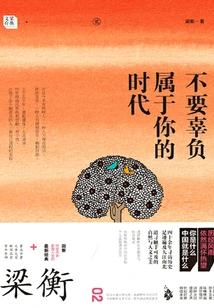
Don't Let Down Your Time
Literature不要辜负属于你的时代
Liang Heng
This book is the second volume of Mr. Liang Heng's first collection of "Liang Heng Wen Cun", which contains more than 80 of the author's latest creations and classic political essays. It contains the essence of the author's thinking on the politics, culture, and society of the country and the times over the years. The content is in-depth and comprehensive. There are judgments on macro-political phenomena, such as "What is Politics" and "Why is it So Difficult to Seek Truth from Facts", etc., Which talk about how officials can improve their political literacy, "I feel that cadres can't speak", "Officials do not interfere with the people's self-enrichment", etc., As well as analyzes of major social events. "Fake Milk Powder Tortures True Morality" and "Earthquakes Teach Us How to Speak", etc. There are also many essential chapters that discuss social and cultural phenomena, explore reading and being a human being, and understand life. The profound insights, far-reaching vision, and quintessential writing style make you unable to put it down after reading.
This book is the second volume of Mr. Liang Heng's first collection of "Liang Heng Wen Cun", which contains more than 80 of the author's latest creations and classic political essays. It contains the essence of the author's thinking on the politics, culture, and society of the country and the times over the years. The content is in-depth and comprehensive. There are judgments on macro-political phenomena, such as "What is Politics" and "Why is it So Difficult to Seek Truth from Facts", etc., Which talk about how officials can improve their political literacy, "I feel that cadres can't speak", "Officials do not interfere with the people's self-enrichment", etc., As well as analyzes of major social events. "Fake Milk Powder Tortures True Morality" and "Earthquakes Teach Us How to Speak", etc. There are also many essential chapters that discuss social and cultural phenomena, explore reading and being a human being, and understand life. The profound insights, far-reaching vision, and quintessential writing style make you unable to put it down after reading.
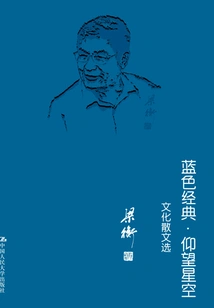
蓝色经典·仰望星空:文化散文选
Liang Heng
What is a classic? Constant recitation is a sutra, and constants are a code. Classics can withstand repetition. Often thought of, never forgotten. According to my understanding of classics, when writing, I always try to choose those immortal people, things, scenes, feelings, and principles. The time span of "Red Classic: Traces of the Moon" is nearly a hundred years, and it praises those who have made sacrifices and contributions to the Chinese revolution and construction. They are immortal; the time span of "Blue Classic: Looking Up at the Stars" is thousands of years, and it describes a large number of people who have made contributions to Chinese and world culture. Cultural celebrities and classic masterpieces, they (they) have retreated into history and become stars in the deep blue starry sky; "Green Classic Famous Mountains and Rivers" spans tens of thousands of years and describes the famous mountains and beautiful waters of the motherland. They have been recited by countless people throughout the ages. It is hoped that these classics salvaged from the past years can arouse readers' interest and thereby enjoy the beauty of literature.
What is a classic? Constant recitation is a sutra, and constants are a code. Classics can withstand repetition. Often thought of, never forgotten. According to my understanding of classics, when writing, I always try to choose those immortal people, things, scenes, feelings, and principles. The time span of "Red Classic: Traces of the Moon" is nearly a hundred years, and it praises those who have made sacrifices and contributions to the Chinese revolution and construction. They are immortal; the time span of "Blue Classic: Looking Up at the Stars" is thousands of years, and it describes a large number of people who have made contributions to Chinese and world culture. Cultural celebrities and classic masterpieces, they (they) have retreated into history and become stars in the deep blue starry sky; "Green Classic Famous Mountains and Rivers" spans tens of thousands of years and describes the famous mountains and beautiful waters of the motherland. They have been recited by countless people throughout the ages. It is hoped that these classics salvaged from the past years can arouse readers' interest and thereby enjoy the beauty of literature.
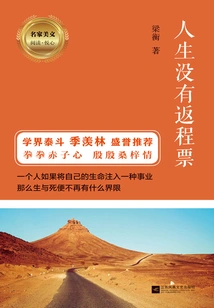
There is No Return Ticket in Life
Literature人生没有返程票
Liang Heng
Liang Heng is a famous essayist, and his prose has influenced generations of young people. This book is a collection of the essence of Liang Heng's fifty years of prose creation. "Landscapes Have Great Beauty" contains the essence of Liang Heng's travel prose, including famous works such as "Hukou Waterfall"; "Photographing the Railings" covers the millennium of cold and heat, and the rise and fall of the human world. What you see with your eyes can be put into paper. Landscapes and figures are all indisputable. This book is suitable for all literature lovers to read.
Liang Heng is a famous essayist, and his prose has influenced generations of young people. This book is a collection of the essence of Liang Heng's fifty years of prose creation. "Landscapes Have Great Beauty" contains the essence of Liang Heng's travel prose, including famous works such as "Hukou Waterfall"; "Photographing the Railings" covers the millennium of cold and heat, and the rise and fall of the human world. What you see with your eyes can be put into paper. Landscapes and figures are all indisputable. This book is suitable for all literature lovers to read.
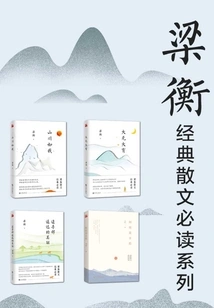
梁衡经典散文必读系列(共4册)
Liang Heng
Liang Heng is unique in literary creation, and most of his works have broad visions and are full of majestic momentum. The work integrates "big events, big feelings, and big principles", has a strong sense of reality and the flavor of the times, and shows the charm of great prose. This set is a collection of Liang Heng's prose collection, including four volumes: "Mountains and Rivers Are Like Me", "The Great and the Great", "Chasing the Distant Beauty" and "Where is Nostalgia".
Liang Heng is unique in literary creation, and most of his works have broad visions and are full of majestic momentum. The work integrates "big events, big feelings, and big principles", has a strong sense of reality and the flavor of the times, and shows the charm of great prose. This set is a collection of Liang Heng's prose collection, including four volumes: "Mountains and Rivers Are Like Me", "The Great and the Great", "Chasing the Distant Beauty" and "Where is Nostalgia".
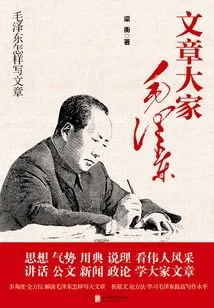
How Mao Zedong Wrote Articles
Literature毛泽东怎样写文章
Liang Heng
Mao Zedong said that revolution relies on the barrel of a gun and a pen to seize power. He himself has never held a gun, but he has always kept the pen in his hands. Mao Wen is unprecedented. There was nothing before him, and there will never be anything after him. The era in which Mao's article was written has passed, and the tasks it guided at that time have long been completed. But why do people still read and use it? Do you think of it whenever something happens? This is the meaning of classics. It has long lost its physical shell and risen to the height of reason, becoming a star that will always hang in the sky and enlighten us all the time. The famous writer Liang Heng devoted himself to the study of Mao Zedong's writing style. He analyzed the uniqueness of Mao Zedong's writings from the aspects of article form, writing method and rhetorical techniques. He pioneered the study of Mao Zedong's writing methods and attracted widespread attention and great repercussions in the country. This book collects his research results and adds the author's articles about Mao Zedong and the author's articles on writing research.
Mao Zedong said that revolution relies on the barrel of a gun and a pen to seize power. He himself has never held a gun, but he has always kept the pen in his hands. Mao Wen is unprecedented. There was nothing before him, and there will never be anything after him. The era in which Mao's article was written has passed, and the tasks it guided at that time have long been completed. But why do people still read and use it? Do you think of it whenever something happens? This is the meaning of classics. It has long lost its physical shell and risen to the height of reason, becoming a star that will always hang in the sky and enlighten us all the time. The famous writer Liang Heng devoted himself to the study of Mao Zedong's writing style. He analyzed the uniqueness of Mao Zedong's writings from the aspects of article form, writing method and rhetorical techniques. He pioneered the study of Mao Zedong's writing methods and attracted widespread attention and great repercussions in the country. This book collects his research results and adds the author's articles about Mao Zedong and the author's articles on writing research.
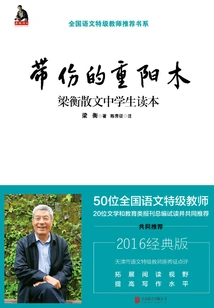
Wounded Chongyang Wood
Literature带伤的重阳木
Liang Heng
Seven years ago, Liang Heng published a book for middle school students, "Photographing the Railings All Over," which featured more than 20 of Liang Heng's essays and was reviewed by a special-grade Chinese language teacher. It became a bestseller as soon as it was published, with sales of around 100,000 copies every year. This book is the third volume in the book series. It selects more than 20 essays and commentaries by Liang Heng and is commented by Chen Xiuzheng, a special grade teacher of Chinese language in Tianjin.
Seven years ago, Liang Heng published a book for middle school students, "Photographing the Railings All Over," which featured more than 20 of Liang Heng's essays and was reviewed by a special-grade Chinese language teacher. It became a bestseller as soon as it was published, with sales of around 100,000 copies every year. This book is the third volume in the book series. It selects more than 20 essays and commentaries by Liang Heng and is commented by Chen Xiuzheng, a special grade teacher of Chinese language in Tianjin.
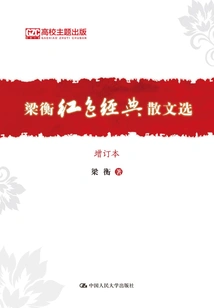
梁衡红色经典散文选(增订本)
Liang Heng
This is a collection of essays mainly about political figures. The whole book uses characters as the thread to outline the context of China's social progress in the past century, vividly showing the images of great men such as Mao Zedong, Zhou Enlai, and Deng Xiaoping. This book mostly writes about big events, big feelings and big principles. It draws on a wide range of materials, has lofty intentions and a grand artistic conception. It not only reviews some great figures of the past and present, such as Lin Zexu, Mao Zedong, Zhou Enlai, Peng Dehuai, Deng Xiaoping, and Zhang Wentian, but also explains more fresh and profound truths from their familiar events, which is refreshing for readers; there are also a large number of chapters that write biographies for workers and make names for the unknown, such as the old man Sang who complained to the end, and Mr. Jia who taught on a Tukang for decades. Some of the essays included in the book are old works, such as "There is no big thing but Zhou Enlai" and "Looking for a ferry, looking for a ferry, where to cross". Considering their existing social influence and historical integrity, they are still retained. In addition, some new works are included, such as "Eternal Search", "Zhou Enlai's Moral Laws", "How can enjoyment be a title", etc.
This is a collection of essays mainly about political figures. The whole book uses characters as the thread to outline the context of China's social progress in the past century, vividly showing the images of great men such as Mao Zedong, Zhou Enlai, and Deng Xiaoping. This book mostly writes about big events, big feelings and big principles. It draws on a wide range of materials, has lofty intentions and a grand artistic conception. It not only reviews some great figures of the past and present, such as Lin Zexu, Mao Zedong, Zhou Enlai, Peng Dehuai, Deng Xiaoping, and Zhang Wentian, but also explains more fresh and profound truths from their familiar events, which is refreshing for readers; there are also a large number of chapters that write biographies for workers and make names for the unknown, such as the old man Sang who complained to the end, and Mr. Jia who taught on a Tukang for decades. Some of the essays included in the book are old works, such as "There is no big thing but Zhou Enlai" and "Looking for a ferry, looking for a ferry, where to cross". Considering their existing social influence and historical integrity, they are still retained. In addition, some new works are included, such as "Eternal Search", "Zhou Enlai's Moral Laws", "How can enjoyment be a title", etc.
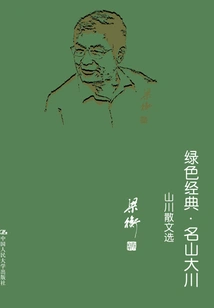
绿色经典·名山大川:山水散文选
Liang Heng
What is a classic? Constant recitation is a sutra, and constants are a code. Classics can withstand repetition. Often thought of, never forgotten. According to my understanding of classics, when writing, I always try to choose those immortal people, things, scenes, feelings, and principles. The time span of "Red Classic: Traces of the Moon" is nearly a hundred years, and it praises those who have made sacrifices and contributions to the Chinese revolution and construction. They are immortal; the time span of "Blue Classic: Looking Up at the Stars" is thousands of years, and it describes a large number of people who have made contributions to Chinese and world culture. Cultural celebrities and classic masterpieces, they (they) have retreated into history and become stars in the deep blue starry sky; "Green Classic Famous Mountains and Rivers" spans tens of thousands of years and describes the famous mountains and beautiful waters of the motherland. They have been recited by countless people throughout the ages. It is hoped that these classics salvaged from the past years can arouse readers' interest and thereby enjoy the beauty of literature.
What is a classic? Constant recitation is a sutra, and constants are a code. Classics can withstand repetition. Often thought of, never forgotten. According to my understanding of classics, when writing, I always try to choose those immortal people, things, scenes, feelings, and principles. The time span of "Red Classic: Traces of the Moon" is nearly a hundred years, and it praises those who have made sacrifices and contributions to the Chinese revolution and construction. They are immortal; the time span of "Blue Classic: Looking Up at the Stars" is thousands of years, and it describes a large number of people who have made contributions to Chinese and world culture. Cultural celebrities and classic masterpieces, they (they) have retreated into history and become stars in the deep blue starry sky; "Green Classic Famous Mountains and Rivers" spans tens of thousands of years and describes the famous mountains and beautiful waters of the motherland. They have been recited by countless people throughout the ages. It is hoped that these classics salvaged from the past years can arouse readers' interest and thereby enjoy the beauty of literature.
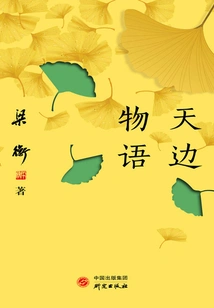
Stories from the Horizon
Literature天边物语
Liang Heng
This is a collection of "note-style" works created by the author with an aesthetic heart. The author captured and discovered all kinds of beautiful things in life during his travels throughout the motherland, and expressed his innocence and innocence with sophisticated writing. Each text is accompanied by exquisite pictures, which complement each other and are beautiful.
This is a collection of "note-style" works created by the author with an aesthetic heart. The author captured and discovered all kinds of beautiful things in life during his travels throughout the motherland, and expressed his innocence and innocence with sophisticated writing. Each text is accompanied by exquisite pictures, which complement each other and are beautiful.
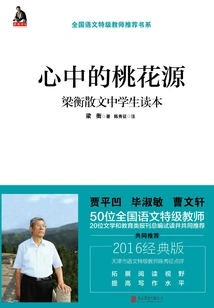
Peach Blossom Land in Heart
Literature心中的桃花源
Liang Heng
Seven years ago, Liang Heng published a book for middle school students, "Photographing the Railings All Over," which featured more than 20 of Liang Heng's essays and was reviewed by a special-grade Chinese language teacher. It became a bestseller as soon as it was published, with sales of around 100,000 copies every year. This book is the second volume in the book series. It selects more than 20 essays and commentaries by Liang Heng and is commented by Chen Xiuzheng, a special grade teacher of Chinese language in Tianjin.
Seven years ago, Liang Heng published a book for middle school students, "Photographing the Railings All Over," which featured more than 20 of Liang Heng's essays and was reviewed by a special-grade Chinese language teacher. It became a bestseller as soon as it was published, with sales of around 100,000 copies every year. This book is the second volume in the book series. It selects more than 20 essays and commentaries by Liang Heng and is commented by Chen Xiuzheng, a special grade teacher of Chinese language in Tianjin.
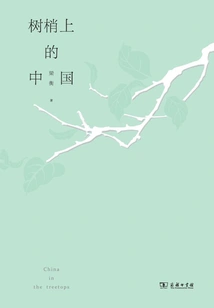
China on the Treetops
Literature树梢上的中国
Liang Heng
"China on the Treetops" is a collection of essays written by Mr. Liang Heng after traveling across mountains and rivers to search for ancient cultural trees. The book records the historical rise and fall of many ancient trees in China, integrating the author's concept of "humanistic forest" and conveying the author's humanistic thinking of advocating green civilization. This book is a newly updated version of the 2018 first edition of "China in the Treetops". It is Liang Heng's last work with the theme of ancient trees. On the basis of revising the original work, the author has added 9 new works, including "Jidu Temple Cypress", "Strong Trees on the Huirao Ancient Road" and "Xu Xiake's Jungle", continuing the first edition's theme of using ancient trees to witness history and conveying the humanistic spirit of green civilization.
"China on the Treetops" is a collection of essays written by Mr. Liang Heng after traveling across mountains and rivers to search for ancient cultural trees. The book records the historical rise and fall of many ancient trees in China, integrating the author's concept of "humanistic forest" and conveying the author's humanistic thinking of advocating green civilization. This book is a newly updated version of the 2018 first edition of "China in the Treetops". It is Liang Heng's last work with the theme of ancient trees. On the basis of revising the original work, the author has added 9 new works, including "Jidu Temple Cypress", "Strong Trees on the Huirao Ancient Road" and "Xu Xiake's Jungle", continuing the first edition's theme of using ancient trees to witness history and conveying the humanistic spirit of green civilization.
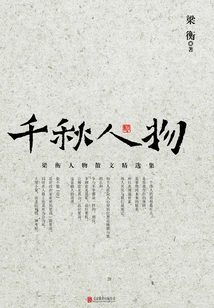
A Thousand Years of Characters
Literature千秋人物
Liang Heng
This book selects 50 of Liang Heng's latest character essays, including comments, insights and thoughts on celebrities such as Mao Zedong, Zhou Enlai, Peng Dehuai, Zhang Wentian, Qu Qiubai, Fang Zhimin, Deng Xiaoping, Zhuge Liang, Tao Yuanming, Han Yu, Fan Zhongyan, Wen Tianxiang, Liu Yong, Li Qingzhao, Lin Zexu, Wang Luobin, Ji Xianlin, Zhao Puchu, Wu Wenji and other celebrities. Mr. Liang Heng tells us a lot of unknown history, coupled with his unique and sharp comments, the writing is flowing, the text is beautiful, and he abandons the dullness of other history books. It can be read by both history majors and non-history majors. It is suitable for all ages and will benefit a lot. The book is arranged with pictures and text, which increases the beauty of the text and makes it easy to read.
This book selects 50 of Liang Heng's latest character essays, including comments, insights and thoughts on celebrities such as Mao Zedong, Zhou Enlai, Peng Dehuai, Zhang Wentian, Qu Qiubai, Fang Zhimin, Deng Xiaoping, Zhuge Liang, Tao Yuanming, Han Yu, Fan Zhongyan, Wen Tianxiang, Liu Yong, Li Qingzhao, Lin Zexu, Wang Luobin, Ji Xianlin, Zhao Puchu, Wu Wenji and other celebrities. Mr. Liang Heng tells us a lot of unknown history, coupled with his unique and sharp comments, the writing is flowing, the text is beautiful, and he abandons the dullness of other history books. It can be read by both history majors and non-history majors. It is suitable for all ages and will benefit a lot. The book is arranged with pictures and text, which increases the beauty of the text and makes it easy to read.