Library
Browse and search books
5 novels found
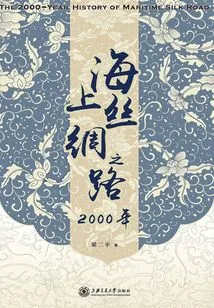
Maritime Silk Road 2000
History海上丝绸之路2000年
Liang Erping
In 2013, the Party Central Committee led by General Secretary Xi Jinping proposed the strategic concept of building a "New Silk Road Economic Belt" and a "21st Century Maritime Silk Road" (referred to as "One Belt, One Road"). It is against this background that the ancient "Maritime Silk Road" has become a hot topic of concern. The ancient "Maritime Silk Road" emerged in the period of Emperor Wu of the Western Han Dynasty, developed from the Three Kingdoms to the Northern and Southern Dynasties, peaked in the Tang and Song Dynasties, degenerated in the Ming Dynasty, and reversed in the late Qing Dynasty... This book follows the historical trails paved by ancient documents, ancient tombs, ancient paintings, ancient ships, and ancient relics, and strives to master the "first-hand information" of the ancient "Maritime Silk Road" and enter the "first-hand information" of the ancient "Maritime Silk Road". "One Site", more use of archaeological evidence to explore the historical truth, and explain this long and complicated history of maritime exchanges with both text and pictures... "Maritime Silk Road 2000" helps people understand China's ancient "Maritime Silk Road". With this understanding, people will know that today's construction of the "21st Century Maritime Silk Road" is by no means a simple repetition or simple inheritance of the ancient "Maritime Silk Road". The New Silk Road is not only an initiative to weave a network of economic cooperation, but also the formulation of economic rules for the new century. It is also a new layout that takes the initiative on the international political and cultural stage.
In 2013, the Party Central Committee led by General Secretary Xi Jinping proposed the strategic concept of building a "New Silk Road Economic Belt" and a "21st Century Maritime Silk Road" (referred to as "One Belt, One Road"). It is against this background that the ancient "Maritime Silk Road" has become a hot topic of concern. The ancient "Maritime Silk Road" emerged in the period of Emperor Wu of the Western Han Dynasty, developed from the Three Kingdoms to the Northern and Southern Dynasties, peaked in the Tang and Song Dynasties, degenerated in the Ming Dynasty, and reversed in the late Qing Dynasty... This book follows the historical trails paved by ancient documents, ancient tombs, ancient paintings, ancient ships, and ancient relics, and strives to master the "first-hand information" of the ancient "Maritime Silk Road" and enter the "first-hand information" of the ancient "Maritime Silk Road". "One Site", more use of archaeological evidence to explore the historical truth, and explain this long and complicated history of maritime exchanges with both text and pictures... "Maritime Silk Road 2000" helps people understand China's ancient "Maritime Silk Road". With this understanding, people will know that today's construction of the "21st Century Maritime Silk Road" is by no means a simple repetition or simple inheritance of the ancient "Maritime Silk Road". The New Silk Road is not only an initiative to weave a network of economic cooperation, but also the formulation of economic rules for the new century. It is also a new layout that takes the initiative on the international political and cultural stage.
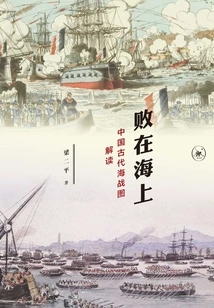
败在海上:中国古代海战图解读
Liang Erping
This book contains more than 160 pictures of naval battles that took place along the coast of China from ancient times to modern times. Some of these pictures were drawn by Chinese and some by foreigners. They vividly record China's wars with other countries at sea from different angles: some offensive (Yuan-ri naval battle) and defensive (Qing-ying naval battle, Qing-Fa naval battle, Qing-ri naval battle). In the outcome of these naval battles, China sometimes won, but more often suffered miserable defeats. By examining these naval battle pictures and the history behind them, the author reflects on why China suffered successive defeats in naval battles. From ancient times to modern times, why was China "defeated at sea"? This book cannot give a standard answer, but it can at least provide some reference for finding out the reasons why China is lagging behind and being beaten.
This book contains more than 160 pictures of naval battles that took place along the coast of China from ancient times to modern times. Some of these pictures were drawn by Chinese and some by foreigners. They vividly record China's wars with other countries at sea from different angles: some offensive (Yuan-ri naval battle) and defensive (Qing-ying naval battle, Qing-Fa naval battle, Qing-ri naval battle). In the outcome of these naval battles, China sometimes won, but more often suffered miserable defeats. By examining these naval battle pictures and the history behind them, the author reflects on why China suffered successive defeats in naval battles. From ancient times to modern times, why was China "defeated at sea"? This book cannot give a standard answer, but it can at least provide some reference for finding out the reasons why China is lagging behind and being beaten.
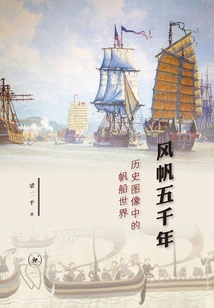
风帆五千年:历史图像中的帆船世界
Liang Erping
As an ancient water vehicle, sailing boats have witnessed people's struggle to "discover" the ocean and conquer nature. "Smooth sailing" expresses people's simplest wishes for thousands of years, and also proves the unruly nature of the ocean. The birth of sailing boats promoted the ocean to become an important stage for human activities. It can be said that sailing ships opened the maritime age of mankind and wrote the history of mankind. Five thousand years of sailing history tells the story of people and sailing ships on the ocean.
As an ancient water vehicle, sailing boats have witnessed people's struggle to "discover" the ocean and conquer nature. "Smooth sailing" expresses people's simplest wishes for thousands of years, and also proves the unruly nature of the ocean. The birth of sailing boats promoted the ocean to become an important stage for human activities. It can be said that sailing ships opened the maritime age of mankind and wrote the history of mankind. Five thousand years of sailing history tells the story of people and sailing ships on the ocean.
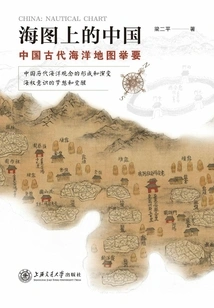
China on the Sea Map
History海图上的中国
Liang Erping
In ancient Chinese geographical knowledge, the sea has been marginalized for a long time. There were not many ancient ocean maps, and even fewer have been handed down after wars. In addition, the academic community has rarely invested in research in this field, and ordinary readers cannot even see photocopied ancient ocean charts. The author of this book collects and organizes ancient ocean maps from ancient atlases with limited circulation and overseas libraries in the hands of private collectors, and introduces them to everyone one by one with their origins, stories behind them, and the formation of ancient Chinese maritime thought. Through more than a hundred precious ancient nautical charts, it describes the historical process of ancient China's maritime exchanges, as well as the great discoveries and changes brought about by the great voyages, thereby constructing a simplified version of the history of ancient Chinese nautical charts and the history of ancient Chinese maritime thought.
In ancient Chinese geographical knowledge, the sea has been marginalized for a long time. There were not many ancient ocean maps, and even fewer have been handed down after wars. In addition, the academic community has rarely invested in research in this field, and ordinary readers cannot even see photocopied ancient ocean charts. The author of this book collects and organizes ancient ocean maps from ancient atlases with limited circulation and overseas libraries in the hands of private collectors, and introduces them to everyone one by one with their origins, stories behind them, and the formation of ancient Chinese maritime thought. Through more than a hundred precious ancient nautical charts, it describes the historical process of ancient China's maritime exchanges, as well as the great discoveries and changes brought about by the great voyages, thereby constructing a simplified version of the history of ancient Chinese nautical charts and the history of ancient Chinese maritime thought.
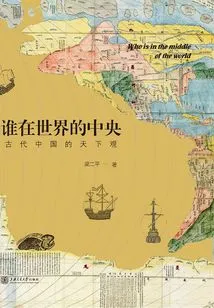
谁在世界的中央:古代中国的天下观
Liang Erping
"Who is at the Center of the World: Ancient China's View of the World" is a popular history book that tells how ancient Chinese ancestors viewed the world and formed a "view of the world" centered on China. The author focuses on ancient Chinese people's understanding of the world and the initial globalization process. In addition, it also analyzes the directional words in ancient Chinese characters, ancient natural meanings, the formation of the early Fang Kingdom, the later unification of the world, as well as transportation crossing and military defense lines... It tells the cultural origin of ancient China's view of the world; through the historical evolution from "the king in the world" to "the entry of Western missionaries into China", it depicts China and the world Through active and passive contact, we analyze the feudal dynasty's "shut down" response at the juncture of history, and the later "physical and practical" strategy of "learning from the barbarians to control the barbarians"; it shows the historical context of China being dragged step by step into the sad situation of being beaten, ceded territory, and paying reparations due to its misunderstanding of itself and its misjudgment of the world. From the perspective of human geography and in the form of cultural essays, this book integrates cultural reflection into the process of popularizing knowledge. It is actually a unique history of the growth of ancient China.
"Who is at the Center of the World: Ancient China's View of the World" is a popular history book that tells how ancient Chinese ancestors viewed the world and formed a "view of the world" centered on China. The author focuses on ancient Chinese people's understanding of the world and the initial globalization process. In addition, it also analyzes the directional words in ancient Chinese characters, ancient natural meanings, the formation of the early Fang Kingdom, the later unification of the world, as well as transportation crossing and military defense lines... It tells the cultural origin of ancient China's view of the world; through the historical evolution from "the king in the world" to "the entry of Western missionaries into China", it depicts China and the world Through active and passive contact, we analyze the feudal dynasty's "shut down" response at the juncture of history, and the later "physical and practical" strategy of "learning from the barbarians to control the barbarians"; it shows the historical context of China being dragged step by step into the sad situation of being beaten, ceded territory, and paying reparations due to its misunderstanding of itself and its misjudgment of the world. From the perspective of human geography and in the form of cultural essays, this book integrates cultural reflection into the process of popularizing knowledge. It is actually a unique history of the growth of ancient China.