Library
Browse and search books
1 novel found
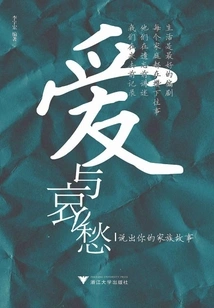
爱与哀愁:说出你的家族故事
Li Yuhong
This is China's first oral family history. It comes from a famous documentary with high sociological value and attracting more and more public attention: "Family Seal - Family Album". This series is a documentary project initiated by the City University of Hong Kong. It started in 2013 and aims to produce the stories of 100 ordinary families. Currently, 58 episodes have been completed, with more than 70 authors, and it is still being continued today. At the internal public screening, these documentaries brought many teachers and classmates to tears. Most of these 58 episodes tell stories about their grandparents, parents, and mothers. They are ordinary people and strangers that students are familiar with. In order to complete the family photo album, they returned to strange relatives and tried to understand their past. Here are a few examples briefly - "Dongyan Qiaotou 60-2" by Zhou Fengting, which later won many awards, records how her grandmother, a 91-year-old mother-in-law from the countryside of Zhejiang, supported her family in troubled times by running an independent gang. However, her contribution was not known to her descendants. It was not until Zhou returned to her strange grandmother, went to church with her, and chatted with her that she slowly began to understand how much she respected this grandmother. Chen Meng's work "Amnesia" tells the story of how her nearly 90-year-old grandparents slowly bid farewell to their glorious past and entered a life of amnesia in old age in their twilight years. This short film has no specific historical background, and even ignores the larger historical background, because the old couple, who both worked in the army, lived through the Cultural Revolution and the most turbulent years without any danger. However, the author captures the details of a pair of elderly people's lives and expresses the problems faced by the elderly society in a touching way. And the young people born in the 1990s participated in the creation. Among the 21 short films they have produced, 10 have chosen to film their parents, and the other 11 are stories about their ancestors. Their stories seem to be far away from the heavy history of the Three Antis, Five Antis, and the Cultural Revolution, but most of their parents were born in the 1960s. Their stories are actually about the history of the thirty years after the reform and opening up, and describe the changes in ordinary Chinese families over the years. The most striking feature of students born in the 1990s is that they have more desire to express themselves and have no more historical burdens. They are very concerned about their identity authentication and are not worried about exposing their family scandals. For example, many students come from divorced or single-parent families. Instead of avoiding these family problems, they are willing to use the opportunity of filming to get to the bottom of things. Among the 21 short films produced in 2015, one is "Neai". This classmate is a Chinese immigrant who immigrated to New Zealand at the age of 13. He graduated from a university in New Zealand and came to Hong Kong to study for a master's degree. If she wasn't involved in the project, she would look like a carefree girl from a good family. However, because of this project, I learned that her parents were divorced when she was young, and she didn't meet her long-lost and successful father until junior high school, and was sent to New Zealand to study by her father. However, the bad blood between father and daughter has formed for many years. The daughter has always wanted to uncover this mystery and chose to photograph her father. After many exchanges and even arguments, father and daughter reached an understanding. The sociological significance behind this film is that during the more than thirty years of reform and opening up, the success of many people was based on the sacrifice of their families. Family members, especially children who lack but crave parental care and attention when they grow up, become the source of all their anger and depression when they grow up. This book retains the oral style of these stories, systematically sorts them out, and provides them with the creators' unique and honest creative notes. The whole article is written in colloquial language, which is smooth and clear, and has high sociological value, psychological value and emotional impact. If this book can be successfully published, it will be an innovation of similar subject matter. The promotion of this book and the echo of the documentary can form a resonance, expand the radius of influence, and reduce the pressure of book marketing. The basic conditions for launching in series are met. Sign digital rights at the same time.
This is China's first oral family history. It comes from a famous documentary with high sociological value and attracting more and more public attention: "Family Seal - Family Album". This series is a documentary project initiated by the City University of Hong Kong. It started in 2013 and aims to produce the stories of 100 ordinary families. Currently, 58 episodes have been completed, with more than 70 authors, and it is still being continued today. At the internal public screening, these documentaries brought many teachers and classmates to tears. Most of these 58 episodes tell stories about their grandparents, parents, and mothers. They are ordinary people and strangers that students are familiar with. In order to complete the family photo album, they returned to strange relatives and tried to understand their past. Here are a few examples briefly - "Dongyan Qiaotou 60-2" by Zhou Fengting, which later won many awards, records how her grandmother, a 91-year-old mother-in-law from the countryside of Zhejiang, supported her family in troubled times by running an independent gang. However, her contribution was not known to her descendants. It was not until Zhou returned to her strange grandmother, went to church with her, and chatted with her that she slowly began to understand how much she respected this grandmother. Chen Meng's work "Amnesia" tells the story of how her nearly 90-year-old grandparents slowly bid farewell to their glorious past and entered a life of amnesia in old age in their twilight years. This short film has no specific historical background, and even ignores the larger historical background, because the old couple, who both worked in the army, lived through the Cultural Revolution and the most turbulent years without any danger. However, the author captures the details of a pair of elderly people's lives and expresses the problems faced by the elderly society in a touching way. And the young people born in the 1990s participated in the creation. Among the 21 short films they have produced, 10 have chosen to film their parents, and the other 11 are stories about their ancestors. Their stories seem to be far away from the heavy history of the Three Antis, Five Antis, and the Cultural Revolution, but most of their parents were born in the 1960s. Their stories are actually about the history of the thirty years after the reform and opening up, and describe the changes in ordinary Chinese families over the years. The most striking feature of students born in the 1990s is that they have more desire to express themselves and have no more historical burdens. They are very concerned about their identity authentication and are not worried about exposing their family scandals. For example, many students come from divorced or single-parent families. Instead of avoiding these family problems, they are willing to use the opportunity of filming to get to the bottom of things. Among the 21 short films produced in 2015, one is "Neai". This classmate is a Chinese immigrant who immigrated to New Zealand at the age of 13. He graduated from a university in New Zealand and came to Hong Kong to study for a master's degree. If she wasn't involved in the project, she would look like a carefree girl from a good family. However, because of this project, I learned that her parents were divorced when she was young, and she didn't meet her long-lost and successful father until junior high school, and was sent to New Zealand to study by her father. However, the bad blood between father and daughter has formed for many years. The daughter has always wanted to uncover this mystery and chose to photograph her father. After many exchanges and even arguments, father and daughter reached an understanding. The sociological significance behind this film is that during the more than thirty years of reform and opening up, the success of many people was based on the sacrifice of their families. Family members, especially children who lack but crave parental care and attention when they grow up, become the source of all their anger and depression when they grow up. This book retains the oral style of these stories, systematically sorts them out, and provides them with the creators' unique and honest creative notes. The whole article is written in colloquial language, which is smooth and clear, and has high sociological value, psychological value and emotional impact. If this book can be successfully published, it will be an innovation of similar subject matter. The promotion of this book and the echo of the documentary can form a resonance, expand the radius of influence, and reduce the pressure of book marketing. The basic conditions for launching in series are met. Sign digital rights at the same time.