Library
Browse and search books
1 novel found
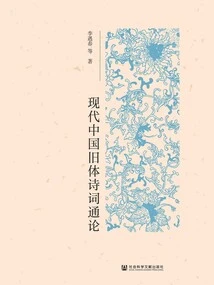
现代中国旧体诗词通论
Li Yuchun Et Al.
This book is a phased result of the National Social Science Foundation's major project "Compilation and Research of the Multi-Volume Chronicle of Modern and Contemporary Chinese Old Style Poetry and Database Construction" (18ZDA263). This book explores the basic issues in the creation and research of modern Chinese old-style poetry in the past century from the perspective of the old-new debate. Although it is directly related to the dispute between the old and the new in the cultural sense, returning to the literary and stylistic sense to explore the dispute between the old and the new is the starting point of this book. In the academic order of century-old Chinese literature centered on New Literature, national traditional old-style literature, including old-style poetry, has long been ignored or devalued. However, in fact, although the century-old Chinese traditional poetry has gone through many battles between the old and the new, such as the May Fourth period, the Anti-Japanese War, etc., It still tenaciously continues the modern lifeline of the long Chinese classical poetry tradition. Compared with the century-old Chinese new poetry creation, the century-old Chinese old-style poetry creation has not only achieved comparable historical achievements as a whole, but in specific historical periods, it may be slightly less popular, or keep pace with it, or even be even more popular. The stylistic destiny of century-old Chinese poetry is related to the current literary education system and media communication methods. There is a voluminous collection of modern Chinese old-style poetry documents. With the large-scale excavation and compilation of century-old old-style documents in the new century, the other side of modern Chinese literary history is increasingly revealed like an iceberg under the sea. Only by breaking through the existing academic mindset of binary opposition between old and new can we objectively explore the creative achievements of old-style poetry by different groups of poets in specific historical periods in the past century, thereby vigorously promoting the canonization process of modern Chinese old-style poetry and welcoming the stylistic renaissance of Chinese poetry tradition in the new century.
This book is a phased result of the National Social Science Foundation's major project "Compilation and Research of the Multi-Volume Chronicle of Modern and Contemporary Chinese Old Style Poetry and Database Construction" (18ZDA263). This book explores the basic issues in the creation and research of modern Chinese old-style poetry in the past century from the perspective of the old-new debate. Although it is directly related to the dispute between the old and the new in the cultural sense, returning to the literary and stylistic sense to explore the dispute between the old and the new is the starting point of this book. In the academic order of century-old Chinese literature centered on New Literature, national traditional old-style literature, including old-style poetry, has long been ignored or devalued. However, in fact, although the century-old Chinese traditional poetry has gone through many battles between the old and the new, such as the May Fourth period, the Anti-Japanese War, etc., It still tenaciously continues the modern lifeline of the long Chinese classical poetry tradition. Compared with the century-old Chinese new poetry creation, the century-old Chinese old-style poetry creation has not only achieved comparable historical achievements as a whole, but in specific historical periods, it may be slightly less popular, or keep pace with it, or even be even more popular. The stylistic destiny of century-old Chinese poetry is related to the current literary education system and media communication methods. There is a voluminous collection of modern Chinese old-style poetry documents. With the large-scale excavation and compilation of century-old old-style documents in the new century, the other side of modern Chinese literary history is increasingly revealed like an iceberg under the sea. Only by breaking through the existing academic mindset of binary opposition between old and new can we objectively explore the creative achievements of old-style poetry by different groups of poets in specific historical periods in the past century, thereby vigorously promoting the canonization process of modern Chinese old-style poetry and welcoming the stylistic renaissance of Chinese poetry tradition in the new century.