Library
Browse and search books
7 novels found
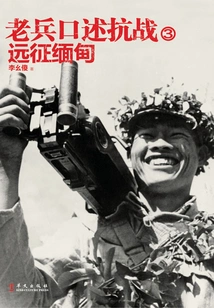
老兵口述抗战3:远征缅甸
Li Yaosha
The book "Veterans' Oral Narrations of the War of Resistance ③: Expedition to Burma" connects the process of this war through the narrations and memories of many veterans who personally visited the India-Burma battlefield. In December 1941, the Japanese army launched a sneak attack on Pearl Harbor, and then spent two months occupying a large area of Southeast Asia and cutting off the Burma Highway. The last channel connecting China to the outside world was blocked. In March 1942, China's 100,000-strong expeditionary force went abroad to fight. However, due to disjointed command and poor intelligence, the expeditionary force suffered a comprehensive defeat and had to withdraw from Myanmar. A few months later, most of the expeditionary force returned to China, and a small number withdrew to India. A year later, China reorganized its expeditionary force and divided its troops into two groups to launch a counterattack in the India-Burma battlefield. The New First Army in the northern Myanmar battlefield won consecutive victories, and the expeditionary force in the counterattack in western Yunnan also successively won victories in the Tengchong, Songshan, and Longling battles. In the end, the two Chinese expeditionary forces successfully joined forces.
The book "Veterans' Oral Narrations of the War of Resistance ③: Expedition to Burma" connects the process of this war through the narrations and memories of many veterans who personally visited the India-Burma battlefield. In December 1941, the Japanese army launched a sneak attack on Pearl Harbor, and then spent two months occupying a large area of Southeast Asia and cutting off the Burma Highway. The last channel connecting China to the outside world was blocked. In March 1942, China's 100,000-strong expeditionary force went abroad to fight. However, due to disjointed command and poor intelligence, the expeditionary force suffered a comprehensive defeat and had to withdraw from Myanmar. A few months later, most of the expeditionary force returned to China, and a small number withdrew to India. A year later, China reorganized its expeditionary force and divided its troops into two groups to launch a counterattack in the India-Burma battlefield. The New First Army in the northern Myanmar battlefield won consecutive victories, and the expeditionary force in the counterattack in western Yunnan also successively won victories in the Tengchong, Songshan, and Longling battles. In the end, the two Chinese expeditionary forces successfully joined forces.
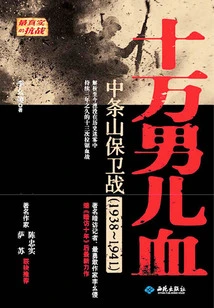
十万男儿血:中条山保卫战(1983~1941)
Li Yaosha
General Sun Weiru, Yang Hucheng's former subordinate, led the 17th Route Army in a bloody battle at Zhongtiao Mountain. The defensive battle lasted for three years and shattered the Japanese army's 13 attempts to seize northern China, suppress Luoyang, peek into Xi'an, and occupy the northwest and southwest Chongqing. Why did the Chinese army fail in the final battle of Zhongtiao Mountain? This was the longest, most extensive, and most complex battle during the Anti-Japanese War. It was also a battle in which the Kuomintang and the Communist Party joined hands to fight against the Japanese invasion. It was a battle in which the Japanese army fought for the last base of the Chinese army north of the Yellow River. It was also a battle in which the Kuomintang army learned guerrilla tactics from the Eighth Route Army. It was a battle in which the Japanese army fought hard for three years and made no progress, and had to call Zhongtiao Mountain the "cecum". It was also the battle that was most misunderstood and criticized by future generations.
General Sun Weiru, Yang Hucheng's former subordinate, led the 17th Route Army in a bloody battle at Zhongtiao Mountain. The defensive battle lasted for three years and shattered the Japanese army's 13 attempts to seize northern China, suppress Luoyang, peek into Xi'an, and occupy the northwest and southwest Chongqing. Why did the Chinese army fail in the final battle of Zhongtiao Mountain? This was the longest, most extensive, and most complex battle during the Anti-Japanese War. It was also a battle in which the Kuomintang and the Communist Party joined hands to fight against the Japanese invasion. It was a battle in which the Japanese army fought for the last base of the Chinese army north of the Yellow River. It was also a battle in which the Kuomintang army learned guerrilla tactics from the Eighth Route Army. It was a battle in which the Japanese army fought hard for three years and made no progress, and had to call Zhongtiao Mountain the "cecum". It was also the battle that was most misunderstood and criticized by future generations.
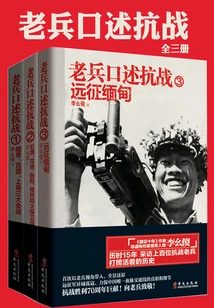
老兵口述抗战史(全3册)
Li Yaosha
The author of the first part, Li Yaosha, spent more than ten years searching for and interviewing anti-war veterans and survivors who participated in the Suizao, Hundred Regiment, and Shanggao battles, truly restoring the scenes of the three major wars, and revealing many unknown truths for the first time. The second part tells the story of the more influential defensive battles on the frontal battlefield, including the Battle of Shipai, the Battle of Changde, the Battle of Hengyang, and the Battle of Guilin. Although these defensive battles were fought fiercely and tragically, except for the battle to defend Shipai, the rest failed. The third part tells the story of the Chinese army fighting on three battlefields during the Anti-Japanese War: the battlefield behind enemy lines, the frontal battlefield, and the India-Burma battlefield. This book connects the process of this war through the narrations and memories of many veterans who personally participated in the India-Burma battlefield.
The author of the first part, Li Yaosha, spent more than ten years searching for and interviewing anti-war veterans and survivors who participated in the Suizao, Hundred Regiment, and Shanggao battles, truly restoring the scenes of the three major wars, and revealing many unknown truths for the first time. The second part tells the story of the more influential defensive battles on the frontal battlefield, including the Battle of Shipai, the Battle of Changde, the Battle of Hengyang, and the Battle of Guilin. Although these defensive battles were fought fiercely and tragically, except for the battle to defend Shipai, the rest failed. The third part tells the story of the Chinese army fighting on three battlefields during the Anti-Japanese War: the battlefield behind enemy lines, the frontal battlefield, and the India-Burma battlefield. This book connects the process of this war through the narrations and memories of many veterans who personally participated in the India-Burma battlefield.
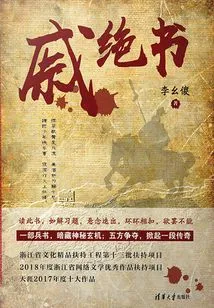
Qi Jueshu
General Fiction戚绝书
Li Yaosha
Qi Jiguang was demoted in his later years and died miserably. There are rumors in the world that before his death, he wrote a "Book of Qi Jue", in which he wrote down the terrain, defenses, fortresses, advantages and disadvantages of various places along the southeast coast. He hid this book in the mountains to wait for the enlightenment. For this book, masters from the late Ming Dynasty, Jianghu, Japan, Korea, and the late Jin Dynasty competed with each other, determined to win it. As a result, a game within a game, a plan within a plan, a case within a case, a set within a set, and scenes of great drama began... No one thought that the clues of "Qi Jueshu" were actually hidden in a hexagram: "Singing and dancing in the greenery are full of romance, and fine wine is like a knife to solve thousands of sorrows. A wasted young man is happy, and he goes to the red building late at night with the lights on." How to decipher this hexagram? Who will "Qi Jueshu" eventually belong to? The plot of this book is full of suspense and interlocking, making you want to read it.
Qi Jiguang was demoted in his later years and died miserably. There are rumors in the world that before his death, he wrote a "Book of Qi Jue", in which he wrote down the terrain, defenses, fortresses, advantages and disadvantages of various places along the southeast coast. He hid this book in the mountains to wait for the enlightenment. For this book, masters from the late Ming Dynasty, Jianghu, Japan, Korea, and the late Jin Dynasty competed with each other, determined to win it. As a result, a game within a game, a plan within a plan, a case within a case, a set within a set, and scenes of great drama began... No one thought that the clues of "Qi Jueshu" were actually hidden in a hexagram: "Singing and dancing in the greenery are full of romance, and fine wine is like a knife to solve thousands of sorrows. A wasted young man is happy, and he goes to the red building late at night with the lights on." How to decipher this hexagram? Who will "Qi Jueshu" eventually belong to? The plot of this book is full of suspense and interlocking, making you want to read it.
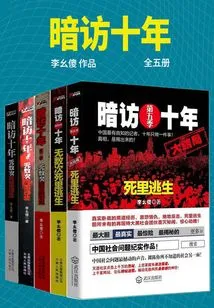
Ten Years of Secret Investigation (5 Volumes in Total)
General Fiction暗访十年(全5册)
Li Yaosha
In the community of beggars, there is a strict hierarchy. The boss has several thugs under his command. The thugs are all young men with strong bodies and strong hands among the beggars. One of their important jobs is to beat people. They will fight when they encounter people who refuse to turn in their money, people they think are disobedient, and people they dislike. In addition to prostitutes, there are all kinds of people in the rental house. Some are the husbands of prostitutes, some are the temporary boyfriends of prostitutes, some are people who protect prostitutes from behind, and some are people who rely on prostitutes for their livelihood. Above the blood slave is the blood head, and above the blood head is the blood tyrant. There are dozens of blood slaves under one blood head, and there are several blood heads under one blood tyrant. The blood heads are all local ruffians, while the blood tyrants are people with great hands and eyes, who can play both black and white.
In the community of beggars, there is a strict hierarchy. The boss has several thugs under his command. The thugs are all young men with strong bodies and strong hands among the beggars. One of their important jobs is to beat people. They will fight when they encounter people who refuse to turn in their money, people they think are disobedient, and people they dislike. In addition to prostitutes, there are all kinds of people in the rental house. Some are the husbands of prostitutes, some are the temporary boyfriends of prostitutes, some are people who protect prostitutes from behind, and some are people who rely on prostitutes for their livelihood. Above the blood slave is the blood head, and above the blood head is the blood tyrant. There are dozens of blood slaves under one blood head, and there are several blood heads under one blood tyrant. The blood heads are all local ruffians, while the blood tyrants are people with great hands and eyes, who can play both black and white.
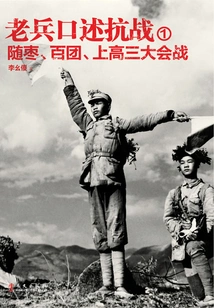
老兵口述抗战1:随枣、百团、上高三大会战
Li Yaosha
Li Yaosha, the author of "Veterans' Oral Narrations of the Anti-Japanese War①: The Three Great Battles of Suizao, Hundred Regiments, and Shanggao" has spent more than ten years searching for and interviewing veterans and survivors of the Anti-Japanese War who participated in the battles of Suizao, Hundred Regiments, and Shanggao, and truly restored the scenes of the three major wars. , Revealed for the first time many little-known truths: Zhang Zizhong was reputed as a traitor and returned to the army. The first words he said were: "I will take you to death." Then he rushed to the anti-Japanese front line non-stop, and finally died on the battlefield. In the Hundred Regiment Battle, the Eighth Route Army used a captured cannon and only 6 shells to continuously lay down more than a dozen bunkers; in order to snatch a 38-gun, several lives were sacrificed. During the Battle of Shanggao, the Kuomintang and the Communist Party worked together and killed and injured about 22,000 Japanese invaders. He Yingqin praised it as "the most exciting battle since the war began." This book is the first to describe the Anti-Japanese War from the perspective of a veteran.
Li Yaosha, the author of "Veterans' Oral Narrations of the Anti-Japanese War①: The Three Great Battles of Suizao, Hundred Regiments, and Shanggao" has spent more than ten years searching for and interviewing veterans and survivors of the Anti-Japanese War who participated in the battles of Suizao, Hundred Regiments, and Shanggao, and truly restored the scenes of the three major wars. , Revealed for the first time many little-known truths: Zhang Zizhong was reputed as a traitor and returned to the army. The first words he said were: "I will take you to death." Then he rushed to the anti-Japanese front line non-stop, and finally died on the battlefield. In the Hundred Regiment Battle, the Eighth Route Army used a captured cannon and only 6 shells to continuously lay down more than a dozen bunkers; in order to snatch a 38-gun, several lives were sacrificed. During the Battle of Shanggao, the Kuomintang and the Communist Party worked together and killed and injured about 22,000 Japanese invaders. He Yingqin praised it as "the most exciting battle since the war began." This book is the first to describe the Anti-Japanese War from the perspective of a veteran.
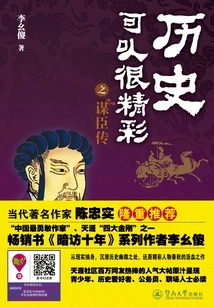
历史可以很精彩之谋臣传
Li Yaosha
This book introduces the stories of Jiang Shang, Guan Zhong, Wu Zixu, Shang Yang, Le Yi, Li Si, Zhang Liang, Guo Jia, Zhuge Liang, Sima Yi, Xie Zi, Wang Meng, Zhao Pu, Liu Ji and Zeng Guofan.
This book introduces the stories of Jiang Shang, Guan Zhong, Wu Zixu, Shang Yang, Le Yi, Li Si, Zhang Liang, Guo Jia, Zhuge Liang, Sima Yi, Xie Zi, Wang Meng, Zhao Pu, Liu Ji and Zeng Guofan.