Library
Browse and search books
2 novels found
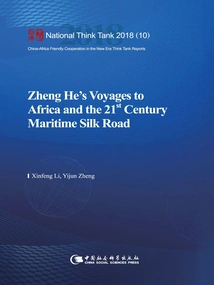
郑和远航非洲与21世纪海上丝绸之路(英文)
Li Xinfeng Zheng Yijun
Zheng He's four voyages to Africa were a symbol of the early Ming Dynasty's diplomatic policy of "sharing the blessings of peace" with other countries, covering the world. This report explains in depth that the achievement of this unprecedented feat in human history was inseparable from China's advanced boating technology and navigation support at that time, as well as the opening of three new routes across the Indian Ocean to Africa: Zheng He's visit to Africa included Mugudushu, Bulawa, Zhubu, Malin, Manbasa and other places into the Maritime Silk Road The trade system of the Maritime Silk Road shows the international significance of the Maritime Silk Road more than ever before: through a visit to the "Chinese Village" on Patai Island, it was found that the descendants of Zheng He's subordinates who stayed in Africa due to the shipwreck still retain Chinese cultural traditions and have successfully integrated into African society. They are the first batch of Chinese to "immigrate" to Africa. It advances the history of Chinese immigration to Africa by two to three hundred years, effectively countering the so-called "neo-colonialism theory" and the "China threat theory," and providing theoretical and practical support for Africa's "Look East" and the development of China-Africa trade. This report is of extremely important historical and practical significance in promoting China and Africa to jointly build the 21st Century Maritime Silk Road and promoting the construction of a China-Africa community with a shared future.
Zheng He's four voyages to Africa were a symbol of the early Ming Dynasty's diplomatic policy of "sharing the blessings of peace" with other countries, covering the world. This report explains in depth that the achievement of this unprecedented feat in human history was inseparable from China's advanced boating technology and navigation support at that time, as well as the opening of three new routes across the Indian Ocean to Africa: Zheng He's visit to Africa included Mugudushu, Bulawa, Zhubu, Malin, Manbasa and other places into the Maritime Silk Road The trade system of the Maritime Silk Road shows the international significance of the Maritime Silk Road more than ever before: through a visit to the "Chinese Village" on Patai Island, it was found that the descendants of Zheng He's subordinates who stayed in Africa due to the shipwreck still retain Chinese cultural traditions and have successfully integrated into African society. They are the first batch of Chinese to "immigrate" to Africa. It advances the history of Chinese immigration to Africa by two to three hundred years, effectively countering the so-called "neo-colonialism theory" and the "China threat theory," and providing theoretical and practical support for Africa's "Look East" and the development of China-Africa trade. This report is of extremely important historical and practical significance in promoting China and Africa to jointly build the 21st Century Maritime Silk Road and promoting the construction of a China-Africa community with a shared future.
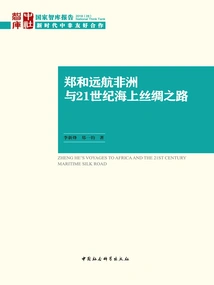
郑和远航非洲与21世纪海上丝绸之路
Li Xinfeng Zheng Yijun
This book is part of a series of national think tank reports by the Central Society Think Tank. It covers a total of seven ocean voyages of Zheng He's fleet, which spanned nearly thirty years. The fleet reached Southeast Asian countries, the northern shores of the Indian Ocean, Arab countries, and as far as the east coast of the African continent, leaving many historical and civilized relics in these areas. This great navigational feat played an extremely important role in spreading advanced Chinese civilization, cultural exchanges with other countries around the world, and expanding economic and trade exchanges, and had a profound impact on future generations. In the history of human navigation, the Chinese nation (and also mankind) entered the vast Indian Ocean with a large-scale maritime fleet for the first time, and conducted long-term exchanges with coastal countries in terms of trade exchanges and cultural dissemination, ultimately marking the first strong rainbow in the history of world navigation. The recasting of the "Maritime Silk Road" in the 21st century will greatly promote the cross-connection of my country and the world economy. (Five Links) can further radiate China's influence to the northern Indian Ocean, Middle Eastern countries, Mediterranean coasts and African regions. While expanding China's economic influence and building China's soft power, it will have major economic benefits for countries along the route, and is conducive to the further formation of new Eurasian trade channels and regional economic development belts. Therefore, in response to the doubts that some governments and people have about the "Maritime Silk Road", active interpretation is the first thing to do.
This book is part of a series of national think tank reports by the Central Society Think Tank. It covers a total of seven ocean voyages of Zheng He's fleet, which spanned nearly thirty years. The fleet reached Southeast Asian countries, the northern shores of the Indian Ocean, Arab countries, and as far as the east coast of the African continent, leaving many historical and civilized relics in these areas. This great navigational feat played an extremely important role in spreading advanced Chinese civilization, cultural exchanges with other countries around the world, and expanding economic and trade exchanges, and had a profound impact on future generations. In the history of human navigation, the Chinese nation (and also mankind) entered the vast Indian Ocean with a large-scale maritime fleet for the first time, and conducted long-term exchanges with coastal countries in terms of trade exchanges and cultural dissemination, ultimately marking the first strong rainbow in the history of world navigation. The recasting of the "Maritime Silk Road" in the 21st century will greatly promote the cross-connection of my country and the world economy. (Five Links) can further radiate China's influence to the northern Indian Ocean, Middle Eastern countries, Mediterranean coasts and African regions. While expanding China's economic influence and building China's soft power, it will have major economic benefits for countries along the route, and is conducive to the further formation of new Eurasian trade channels and regional economic development belts. Therefore, in response to the doubts that some governments and people have about the "Maritime Silk Road", active interpretation is the first thing to do.