Library
Browse and search books
4 novels found
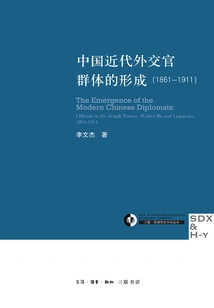
中国近代外交官群体的形成(1861-1911)
Li Wenjie
Officials engaged in Western-style diplomacy in modern times came from the imperial examination. How did they "adapt" to the new "profession" of diplomacy? How to understand the operation methods and characteristics of the Qing Dynasty's diplomatic institutions? From the Qing Dynasty archives, the author examines the biographical data of the Prime Minister's Office, the Ministry of Foreign Affairs, and foreign officials, and examines a series of issues such as their origins, selection, promotion, whereabouts, and group evolution. The author constructs and displays the entire process of the late Qing diplomats from their origin and development to the formation of the so-called "professional" diplomat group. "Diplomats" are a poorly researched group, and the study of this book lays the foundation for future research on the diplomatic history of the late Qing Dynasty.
Officials engaged in Western-style diplomacy in modern times came from the imperial examination. How did they "adapt" to the new "profession" of diplomacy? How to understand the operation methods and characteristics of the Qing Dynasty's diplomatic institutions? From the Qing Dynasty archives, the author examines the biographical data of the Prime Minister's Office, the Ministry of Foreign Affairs, and foreign officials, and examines a series of issues such as their origins, selection, promotion, whereabouts, and group evolution. The author constructs and displays the entire process of the late Qing diplomats from their origin and development to the formation of the so-called "professional" diplomat group. "Diplomats" are a poorly researched group, and the study of this book lays the foundation for future research on the diplomatic history of the late Qing Dynasty.

That Distant Memory
Literature那一抹远去的记忆
Li Wenjie
Most of the articles praise the countryside, call for environmental protection, and describe the image of simple and lovely farmers. The works are full of strong earthy fragrance, smooth writing, simple language, and storyline always give people a feeling of beauty and inspiration for goodness, and are deeply loved by readers. His works are mainly published on Toutiao, Yidian News, NetEase News, Baidu 360, Travel Network, Western Literature Network, Shaanxi Municipal Government Network, Jingwei Wenyuan, Bashui Cross-Strait and other media platforms.
Most of the articles praise the countryside, call for environmental protection, and describe the image of simple and lovely farmers. The works are full of strong earthy fragrance, smooth writing, simple language, and storyline always give people a feeling of beauty and inspiration for goodness, and are deeply loved by readers. His works are mainly published on Toutiao, Yidian News, NetEase News, Baidu 360, Travel Network, Western Literature Network, Shaanxi Municipal Government Network, Jingwei Wenyuan, Bashui Cross-Strait and other media platforms.
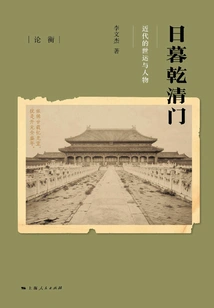
日暮乾清门:近代的世运与人物
Li Wenjie
Zhang Zhidong has a famous saying in "Encouragement to Learning": "In ancient times, the clarity of world fortune and the rise and fall of talents lie in politics, while learning lies inside." What this book deals with is the part of "politics on the surface", including modern systems, characters and historical events, which are direct manifestations of the rise and fall of world fortune. The 20 texts included in the book span more than a hundred years, from the Jiadao period to the end of 1919. They explain the early dynasty of the late Qing monarch, the interaction between monarchs and ministers during summons, the operation of central institutions, how the emperor gave instructions, and confidential official communications. It attempts to reinterpret many political events that influenced the direction of history from an institutional perspective, including the Xinyou coup and the imperial family. The pavilion, the abdication of the Qing emperor, and the succession of power before and after the Revolution of 1911 also outline the performance of the Guangxu Emperor's biological father, Prince Chun Yixuan, the Minister to the United States Chen Lanbin, the Minister to the United Kingdom Wang Daxie, the influential figure Kang Youwei, and the Minister of Foreign Affairs Lu Zhengxiang in major historical events. It reveals some subtle clues behind the historical events and figures that these people are familiar with, hoping to bring some new inspiration to readers.
Zhang Zhidong has a famous saying in "Encouragement to Learning": "In ancient times, the clarity of world fortune and the rise and fall of talents lie in politics, while learning lies inside." What this book deals with is the part of "politics on the surface", including modern systems, characters and historical events, which are direct manifestations of the rise and fall of world fortune. The 20 texts included in the book span more than a hundred years, from the Jiadao period to the end of 1919. They explain the early dynasty of the late Qing monarch, the interaction between monarchs and ministers during summons, the operation of central institutions, how the emperor gave instructions, and confidential official communications. It attempts to reinterpret many political events that influenced the direction of history from an institutional perspective, including the Xinyou coup and the imperial family. The pavilion, the abdication of the Qing emperor, and the succession of power before and after the Revolution of 1911 also outline the performance of the Guangxu Emperor's biological father, Prince Chun Yixuan, the Minister to the United States Chen Lanbin, the Minister to the United Kingdom Wang Daxie, the influential figure Kang Youwei, and the Minister of Foreign Affairs Lu Zhengxiang in major historical events. It reveals some subtle clues behind the historical events and figures that these people are familiar with, hoping to bring some new inspiration to readers.
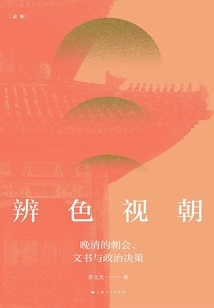
辨色视朝:晚清的朝会、文书与政治决策
Li Wenjie
The operation of government affairs in the Qing Dynasty can be reflected in the circulation process of documents, and the most important government documents and memorials were the main contents of court meetings. Court meetings and documents are the elements and concrete manifestations of political decision-making. Before dawn, the monarch and his ministers had to enter the process of governing affairs and court meetings. This was summarized by the Qing Dynasty as "distinguishing color and looking at the court." This book attempts to clear up many details of the central government's government affairs procedures and decision-making process in the late Qing Dynasty, including the main contents of the three types of court meetings in the Qing Dynasty and their role in decision-making, the production and circulation process of government affairs documents, the empress dowager, the emperor, and the military aircraft department during the periods of listening to the government behind the curtain, training the government, and returning to power. Their respective authorities, the "court discussions" in the late Qing Dynasty, the reforms of the cabinet and the Military Aircraft Department during the New Deal period, and the differences between the two responsible cabinets before and after the Revolution of 1911. Pay special attention to the careful interpretation of important historical materials and the in-depth excavation of details. From the perspective of institutional history, the characteristics of high-level political decision-making in the late Qing Dynasty are explored.
The operation of government affairs in the Qing Dynasty can be reflected in the circulation process of documents, and the most important government documents and memorials were the main contents of court meetings. Court meetings and documents are the elements and concrete manifestations of political decision-making. Before dawn, the monarch and his ministers had to enter the process of governing affairs and court meetings. This was summarized by the Qing Dynasty as "distinguishing color and looking at the court." This book attempts to clear up many details of the central government's government affairs procedures and decision-making process in the late Qing Dynasty, including the main contents of the three types of court meetings in the Qing Dynasty and their role in decision-making, the production and circulation process of government affairs documents, the empress dowager, the emperor, and the military aircraft department during the periods of listening to the government behind the curtain, training the government, and returning to power. Their respective authorities, the "court discussions" in the late Qing Dynasty, the reforms of the cabinet and the Military Aircraft Department during the New Deal period, and the differences between the two responsible cabinets before and after the Revolution of 1911. Pay special attention to the careful interpretation of important historical materials and the in-depth excavation of details. From the perspective of institutional history, the characteristics of high-level political decision-making in the late Qing Dynasty are explored.