Library
Browse and search books
1 novel found
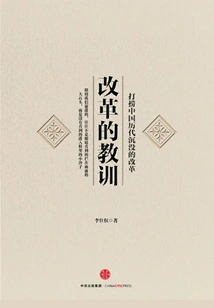
改革的教训:打捞中国历代沉没的改革
Li Shiquan
General Secretary Xi Jinping proposed: keep historical experience, lessons and warnings in mind to provide useful reference for promoting the modernization of the national governance system and governance capabilities. He emphasized that history is the best teacher. Therefore, for China's current comprehensive deepening of reforms, one of the most important propositions is: How to draw useful lessons from China's previous reforms? The reforms or reforms of Guan Zhong, Shang Yang, Emperor Wu of the Han Dynasty, Wang Anshi, Yongzheng, etc. Have been highlighted. In addition to these, there are many more major reforms in history, and their value has been invisible to us. Knowing the past and learning from the present, this book is to salvage those more valuable "sunken reforms", including: the first comprehensive reform in history, "King Zhou Li's Reform", the "Qin Xiangong Reform" that was the real starting point for Qin to achieve a super counterattack, the "Han Xuan Emperor's Reform" that made the Han Dynasty more prosperous and prosperous than that of Emperor Wu of the Han Dynasty, and the "Han Ming Emperor's Reform" that made people live in peace despite the official life... In the ups and downs of reform stories told one after another, we will find that history is always such a coincidence. They provide amazing and practical experiences and lessons, which provide enlightenment and warning to the Chinese people who are comprehensively deepening reforms, and enable us to face the present and the future more wisely. This is what makes the book "Lessons of Reform" knowledgeable, interesting and informative.
General Secretary Xi Jinping proposed: keep historical experience, lessons and warnings in mind to provide useful reference for promoting the modernization of the national governance system and governance capabilities. He emphasized that history is the best teacher. Therefore, for China's current comprehensive deepening of reforms, one of the most important propositions is: How to draw useful lessons from China's previous reforms? The reforms or reforms of Guan Zhong, Shang Yang, Emperor Wu of the Han Dynasty, Wang Anshi, Yongzheng, etc. Have been highlighted. In addition to these, there are many more major reforms in history, and their value has been invisible to us. Knowing the past and learning from the present, this book is to salvage those more valuable "sunken reforms", including: the first comprehensive reform in history, "King Zhou Li's Reform", the "Qin Xiangong Reform" that was the real starting point for Qin to achieve a super counterattack, the "Han Xuan Emperor's Reform" that made the Han Dynasty more prosperous and prosperous than that of Emperor Wu of the Han Dynasty, and the "Han Ming Emperor's Reform" that made people live in peace despite the official life... In the ups and downs of reform stories told one after another, we will find that history is always such a coincidence. They provide amazing and practical experiences and lessons, which provide enlightenment and warning to the Chinese people who are comprehensively deepening reforms, and enable us to face the present and the future more wisely. This is what makes the book "Lessons of Reform" knowledgeable, interesting and informative.