Library
Browse and search books
2 novels found
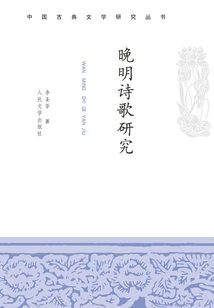
Research on Late Ming Poetry
Literature晚明诗歌研究
Li Shenghua
This book takes the nearly seventy years of poetry creation from Wanli to the end of Chongzhen in the Ming Dynasty as the research object, and explores in depth and detail the social composition of late Ming poets, the geographical distribution of poet communities, the creative pursuits of each school, and the historical evolution of the overall poetic style. The author has abundant information, rigorous reasoning, concise writing, and clear discussion, which makes the book have high theoretical depth and academic credibility.
This book takes the nearly seventy years of poetry creation from Wanli to the end of Chongzhen in the Ming Dynasty as the research object, and explores in depth and detail the social composition of late Ming poets, the geographical distribution of poet communities, the creative pursuits of each school, and the historical evolution of the overall poetic style. The author has abundant information, rigorous reasoning, concise writing, and clear discussion, which makes the book have high theoretical depth and academic credibility.
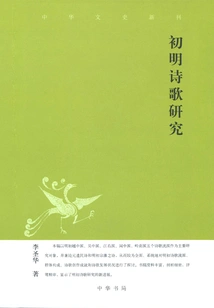
初明诗歌研究(中华文史新刊)
Li Shenghua
This manuscript takes the five poetry schools of the Yue Zhong School, the Wuzhong School, the Jiangyou School, the Minzhong School, and the Lingnan School as the main research objects, and also discusses the poems of the Yuan survivors and the poems of the sects and vassals in the early Ming Dynasty, thus making a more comprehensive and systematic discussion of the poetry schools, group composition, poetry creation achievements, and poetry development of the early Ming Dynasty. The manuscript is rich in information, detailed in analysis, and meticulous in evaluation, showing new progress in the study of poetry in the early Ming Dynasty.
This manuscript takes the five poetry schools of the Yue Zhong School, the Wuzhong School, the Jiangyou School, the Minzhong School, and the Lingnan School as the main research objects, and also discusses the poems of the Yuan survivors and the poems of the sects and vassals in the early Ming Dynasty, thus making a more comprehensive and systematic discussion of the poetry schools, group composition, poetry creation achievements, and poetry development of the early Ming Dynasty. The manuscript is rich in information, detailed in analysis, and meticulous in evaluation, showing new progress in the study of poetry in the early Ming Dynasty.