Library
Browse and search books
3 novels found
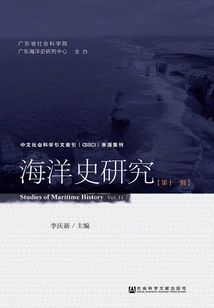
海洋史研究(第11辑)
Li Qingxin
This book discusses the export porcelain production of Chaozhou kilns after the Song Dynasty and the Chaozhou kiln products discovered at the Fukuoka archaeological site in Japan, modern Chaozhou porcelain merchants and Southeast Asian Chaozhou porcelain enterprises, the abolition of maidservants movement in important seaport cities in modern "Ocean Asia", the spread of Christianity in Chaoshan area and the issue of religious women, and the Ming Dynasty survivor Li Weijing of Malacca (1614 ~1688) and the construction of public memory of the Chinese community, the rise and fall of Sino-Philippine trade from the 16th century to modern times, the customs history of the Qing Dynasty and Guangdong Customs, the "Guangzhou system" and other issues, expand the new field of maritime history research, conduct in-depth discussions on some new issues, and reflect the new trends and new levels of international maritime history research.
This book discusses the export porcelain production of Chaozhou kilns after the Song Dynasty and the Chaozhou kiln products discovered at the Fukuoka archaeological site in Japan, modern Chaozhou porcelain merchants and Southeast Asian Chaozhou porcelain enterprises, the abolition of maidservants movement in important seaport cities in modern "Ocean Asia", the spread of Christianity in Chaoshan area and the issue of religious women, and the Ming Dynasty survivor Li Weijing of Malacca (1614 ~1688) and the construction of public memory of the Chinese community, the rise and fall of Sino-Philippine trade from the 16th century to modern times, the customs history of the Qing Dynasty and Guangdong Customs, the "Guangzhou system" and other issues, expand the new field of maritime history research, conduct in-depth discussions on some new issues, and reflect the new trends and new levels of international maritime history research.
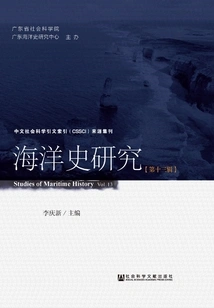
海洋史研究(第13辑)
Li Qingxin
This book mainly explores in depth the issues of long-distance trade of special commodities, special artifacts and technological exchanges between the East and the West on the Silk Road since the third millennium BC, and fills several gaps in the study of maritime history and the history of exchanges between the East and the West. At the same time, the papers included in the book also have unique insights into the research on Champa history and Vietnamese history, Japanese "Fengshu" and the Ming and Qing Dynasties, research on the development of the Rhine River Delta and the Yangtze River Delta, research on Shandong and the Maritime Silk Road, as well as new developments in China's maritime history research in 2018, etc., Presenting the cutting-edge results of current international maritime history research.
This book mainly explores in depth the issues of long-distance trade of special commodities, special artifacts and technological exchanges between the East and the West on the Silk Road since the third millennium BC, and fills several gaps in the study of maritime history and the history of exchanges between the East and the West. At the same time, the papers included in the book also have unique insights into the research on Champa history and Vietnamese history, Japanese "Fengshu" and the Ming and Qing Dynasties, research on the development of the Rhine River Delta and the Yangtze River Delta, research on Shandong and the Maritime Silk Road, as well as new developments in China's maritime history research in 2018, etc., Presenting the cutting-edge results of current international maritime history research.
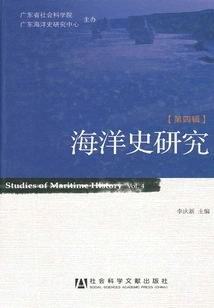
海洋史研究(第4辑)
Li Qingxin
This volume includes a group of monographs on the social life, maritime economic connections, and administrative jurisdiction of the Beibu Gulf from prehistory to the Tang Dynasty. It deeply explores the maritime characteristics of this region's early history from multiple angles. Other monographs respectively explore the large-scale outflow of Chinese people overseas due to economic and political reasons during the Ming and Qing Dynasties. It explores important issues such as smuggling, sailor management in overseas trade, international smuggling networks and trade changes in the Pearl River Estuary Bay Area, Mazu belief and its comparative research. It excavates and uses a large number of first-hand Chinese and foreign literature materials, archaeological cultural relics materials and field investigation findings. It has a unique vision, subtle research, and a high academic level.
This volume includes a group of monographs on the social life, maritime economic connections, and administrative jurisdiction of the Beibu Gulf from prehistory to the Tang Dynasty. It deeply explores the maritime characteristics of this region's early history from multiple angles. Other monographs respectively explore the large-scale outflow of Chinese people overseas due to economic and political reasons during the Ming and Qing Dynasties. It explores important issues such as smuggling, sailor management in overseas trade, international smuggling networks and trade changes in the Pearl River Estuary Bay Area, Mazu belief and its comparative research. It excavates and uses a large number of first-hand Chinese and foreign literature materials, archaeological cultural relics materials and field investigation findings. It has a unique vision, subtle research, and a high academic level.