Library
Browse and search books
8 novels found
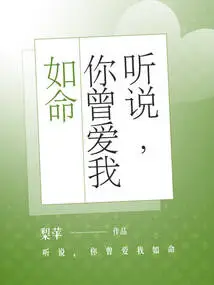
I Heard That You Loved Me Dearly
Modern Romance听说,你曾爱我如命
Li Ping
Yan Siyu, a leftover woman who is nearly thirty years old, never dreamed that one day she would knock down the male god in her heart who is as tall as a mountain! And paid a lifelong price for it...
Yan Siyu, a leftover woman who is nearly thirty years old, never dreamed that one day she would knock down the male god in her heart who is as tall as a mountain! And paid a lifelong price for it...
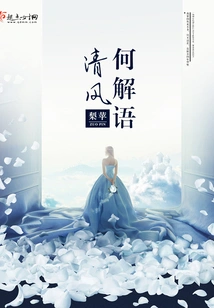
What is the Meaning of the Breeze?
Modern Romance清风何解语
Li Ping
In fact, there is another tacky name called: Hi, hello, male god! Introduction: Yan Siyu, a leftover woman who is nearly 30 years old, never dreamed that one day she would knock down the male god in her heart who is as tall as a mountain! And paid a lifelong price for it... (Although the introduction is a bit naive, it is actually a real drama! Haha...) PS: Because it's a date in the future, it's a bit of a guess. Don't worry about the weather. If I want it to rain, it will rain. If I want it to be sunny, it will be sunny! Hey-hey......
In fact, there is another tacky name called: Hi, hello, male god! Introduction: Yan Siyu, a leftover woman who is nearly 30 years old, never dreamed that one day she would knock down the male god in her heart who is as tall as a mountain! And paid a lifelong price for it... (Although the introduction is a bit naive, it is actually a real drama! Haha...) PS: Because it's a date in the future, it's a bit of a guess. Don't worry about the weather. If I want it to rain, it will rain. If I want it to be sunny, it will be sunny! Hey-hey......
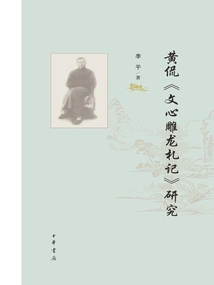
黄侃《文心雕龙札记》研究
Li Ping
In 1914, Huang Kan brought "Literary Mind and Carving of Dragons" as a subject to the university lecture hall, marking the birth of "Dragonology" in the modern sense; and the lecture notes he wrote for his lectures, "Notes on Literary Mind and Carving of Dragons," became the foundation of modern "Dragonology" research. "Notes" transcends traditional annotations and comments and creates a research method that combines text collation, data verification and theoretical elaboration, giving people a new perspective, "thus enabling the academic and ideological circles to make revolutionary adjustments to the practical value and research angle of "Wen Xin Diao Long"." "Notes" focuses on the interpretation of the main themes of thirty-one articles. Because Huang has profound academic background and considerable creative experience, his exploration of the main themes has been fruitful. It has been particularly enlightening for the study of modern literary theory of "Wen Xin Diao Long". It is still an essential reference book for the study of "Wen Xin Diao Long". This book conducts a comprehensive, in-depth and systematic study of the "Notes" and discusses the interactive and symbiotic relationship between Huang Kan and his "Notes" and the academic history of China in the 20th century, especially the history of "Longxue".
In 1914, Huang Kan brought "Literary Mind and Carving of Dragons" as a subject to the university lecture hall, marking the birth of "Dragonology" in the modern sense; and the lecture notes he wrote for his lectures, "Notes on Literary Mind and Carving of Dragons," became the foundation of modern "Dragonology" research. "Notes" transcends traditional annotations and comments and creates a research method that combines text collation, data verification and theoretical elaboration, giving people a new perspective, "thus enabling the academic and ideological circles to make revolutionary adjustments to the practical value and research angle of "Wen Xin Diao Long"." "Notes" focuses on the interpretation of the main themes of thirty-one articles. Because Huang has profound academic background and considerable creative experience, his exploration of the main themes has been fruitful. It has been particularly enlightening for the study of modern literary theory of "Wen Xin Diao Long". It is still an essential reference book for the study of "Wen Xin Diao Long". This book conducts a comprehensive, in-depth and systematic study of the "Notes" and discusses the interactive and symbiotic relationship between Huang Kan and his "Notes" and the academic history of China in the 20th century, especially the history of "Longxue".
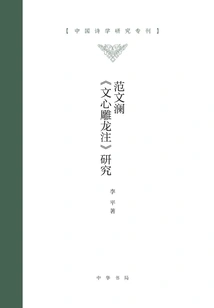
范文澜《文心雕龙注》研究
Li Ping
Mr. Fan Wenlan's "Literary Mind and the Carving of the Dragon" is one of the most important academic classics in Chinese academia in the 20th century. It is known as a milestone in the history of the study of "The Literary Mind and the Carving of the Dragon" and is also a must-read advanced work for future generations to study "The Literary Mind and the Carving of the Dragon." This book discusses important issues in all aspects of "Fan Annotation" through more than ten monographs. Finally, a case analysis is conducted on the corrections, revisions, and refutations of "Fan Annotation" by academic scholars such as Yang Mingzhao, Wang Liqi, Shiba Rokuro, Zhang Lizhai, and Wang Gengsheng. In addition, there are two appendices that are closely related to "Fan Notes". This book contains many innovative contents and makes a useful attempt to solve many difficult problems in the history of "Dragonology".
Mr. Fan Wenlan's "Literary Mind and the Carving of the Dragon" is one of the most important academic classics in Chinese academia in the 20th century. It is known as a milestone in the history of the study of "The Literary Mind and the Carving of the Dragon" and is also a must-read advanced work for future generations to study "The Literary Mind and the Carving of the Dragon." This book discusses important issues in all aspects of "Fan Annotation" through more than ten monographs. Finally, a case analysis is conducted on the corrections, revisions, and refutations of "Fan Annotation" by academic scholars such as Yang Mingzhao, Wang Liqi, Shiba Rokuro, Zhang Lizhai, and Wang Gengsheng. In addition, there are two appendices that are closely related to "Fan Notes". This book contains many innovative contents and makes a useful attempt to solve many difficult problems in the history of "Dragonology".
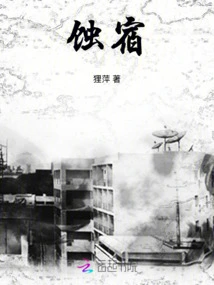
Eclipse
Mystery蚀宿
Li Ping
They are the bugs in my life, eating away at my peace and gnawing at my sanity once every night. They carry away the soil of the dead and gnaw at the faces of the living. When I finally understood that this was not harassment, but a carefully planned "erosion" - I had become the sacrifice in this ritual with nowhere to escape.
They are the bugs in my life, eating away at my peace and gnawing at my sanity once every night. They carry away the soil of the dead and gnaw at the faces of the living. When I finally understood that this was not harassment, but a carefully planned "erosion" - I had become the sacrifice in this ritual with nowhere to escape.
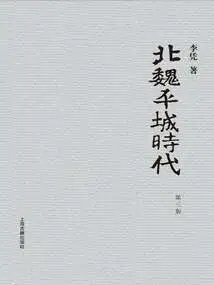
北魏平城时代(第三版)
Li Ping
This book gradually unfolds the study of the political history of the early Northern Wei Dynasty, centering on the capital Pingcheng, and conducts longitudinal exploration in four chapters in chronological order, accurately and clearly outlining its trajectory of change. The author's investigation has always focused on the social and cultural characteristics of the Tuoba tribe itself and the tortuous influence of Han culture on it, which are two important aspects that affect the development of the Pingcheng regime. Therefore, although what is being examined is the feudalization process of the Pingcheng regime in the Northern Wei Dynasty, its significance has transcended the topic itself and has become an important example of exploring the mutual influence and integration of the Han and nomadic peoples in the formation of the Chinese nation. In the research, the author neither avoids various major contradictions, but also uses a meticulous attitude to examine the details in detail, so the conclusion he draws is novel and convincing.
This book gradually unfolds the study of the political history of the early Northern Wei Dynasty, centering on the capital Pingcheng, and conducts longitudinal exploration in four chapters in chronological order, accurately and clearly outlining its trajectory of change. The author's investigation has always focused on the social and cultural characteristics of the Tuoba tribe itself and the tortuous influence of Han culture on it, which are two important aspects that affect the development of the Pingcheng regime. Therefore, although what is being examined is the feudalization process of the Pingcheng regime in the Northern Wei Dynasty, its significance has transcended the topic itself and has become an important example of exploring the mutual influence and integration of the Han and nomadic peoples in the formation of the Chinese nation. In the research, the author neither avoids various major contradictions, but also uses a meticulous attitude to examine the details in detail, so the conclusion he draws is novel and convincing.
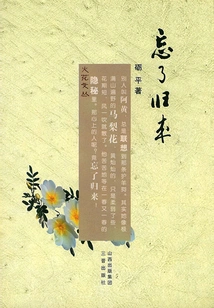
Forgot to Return
Literature忘了归来
Li Ping
The author of this book, Li Ping, is one of the "Sanping Beautiful Writers" from Qinshui. She has stayed in Qinshui for a long time and has written in poetry, prose and other fields. She has published a collection of poems and essays "What Kind of Parting Is Not Sad". The other two are Ge Shuiping and Yang Ping. Ge Shuiping is a first-class writer who is famous in the national literary circle and is currently the vice chairman of the Changzhi Federation of Literary and Art Circles. Yang Ping worked hard in Hangzhou and published two volumes of "Humanities Jincheng", which became a sensation in Jincheng.
The author of this book, Li Ping, is one of the "Sanping Beautiful Writers" from Qinshui. She has stayed in Qinshui for a long time and has written in poetry, prose and other fields. She has published a collection of poems and essays "What Kind of Parting Is Not Sad". The other two are Ge Shuiping and Yang Ping. Ge Shuiping is a first-class writer who is famous in the national literary circle and is currently the vice chairman of the Changzhi Federation of Literary and Art Circles. Yang Ping worked hard in Hangzhou and published two volumes of "Humanities Jincheng", which became a sensation in Jincheng.
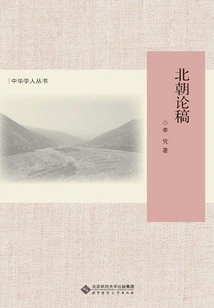
Papers on Northern Dynasties
History北朝论稿
Li Ping
The Northern Dynasties included several dynasties such as the Northern Wei, Eastern Wei, Western Wei, Northern Qi, and Northern Zhou, and ended the nearly 150 years of melee in the Central Plains since the Rebellion of the Eight Kings in our country. Later Sui and Tang dynasties inherited the Northern Dynasty, and the ancestors of their founding emperors were all nobles from the Northern Dynasty. They also inherited the Northern Dynasty in various fields such as military and political systems and made better developments and innovations. This book provides an in-depth discussion on the politics and society of the Northern Dynasties and is of great academic value.
The Northern Dynasties included several dynasties such as the Northern Wei, Eastern Wei, Western Wei, Northern Qi, and Northern Zhou, and ended the nearly 150 years of melee in the Central Plains since the Rebellion of the Eight Kings in our country. Later Sui and Tang dynasties inherited the Northern Dynasty, and the ancestors of their founding emperors were all nobles from the Northern Dynasty. They also inherited the Northern Dynasty in various fields such as military and political systems and made better developments and innovations. This book provides an in-depth discussion on the politics and society of the Northern Dynasties and is of great academic value.