Library
Browse and search books
8 novels found
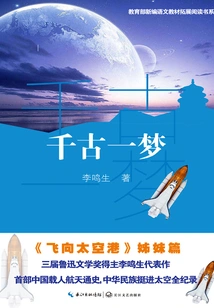
千古一梦(教育部新编语文教材拓展阅读书系)
Li Mingsheng
This book provides the first panoramic view of the development process of China's manned space engineering. Through long-term follow-up interviews, the author in-depth restored and deciphered the inside story of the decision-making and development of China's Feitian Dream, created a group of scientists who devoted themselves to science and aerospace industry, and also vividly depicted the glory and magnificence of the moment when the Feitian Dream came true. This is a real and literary space epic.
This book provides the first panoramic view of the development process of China's manned space engineering. Through long-term follow-up interviews, the author in-depth restored and deciphered the inside story of the decision-making and development of China's Feitian Dream, created a group of scientists who devoted themselves to science and aerospace industry, and also vividly depicted the glory and magnificence of the moment when the Feitian Dream came true. This is a real and literary space epic.
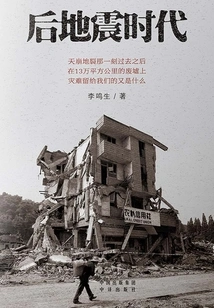
Post-earthquake Era
Literature后地震时代
Li Mingsheng
"The Post-Earthquake Era" is the second non-fiction work written by Li Mingsheng, a three-time Lu Xun Literature Award winner who is called a "writer with conscience" by netizens, about the Wenchuan earthquake after "Earthquake in the Heart". "Post-Earthquake Era" sticks closely to the ruins and faces the scars. It not only praises the spirit of the disaster area, but also reflects on the various contradictions of post-disaster reconstruction. It also records the unspeakable soul struggles and overwhelming mental anguish of many victims and township cadres. The stories in the book are simple, touching, true and believable. From them, one can smell the breath of death under the ruins and see the fresh life on the ruins, inspiring and causing people to reflect.
"The Post-Earthquake Era" is the second non-fiction work written by Li Mingsheng, a three-time Lu Xun Literature Award winner who is called a "writer with conscience" by netizens, about the Wenchuan earthquake after "Earthquake in the Heart". "Post-Earthquake Era" sticks closely to the ruins and faces the scars. It not only praises the spirit of the disaster area, but also reflects on the various contradictions of post-disaster reconstruction. It also records the unspeakable soul struggles and overwhelming mental anguish of many victims and township cadres. The stories in the book are simple, touching, true and believable. From them, one can smell the breath of death under the ruins and see the fresh life on the ruins, inspiring and causing people to reflect.
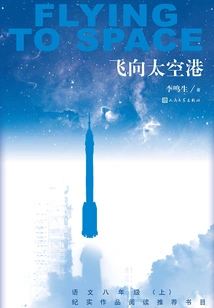
Fly to Spaceport
Literature飞向太空港
Li Mingsheng
"Flying to the Spaceport" is a documentary literary work. This book tells the story of China's Long March 3 rocket launching the U. S. Asia-1 satellite for the first time at the Xichang launch site, and records the glorious moment of China's aerospace industry inheriting the past and opening up the future. The book includes stories of Chinese and American experts working together in the mountains, as well as the collision of Chinese and Western civilizations at the launch site. The work is relaxed and relaxed, showing the proud achievements of China's aerospace science and technology, and is known as the pioneering work of China's "aerospace literature". This book is selected as the designated book for independent reading of famous works in the eighth grade (Part 1) of the "Ministry of Education" Chinese textbook.
"Flying to the Spaceport" is a documentary literary work. This book tells the story of China's Long March 3 rocket launching the U. S. Asia-1 satellite for the first time at the Xichang launch site, and records the glorious moment of China's aerospace industry inheriting the past and opening up the future. The book includes stories of Chinese and American experts working together in the mountains, as well as the collision of Chinese and Western civilizations at the launch site. The work is relaxed and relaxed, showing the proud achievements of China's aerospace science and technology, and is known as the pioneering work of China's "aerospace literature". This book is selected as the designated book for independent reading of famous works in the eighth grade (Part 1) of the "Ministry of Education" Chinese textbook.
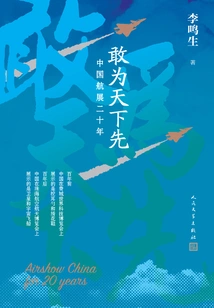
敢为天下先:中国航展二十年
Li Mingsheng
This work comprehensively documents the glorious history of the Zhuhai Air Show. Through nearly two decades of hard work, the Zhuhai Air Show has become one of the five world-famous air shows and a historical stage to showcase China's economic development. The work faithfully records the great contributions made by the Secretary of the Zhuhai Municipal Party Committee and his Zhuhai people, who dared to be ahead of the times, and demonstrated China's strength for China's outstanding performance on the world stage.
This work comprehensively documents the glorious history of the Zhuhai Air Show. Through nearly two decades of hard work, the Zhuhai Air Show has become one of the five world-famous air shows and a historical stage to showcase China's economic development. The work faithfully records the great contributions made by the Secretary of the Zhuhai Municipal Party Committee and his Zhuhai people, who dared to be ahead of the times, and demonstrated China's strength for China's outstanding performance on the world stage.
Fly to Spaceport
Literature飞向太空港
Li Mingsheng
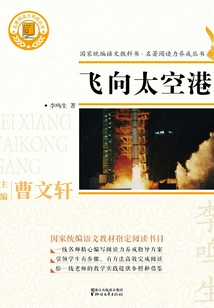
This book sets a precedent for Chinese literature to write about "space civilization" and shows the remarkable achievements of China's aerospace science and technology. It is called the pioneering work of China's "aerospace literature". In the 1990s, Chinese astronauts used the "Long March 3" rocket at the Xichang Satellite Launch Center to successfully launch the U. S. "Asia-1" satellite into space, starting a new journey for China's aerospace industry to go abroad and go global. This is China's first launch of a foreign commercial satellite, marking China's great success in the international aerospace industry. This book is an account of this process.
This book sets a precedent for Chinese literature to write about "space civilization" and shows the remarkable achievements of China's aerospace science and technology. It is called the pioneering work of China's "aerospace literature". In the 1990s, Chinese astronauts used the "Long March 3" rocket at the Xichang Satellite Launch Center to successfully launch the U. S. "Asia-1" satellite into space, starting a new journey for China's aerospace industry to go abroad and go global. This is China's first launch of a foreign commercial satellite, marking China's great success in the international aerospace industry. This book is an account of this process.
飞向太空港(经典译林)
Li Mingsheng
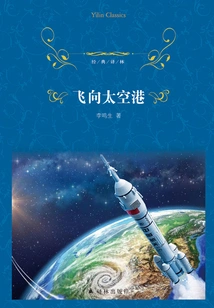
"Flying to the Spaceport" records the story of China's Xichang Satellite Launch Center's successful launch of a foreign satellite, the United States' "Asia One", using the "Long March 3" carrier rocket. It includes both the cooperation and friendship between Chinese and American experts deep in the Daliang Mountains, as well as the collision and conflict between Eastern and Western civilizations at the modern satellite launch site. The whole work has a tight rhythm and a relaxed pace. It uses a panoramic writing to completely reproduce the entire process of the first successful launch of a foreign satellite by China's self-developed launch vehicle. It shows the wisdom and determination of the Chinese nation to forge ahead and constantly overcome difficulties. It also uses the vision and courage of earth people to look up to the heaven and earth, travel through ancient and modern times, and show the broad mind of mankind to explore the universe and look forward to the future.
"Flying to the Spaceport" records the story of China's Xichang Satellite Launch Center's successful launch of a foreign satellite, the United States' "Asia One", using the "Long March 3" carrier rocket. It includes both the cooperation and friendship between Chinese and American experts deep in the Daliang Mountains, as well as the collision and conflict between Eastern and Western civilizations at the modern satellite launch site. The whole work has a tight rhythm and a relaxed pace. It uses a panoramic writing to completely reproduce the entire process of the first successful launch of a foreign satellite by China's self-developed launch vehicle. It shows the wisdom and determination of the Chinese nation to forge ahead and constantly overcome difficulties. It also uses the vision and courage of earth people to look up to the heaven and earth, travel through ancient and modern times, and show the broad mind of mankind to explore the universe and look forward to the future.
Fly to Spaceport
Literature飞向太空港
Li Mingsheng
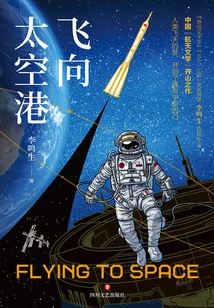
[A classic work by Li Mingsheng, winner of the "Lu Xun Literature Award" and "Five One Project" awards. The pioneering work of China's "aerospace literature". Recommended extracurricular reading books for primary and secondary schools. "Flying to the Spaceport" is a reportage work with an aerospace theme. It tells the story of China's "Long March 3" rocket launching the US "Asia 1" satellite at the Xichang launch site for the first time. It records the glorious moment of China's aerospace industry inheriting the past and opening up the future. Among them are the cooperation and friendship between Chinese and American experts deep in the Daliang Mountains, as well as the collision and conflict between Eastern and Western civilizations at the modern satellite launch site. The work is full of vertical and horizontal twists and turns, and is known as the pioneering work of China's "aerospace literature".
[A classic work by Li Mingsheng, winner of the "Lu Xun Literature Award" and "Five One Project" awards. The pioneering work of China's "aerospace literature". Recommended extracurricular reading books for primary and secondary schools. "Flying to the Spaceport" is a reportage work with an aerospace theme. It tells the story of China's "Long March 3" rocket launching the US "Asia 1" satellite at the Xichang launch site for the first time. It records the glorious moment of China's aerospace industry inheriting the past and opening up the future. Among them are the cooperation and friendship between Chinese and American experts deep in the Daliang Mountains, as well as the collision and conflict between Eastern and Western civilizations at the modern satellite launch site. The work is full of vertical and horizontal twists and turns, and is known as the pioneering work of China's "aerospace literature".
Fly to Spaceport
Literature飞向太空港
Li Mingsheng
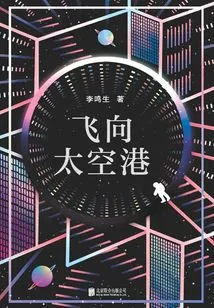
On February 22, 1990, the French Ariane 4 carrier rocket exploded less than two minutes after takeoff; on February 28, 1990, a satellite launched by the U. S. Atlantis space shuttle disintegrated in the air; on March 14, 1990, the satellite launched by the U. S. Hercules-3 carrier rocket failed to separate from the second-stage rocket as scheduled; 1990 was called the "catastrophic year" in the world's space history by Westerners. However, at this time, China successfully used the "Long March 3" carrier rocket to put the "Asia-1" satellite into a predetermined orbit, opening up the international satellite launch market in one fell swoop. One volume of "Flying to the Spaceport" is a "spiritual history of the Chinese nation". Let us follow the footsteps of astronauts and embark on this literary expedition from land to space.
On February 22, 1990, the French Ariane 4 carrier rocket exploded less than two minutes after takeoff; on February 28, 1990, a satellite launched by the U. S. Atlantis space shuttle disintegrated in the air; on March 14, 1990, the satellite launched by the U. S. Hercules-3 carrier rocket failed to separate from the second-stage rocket as scheduled; 1990 was called the "catastrophic year" in the world's space history by Westerners. However, at this time, China successfully used the "Long March 3" carrier rocket to put the "Asia-1" satellite into a predetermined orbit, opening up the international satellite launch market in one fell swoop. One volume of "Flying to the Spaceport" is a "spiritual history of the Chinese nation". Let us follow the footsteps of astronauts and embark on this literary expedition from land to space.