Library
Browse and search books
3 novels found
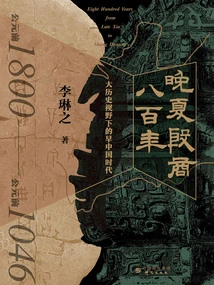
晚夏殷商八百年
Li Linzhi
The author uses the results of archaeology and oracle bone inscriptions to reconstruct the history from the late summer to the late Shang Dynasty, clarify the changes in the capital and the rise and fall of dynasties, and reproduce the grand epic of the early Chinese era. Based on the generally recognized principle of dividing the human civilization process of "chiefdoms-ancient states-kingdoms-empires" in the academic circles and the actual development of ancient Chinese history, the author defines the special period from 4000 BC to 1046 BC, the birth, birth and initial development of "China", as three stages: the Pre-Chinese Era, the Yuan-Chinese Era and the Early Chinese Era. The author mainly uses archaeological results and the achievements of many experts and scholars in interpreting oracle bone inscriptions and bronze inscriptions, and compares them with documentary records to correct some untrue words and ambiguous statements in the literature. He determines the specific location of the city sites in the late Xia and the early, middle and late Shang Dynasties, and systematically restores and displays the magnificent historical picture of the early Chinese era.
The author uses the results of archaeology and oracle bone inscriptions to reconstruct the history from the late summer to the late Shang Dynasty, clarify the changes in the capital and the rise and fall of dynasties, and reproduce the grand epic of the early Chinese era. Based on the generally recognized principle of dividing the human civilization process of "chiefdoms-ancient states-kingdoms-empires" in the academic circles and the actual development of ancient Chinese history, the author defines the special period from 4000 BC to 1046 BC, the birth, birth and initial development of "China", as three stages: the Pre-Chinese Era, the Yuan-Chinese Era and the Early Chinese Era. The author mainly uses archaeological results and the achievements of many experts and scholars in interpreting oracle bone inscriptions and bronze inscriptions, and compares them with documentary records to correct some untrue words and ambiguous statements in the literature. He determines the specific location of the city sites in the late Xia and the early, middle and late Shang Dynasties, and systematically restores and displays the magnificent historical picture of the early Chinese era.
Grandfather's Revolutionary Journey (part 1)
General Fiction外祖父的革命苦旅(上)
Li Linzhi
My grandfather's life is full of legends. My grandfather's life is full of legends. For example, he became a member of the CCP's underground party organization in Peiping as early as 1935, and was a member of the "December 9" He was a key member of a series of student movements such as the "December 16th Movement", but he inexplicably lost contact with his organization only after 1967, and was shut out of the party for life; for example, he was a major figure in the anti-Japanese armed struggle in Fenyang, Anyi, Wenxi and other counties in Shanxi. Leader, but in some later party history materials, his name was nowhere to be found; for another example, many of his comrades and subordinates later became high-ranking officials of the CCP, and became great writers, translators and thinkers, but he has been lingering in the same place and unable to take a step forward.
My grandfather's life is full of legends. My grandfather's life is full of legends. For example, he became a member of the CCP's underground party organization in Peiping as early as 1935, and was a member of the "December 9" He was a key member of a series of student movements such as the "December 16th Movement", but he inexplicably lost contact with his organization only after 1967, and was shut out of the party for life; for example, he was a major figure in the anti-Japanese armed struggle in Fenyang, Anyi, Wenxi and other counties in Shanxi. Leader, but in some later party history materials, his name was nowhere to be found; for another example, many of his comrades and subordinates later became high-ranking officials of the CCP, and became great writers, translators and thinkers, but he has been lingering in the same place and unable to take a step forward.
Grandfather's Revolutionary Journey (part 2)
General Fiction外祖父的革命苦旅(下)
Li Linzhi
Things always have pros and cons. An's detachment expanded, but its personnel also began to become complex. Among them, some did have patriotic feelings and sincerely wanted to join the army to fight the war; some could not bear the harassment and bullying by the Japanese and had to come out just to find a place to hang out; others were bandits in the past, but later "washed their hands in a golden basin", and this time they thought of getting an official position in the guerrilla detachment in order to make a comeback in the future. For example, Li Lifa, the captain of the Third Squadron, had served under the big bandit Liu Guitang a long time ago. He was very brave in fighting and was unambiguous in his bad deeds. As mentioned before, one time, because of work problems, he was so angry that he slapped the instructor Shao Minglun.
Things always have pros and cons. An's detachment expanded, but its personnel also began to become complex. Among them, some did have patriotic feelings and sincerely wanted to join the army to fight the war; some could not bear the harassment and bullying by the Japanese and had to come out just to find a place to hang out; others were bandits in the past, but later "washed their hands in a golden basin", and this time they thought of getting an official position in the guerrilla detachment in order to make a comeback in the future. For example, Li Lifa, the captain of the Third Squadron, had served under the big bandit Liu Guitang a long time ago. He was very brave in fighting and was unambiguous in his bad deeds. As mentioned before, one time, because of work problems, he was so angry that he slapped the instructor Shao Minglun.