Library
Browse and search books
5 novels found
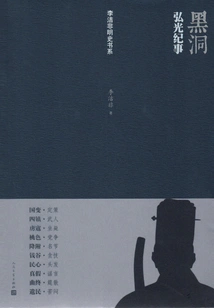
黑洞:弘光纪事
Li Jiefei
The author has devoted himself to writing during the Hongguang Dynasty in the late Ming Dynasty in the past two years. "Black Hole: Chronicles of Hongguang" has ten special topics. The characters in this book include the last emperor Zhu Yousong, Hongguang Councilor Shi Kefa, Zuo Maodi who was called "Su Wu of the Ming Dynasty", Zuo Liangyu who caused the disintegration of the Southern Ming Dynasty with a mutiny, Ruan Dacheng who was the root of Nanjing's troubles, the depressed youthful rebel group along the Qinhuai River, and the great thinker Huang Zong Xi, the young genius Xia Wanchun, the legendary storyteller Liu Jingting, Xu Fang, a typical example of the "remnant phenomenon", etc... Their identities involve emperors, warriors, scholar-bureaucrats, students, prostitutes, entertainers, scholars, hermits, and rebels, covering many levels of society at that time.
The author has devoted himself to writing during the Hongguang Dynasty in the late Ming Dynasty in the past two years. "Black Hole: Chronicles of Hongguang" has ten special topics. The characters in this book include the last emperor Zhu Yousong, Hongguang Councilor Shi Kefa, Zuo Maodi who was called "Su Wu of the Ming Dynasty", Zuo Liangyu who caused the disintegration of the Southern Ming Dynasty with a mutiny, Ruan Dacheng who was the root of Nanjing's troubles, the depressed youthful rebel group along the Qinhuai River, and the great thinker Huang Zong Xi, the young genius Xia Wanchun, the legendary storyteller Liu Jingting, Xu Fang, a typical example of the "remnant phenomenon", etc... Their identities involve emperors, warriors, scholar-bureaucrats, students, prostitutes, entertainers, scholars, hermits, and rebels, covering many levels of society at that time.
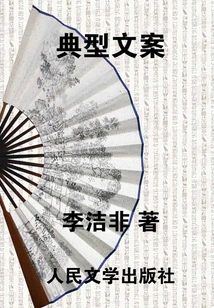
Typical Copywriting
Literature典型文案
Li Jiefei
This book carefully combs the development of contemporary Chinese literature since 1949 based on examples. The examination of typical events and characters in conjunction with the background of China's contemporary literary and art policies and deployments clearly outlines a "history of the relationship" between contemporary literature, especially the first thirty years (1949-1979) of literature and institutions, policies, situations, movements, etc.
This book carefully combs the development of contemporary Chinese literature since 1949 based on examples. The examination of typical events and characters in conjunction with the background of China's contemporary literary and art policies and deployments clearly outlines a "history of the relationship" between contemporary literature, especially the first thirty years (1949-1979) of literature and institutions, policies, situations, movements, etc.
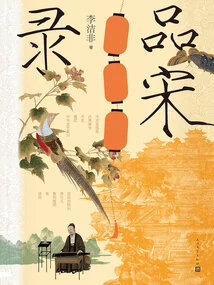
Pin Song Lu
History品宋录
Li Jiefei
"Taking Song Lu" is a new work by Mr. Li Jiefei, a famous writer and historian of literature, who deeply analyzes the history and culture of the Song Dynasty from multiple angles. The whole book uses the word "pin" to refer to the Song Dynasty, with a total of twelve chapters, each of which is "pin". The order is as follows: three chapters on the rights and wrongs of the southern crossing; one chapter each on Song Dynasty paintings, banknotes, force, spiritual thought, common people's culture, political system, judiciary and tea culture; and finally collected in the chapter "Lanking the Song Dynasty", which captures the whole picture of the Song Dynasty, focusing on its cities, commerce, lifestyle, science and technology, literature and art, power supervision and restraint, etc. The author, Mr. Li Jiefei, specializes in literature and "intervenes" in old history. His perspective and approach are different from those of professional historians. Today's serious historical treatises and monographs have the same voice and little difference in style; while "Pin Song Lu" writes history in a tactful way, with elegant writing and ink, making it easier for readers to appreciate the hidden meanings and subtexts.
"Taking Song Lu" is a new work by Mr. Li Jiefei, a famous writer and historian of literature, who deeply analyzes the history and culture of the Song Dynasty from multiple angles. The whole book uses the word "pin" to refer to the Song Dynasty, with a total of twelve chapters, each of which is "pin". The order is as follows: three chapters on the rights and wrongs of the southern crossing; one chapter each on Song Dynasty paintings, banknotes, force, spiritual thought, common people's culture, political system, judiciary and tea culture; and finally collected in the chapter "Lanking the Song Dynasty", which captures the whole picture of the Song Dynasty, focusing on its cities, commerce, lifestyle, science and technology, literature and art, power supervision and restraint, etc. The author, Mr. Li Jiefei, specializes in literature and "intervenes" in old history. His perspective and approach are different from those of professional historians. Today's serious historical treatises and monographs have the same voice and little difference in style; while "Pin Song Lu" writes history in a tactful way, with elegant writing and ink, making it easier for readers to appreciate the hidden meanings and subtexts.
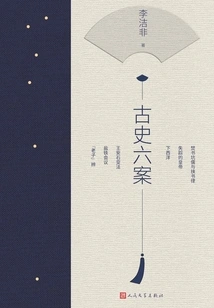
Six Cases in Ancient History
History古史六案
Li Jiefei
Chinese historiography is the most developed and can be regarded as a reliable history. Even so, there are still a lot of doubts, including many historical examples that are familiar to the world. This is the case with the "six cases" written in this book - the burning of books and the entrapment of Confucian scholars, the end of Emperor Jianwen, Zheng He's voyages to the West, Wang Anshi's reform, the Salt and Iron Conference of the Western Han Dynasty, the mystery of Laozi and his books, Zhao Kuangyin and his research on the Southern Tang Dynasty. The events and characters they involve are famous in history and can be said to be household names. However, the details of the knowledge are actually full of uncertain and even unknown factors. Many casual readers know nothing about this. This book examines the literature extensively and makes a microscope-like analysis and cracking of the "Six Cases". It is both informative, suspenseful and academic.
Chinese historiography is the most developed and can be regarded as a reliable history. Even so, there are still a lot of doubts, including many historical examples that are familiar to the world. This is the case with the "six cases" written in this book - the burning of books and the entrapment of Confucian scholars, the end of Emperor Jianwen, Zheng He's voyages to the West, Wang Anshi's reform, the Salt and Iron Conference of the Western Han Dynasty, the mystery of Laozi and his books, Zhao Kuangyin and his research on the Southern Tang Dynasty. The events and characters they involve are famous in history and can be said to be household names. However, the details of the knowledge are actually full of uncertain and even unknown factors. Many casual readers know nothing about this. This book examines the literature extensively and makes a microscope-like analysis and cracking of the "Six Cases". It is both informative, suspenseful and academic.
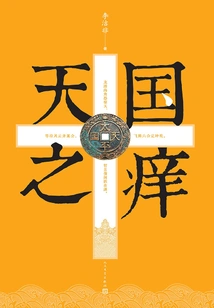
Heavenly Itch
History天国之痒
Li Jiefei
The Taiping Heavenly Kingdom (1850-1864) was a great drama on the Chinese historical stage after the Opium War. In just over ten years, China was shaken and all living beings were depressed. It is the end point of the history of peasant uprisings in China, but it goes beyond the consistent characteristics of peasant uprisings and combines various modern factors. The form it presents is particularly worthy of study and understanding. The roots of many problems in modern times can be found in it. As an important event that occurred in the context of ancient and modern historical transformation, it contains rich and profound content.
The Taiping Heavenly Kingdom (1850-1864) was a great drama on the Chinese historical stage after the Opium War. In just over ten years, China was shaken and all living beings were depressed. It is the end point of the history of peasant uprisings in China, but it goes beyond the consistent characteristics of peasant uprisings and combines various modern factors. The form it presents is particularly worthy of study and understanding. The roots of many problems in modern times can be found in it. As an important event that occurred in the context of ancient and modern historical transformation, it contains rich and profound content.