Library
Browse and search books
11 novels found
万历二十年:抗日援朝
Li Haobai
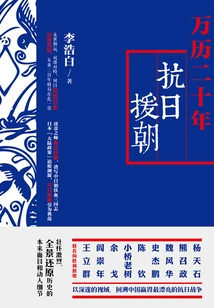
In the twentieth year of Wanli (AD 1592), Japan brazenly launched an aggressive war against North Korea and the Ming Dynasty of China. At the request of the Korean king, Zhu Yijun, the Wanli Emperor of the Ming Dynasty, resolutely sent the famous general Li Rusong to the Eastern Expedition to resist Japan and aid Korea, and fertile the Korean Peninsula with blood. Wanli's victory in resisting Japan and aiding Korea had a decisive impact on the development of the Asian pattern. With a pen that is like a raft, the author clears away the fog of history, analyzes it piece by piece, and directly attacks the "vital gate" of the Wanli War. He also puts forward many insights into the historical trends of China, Japan, and Korea before and after it, which is profound and full of new ideas. The whole work is majestic and passionate, leading readers to appreciate the changes in history. It also contains a sophisticated interpretation of history and a rational analysis of its causes, restoring the truth of history. The profound concern for reality is even more touching and thoughtful, and it makes people nod and praise!
In the twentieth year of Wanli (AD 1592), Japan brazenly launched an aggressive war against North Korea and the Ming Dynasty of China. At the request of the Korean king, Zhu Yijun, the Wanli Emperor of the Ming Dynasty, resolutely sent the famous general Li Rusong to the Eastern Expedition to resist Japan and aid Korea, and fertile the Korean Peninsula with blood. Wanli's victory in resisting Japan and aiding Korea had a decisive impact on the development of the Asian pattern. With a pen that is like a raft, the author clears away the fog of history, analyzes it piece by piece, and directly attacks the "vital gate" of the Wanli War. He also puts forward many insights into the historical trends of China, Japan, and Korea before and after it, which is profound and full of new ideas. The whole work is majestic and passionate, leading readers to appreciate the changes in history. It also contains a sophisticated interpretation of history and a rational analysis of its causes, restoring the truth of history. The profound concern for reality is even more touching and thoughtful, and it makes people nod and praise!
Salt Wars: Final Chapter
General Fiction盐战:终章
Li Haobai
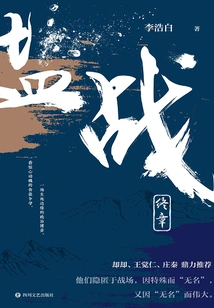
After the "poisonous salt water" incident at the Jingzu Gong Festival that shocked the whole country occurred in Zhongxian County, Chongqing, the Kuomintang Party Headquarters held an emergency meeting to conduct a thorough investigation into the incident and tightened the management and monopoly of the "salt industry." At the same time, the Communist Party in northern Shaanxi was in short supply of salt and urgently needed Li Tiancheng to transfer salt from the Zhong County Salt Factory to maintain battlefield supplies. Li Tiancheng's secret "salt transportation" operation attracted the attention of Japanese spies. The Japanese spies planned to use this "salt transportation" operation to trigger an internal struggle within the Kuomintang, thereby implementing the "515 Top Secret Plan" to limit the strategic use of salt by the Kuomintang and the Communist Party. During an operation by a Japanese spy, the "515 Top Secret Plan" was suddenly exposed. The cooperation between the Kuomintang and the Communist Party to capture Japanese spies has also begun...
After the "poisonous salt water" incident at the Jingzu Gong Festival that shocked the whole country occurred in Zhongxian County, Chongqing, the Kuomintang Party Headquarters held an emergency meeting to conduct a thorough investigation into the incident and tightened the management and monopoly of the "salt industry." At the same time, the Communist Party in northern Shaanxi was in short supply of salt and urgently needed Li Tiancheng to transfer salt from the Zhong County Salt Factory to maintain battlefield supplies. Li Tiancheng's secret "salt transportation" operation attracted the attention of Japanese spies. The Japanese spies planned to use this "salt transportation" operation to trigger an internal struggle within the Kuomintang, thereby implementing the "515 Top Secret Plan" to limit the strategic use of salt by the Kuomintang and the Communist Party. During an operation by a Japanese spy, the "515 Top Secret Plan" was suddenly exposed. The cooperation between the Kuomintang and the Communist Party to capture Japanese spies has also begun...
铁马碧血耀山河
Li Haobai
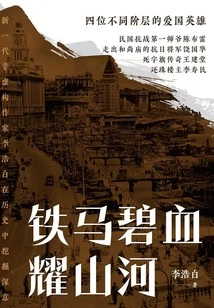
This book is composed of four novellas of patriotic hero stories from different classes, namely "Chen Bulei, the First Master of the Anti-Japanese War of the Republic of China", "The Anti-Japanese General Rao Guohua Who Walked Out of the Monk Temple", "The Legend of Death Flag Wang Jiantang" and "The Master of Huanzhu Tower Li Shoumin". Adopting the writing method of "doing the big things right and the small things right", the author explores the profound and new meanings in history, explains the profound and simple things in a simple way, and refreshes people's understanding of historical figures.
This book is composed of four novellas of patriotic hero stories from different classes, namely "Chen Bulei, the First Master of the Anti-Japanese War of the Republic of China", "The Anti-Japanese General Rao Guohua Who Walked Out of the Monk Temple", "The Legend of Death Flag Wang Jiantang" and "The Master of Huanzhu Tower Li Shoumin". Adopting the writing method of "doing the big things right and the small things right", the author explores the profound and new meanings in history, explains the profound and simple things in a simple way, and refreshes people's understanding of historical figures.
大明神断:洪武元年1368
Li Haobai
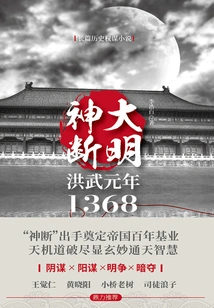
"The Legend of the Ming Dynasty: 1368, the First Year of Hongwu" tells this story: In the spring of the first year of Hongwu, Zhu Yuanzhang personally led an army to conquer Wang Baobao, the powerful general of the Yuan Dynasty. Prime Minister Li Shanchang and Yushi Zhongcheng Liu Bowen stayed in Yingtian Mansion as two ministers of supervision and auxiliary government, assisting Prince Zhu Biao in governing the country. When the three major problems of expelling the barbarians, eliminating natural disasters, and clearing up the rule of law suddenly hit him, Liu Bowen cleverly planned it within two or three months, used the theory of Yili, and deeply understood the ways of heaven and humanity. Wang Baobao's great worries relieved the constraints of the Huaixi clique on Li Bin's case, and the difficulties faced by the common people in Jiangnan due to lack of manpower to fight disasters. It promoted the concept of respecting the law and abiding by the law in the hearts of the people, and firmly safeguarded judicial fairness and the integrity of officials.
"The Legend of the Ming Dynasty: 1368, the First Year of Hongwu" tells this story: In the spring of the first year of Hongwu, Zhu Yuanzhang personally led an army to conquer Wang Baobao, the powerful general of the Yuan Dynasty. Prime Minister Li Shanchang and Yushi Zhongcheng Liu Bowen stayed in Yingtian Mansion as two ministers of supervision and auxiliary government, assisting Prince Zhu Biao in governing the country. When the three major problems of expelling the barbarians, eliminating natural disasters, and clearing up the rule of law suddenly hit him, Liu Bowen cleverly planned it within two or three months, used the theory of Yili, and deeply understood the ways of heaven and humanity. Wang Baobao's great worries relieved the constraints of the Huaixi clique on Li Bin's case, and the difficulties faced by the common people in Jiangnan due to lack of manpower to fight disasters. It promoted the concept of respecting the law and abiding by the law in the hearts of the people, and firmly safeguarded judicial fairness and the integrity of officials.
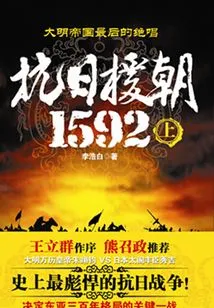
抗日援朝1592(上)
Li Haobai
The most ferocious Anti-Japanese War in history, the last swan song of the Ming Empire! This was a key battle that determined the three-hundred-year pattern of East Asia. It was also the most beautiful war of resistance against Japan won by the Chinese. In the 20th year of Wanli in the Ming Dynasty (1592), the actual ruler of Japan, Toyotomi Hideyoshi, took advantage of the power of unifying Japan and brazenly launched an aggressive war against Korea and the Ming Dynasty. At the request of the Korean King Li Huo, the Wanli Emperor Zhu Yijun of the Ming Dynasty overcame various difficulties and resolutely sent the famous general Li Rusong to the east to fight against Japan and aid Korea. A bloody battle between aggression and counter-aggression began on the Korean Peninsula... This book reproduces this long-lasting and far-reaching history. The foundation laid by Toyotomi Hideyoshi, a generation of Japanese heroes, fell apart in this war and eventually fell into the hands of Tokugawa Ieyasu. The book describes the overt and covert struggles and power intrigues of the two heroes.
The most ferocious Anti-Japanese War in history, the last swan song of the Ming Empire! This was a key battle that determined the three-hundred-year pattern of East Asia. It was also the most beautiful war of resistance against Japan won by the Chinese. In the 20th year of Wanli in the Ming Dynasty (1592), the actual ruler of Japan, Toyotomi Hideyoshi, took advantage of the power of unifying Japan and brazenly launched an aggressive war against Korea and the Ming Dynasty. At the request of the Korean King Li Huo, the Wanli Emperor Zhu Yijun of the Ming Dynasty overcame various difficulties and resolutely sent the famous general Li Rusong to the east to fight against Japan and aid Korea. A bloody battle between aggression and counter-aggression began on the Korean Peninsula... This book reproduces this long-lasting and far-reaching history. The foundation laid by Toyotomi Hideyoshi, a generation of Japanese heroes, fell apart in this war and eventually fell into the hands of Tokugawa Ieyasu. The book describes the overt and covert struggles and power intrigues of the two heroes.
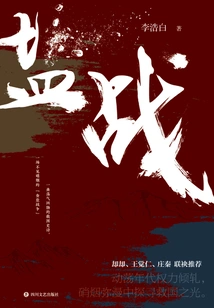
Salt War
General Fiction盐战
Li Haobai
In 1938, the domestic political situation was turbulent and the people were in dire straits. Japan even implemented a "salt blockade" policy against China in an attempt to defeat China materially. Zhongxian County, Chongqing, the salt supply center in eastern Sichuan, was controlled by the local warlord "Wude Lijinhui". Li Tiancheng, a special commissioner of the Kuomintang, was "parachuted down" to Zhongxian County to take over the salt industry. At the same time, Li Tiancheng, as a communist lurking within the Kuomintang, secretly assisted the Communist Party. During a large-scale salt transportation mission, the Kuomintang's salt transportation team was robbed. The Kuomintang and the Communist Party formed a joint investigation team in response to this incident. During the investigation, the Kuomintang took the opportunity to eliminate the influence of the "Budoku Regiment Association" in Zhong County. However, they did not expect that the secret action plan of Japanese spies at the salt industry ceremony was already quietly underway...
In 1938, the domestic political situation was turbulent and the people were in dire straits. Japan even implemented a "salt blockade" policy against China in an attempt to defeat China materially. Zhongxian County, Chongqing, the salt supply center in eastern Sichuan, was controlled by the local warlord "Wude Lijinhui". Li Tiancheng, a special commissioner of the Kuomintang, was "parachuted down" to Zhongxian County to take over the salt industry. At the same time, Li Tiancheng, as a communist lurking within the Kuomintang, secretly assisted the Communist Party. During a large-scale salt transportation mission, the Kuomintang's salt transportation team was robbed. The Kuomintang and the Communist Party formed a joint investigation team in response to this incident. During the investigation, the Kuomintang took the opportunity to eliminate the influence of the "Budoku Regiment Association" in Zhong County. However, they did not expect that the secret action plan of Japanese spies at the salt industry ceremony was already quietly underway...
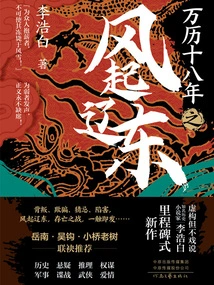
In the 18th Year of Wanli, the Wind Started in Liaodong
General Fiction万历十八年之风起辽东
Li Haobai
In the eighteenth year of Wanli in the Ming Dynasty, Zhu Yijun, the emperor of the Ming Dynasty, decided to hold the "Meridian Gate Prisoner Presentation Ceremony" in order to regain his national prestige and summon all the major vassal states to visit. The "North Korean secret treasure" paid tribute by the North Korean envoys disappeared. Zhang Cheng, the eunuch in charge of the Ming Dynasty's ceremonial department, and Shen Shixing, the chief minister of the cabinet, were assassinated, and the clues pointed directly to Liaodong Town. The martyrs of the "Southern Barracks" in Liaodong demanded extreme wages, the dead soldiers of the "Blood Knife Camp" angrily demanded justice, Japanese spies publicly assassinated Zhu Yijun, the Mongolian Duoyan tribe came to the city, and the clan forces of the Ming Dynasty conspired to rebel... Between collusion and competition, what are they planning? Faced with heavy fog, Bai Qingzhuo, with the full support of many parties, adheres to the original intention of "being honest, benevolent and harmonious", overcomes all difficulties step by step, and pursues the final truth...
In the eighteenth year of Wanli in the Ming Dynasty, Zhu Yijun, the emperor of the Ming Dynasty, decided to hold the "Meridian Gate Prisoner Presentation Ceremony" in order to regain his national prestige and summon all the major vassal states to visit. The "North Korean secret treasure" paid tribute by the North Korean envoys disappeared. Zhang Cheng, the eunuch in charge of the Ming Dynasty's ceremonial department, and Shen Shixing, the chief minister of the cabinet, were assassinated, and the clues pointed directly to Liaodong Town. The martyrs of the "Southern Barracks" in Liaodong demanded extreme wages, the dead soldiers of the "Blood Knife Camp" angrily demanded justice, Japanese spies publicly assassinated Zhu Yijun, the Mongolian Duoyan tribe came to the city, and the clan forces of the Ming Dynasty conspired to rebel... Between collusion and competition, what are they planning? Faced with heavy fog, Bai Qingzhuo, with the full support of many parties, adheres to the original intention of "being honest, benevolent and harmonious", overcomes all difficulties step by step, and pursues the final truth...
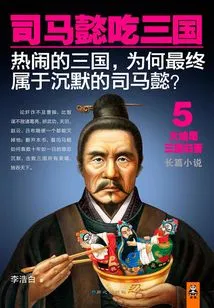
Sima Yi Eats Three Kingdoms 5 (finale)
General Fiction司马懿吃三国5(大结局)
Li Haobai
Why did the bustling Three Kingdoms end up belonging to the silent Sima Yi? In terms of cunning and cunning, he is inferior to Zhuge Liang. In terms of martial arts, any one of Guan Yu, Zhao Yun and Lu Bu can destroy him. Open this book and see how Sima Yi relied on decades of forbearance to defeat all the heroes of the Three Kingdoms and monopolize the world. Sima Yi lurked around Cao Cao for decades, letting Cao Cao do what he wanted. He pretended to be weak, stupid, sick, paralyzed, and even dead to paralyze his enemies, opponents, bosses, brothers, friends and even family members... Open this book and see Sima Yi's unparalleled silence, forbearance and strategy.
Why did the bustling Three Kingdoms end up belonging to the silent Sima Yi? In terms of cunning and cunning, he is inferior to Zhuge Liang. In terms of martial arts, any one of Guan Yu, Zhao Yun and Lu Bu can destroy him. Open this book and see how Sima Yi relied on decades of forbearance to defeat all the heroes of the Three Kingdoms and monopolize the world. Sima Yi lurked around Cao Cao for decades, letting Cao Cao do what he wanted. He pretended to be weak, stupid, sick, paralyzed, and even dead to paralyze his enemies, opponents, bosses, brothers, friends and even family members... Open this book and see Sima Yi's unparalleled silence, forbearance and strategy.
洪武元年:大明开国的罪与罚
Li Haobai
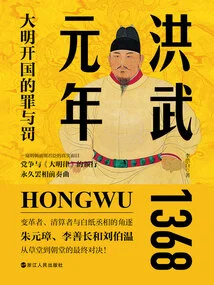
77 days before the establishment of the Ming Dynasty, Zhu Yuanzhang launched a northern expedition to the remaining forces of the Yuan Dynasty, and Prince Zhu Biao stayed in Yingtianfu, Nanjing, the capital. Little did they know that in Nanjing at this time, undercurrents were surging. With the severe drought as the background and the arrest of Li Shanchang's nephew Li Bin for corruption as the trigger, a secret war began surrounding Zhu Yuanzhang, Li Shanchang, Hu Weiyong, and Liu Bowen. Various parties launched an arduous and complicated wrestling on this matter. When three major problems such as driving away the barbarians, eliminating natural disasters, and clearing up the rule of law suddenly hit them, the four people each showed their uprightness, strategy, and ferocity. A small incident suddenly became the biggest case in the early days of the Ming Dynasty. Who is confusing everything? What secrets are hidden behind this corruption case? Why did Liu Bowen resign and go home 11 days after the case ended? Did Hu Weiyong and Li Shanchang really die because of the "Hu Weiyong Case"? All the secrets are within these 77 days!
77 days before the establishment of the Ming Dynasty, Zhu Yuanzhang launched a northern expedition to the remaining forces of the Yuan Dynasty, and Prince Zhu Biao stayed in Yingtianfu, Nanjing, the capital. Little did they know that in Nanjing at this time, undercurrents were surging. With the severe drought as the background and the arrest of Li Shanchang's nephew Li Bin for corruption as the trigger, a secret war began surrounding Zhu Yuanzhang, Li Shanchang, Hu Weiyong, and Liu Bowen. Various parties launched an arduous and complicated wrestling on this matter. When three major problems such as driving away the barbarians, eliminating natural disasters, and clearing up the rule of law suddenly hit them, the four people each showed their uprightness, strategy, and ferocity. A small incident suddenly became the biggest case in the early days of the Ming Dynasty. Who is confusing everything? What secrets are hidden behind this corruption case? Why did Liu Bowen resign and go home 11 days after the case ended? Did Hu Weiyong and Li Shanchang really die because of the "Hu Weiyong Case"? All the secrets are within these 77 days!
一看就停不下来的三国史
Li Haobai
It turns out that Dong Zhuo once had a dream of Duke Zhou? Is Jia Xu the most refined egotist during the Three Kingdoms period? Was it the arrogance of the martial sage Guan Yu that ended Liu Bei's ambitions? ... From the division of the Three Kingdoms at the end of the Eastern Han Dynasty to the unification of the three families under the Jin Dynasty, the Three Kingdoms era saw numerous heroes, a tortuous and bizarre tragic song of generosity! This book analyzes the characters of the Three Kingdoms from a novel perspective and refreshes your understanding of the history of the Three Kingdoms.
It turns out that Dong Zhuo once had a dream of Duke Zhou? Is Jia Xu the most refined egotist during the Three Kingdoms period? Was it the arrogance of the martial sage Guan Yu that ended Liu Bei's ambitions? ... From the division of the Three Kingdoms at the end of the Eastern Han Dynasty to the unification of the three families under the Jin Dynasty, the Three Kingdoms era saw numerous heroes, a tortuous and bizarre tragic song of generosity! This book analyzes the characters of the Three Kingdoms from a novel perspective and refreshes your understanding of the history of the Three Kingdoms.
大明帝国的荣光:抗日援朝1592
Li Haobai
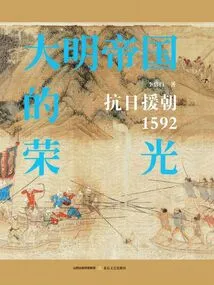
In the twentieth year of Wanli (1592), Japan brazenly launched an aggressive war against North Korea and the Ming Dynasty of China. At the request of the Korean king, Zhu Yijun, the Wanli Emperor of the Ming Dynasty, resolutely sent the famous general Li Rusong to the Eastern Expedition to resist Japan and aid Korea, and fertile the Korean Peninsula with blood. Everyone has their own feelings and judgments about history. The author adopts the method of "Zuo Zhuan" to make the decision before success or failure, using people to lead the affairs, and vividly shows the strategies of the various forces and the wit of the generals before the war. In the book, the image of each character is so distinct, and the connotation of each character is so rich. Wanli's victory in resisting Japan and aiding Korea had a decisive impact on the development of the Asian pattern.
In the twentieth year of Wanli (1592), Japan brazenly launched an aggressive war against North Korea and the Ming Dynasty of China. At the request of the Korean king, Zhu Yijun, the Wanli Emperor of the Ming Dynasty, resolutely sent the famous general Li Rusong to the Eastern Expedition to resist Japan and aid Korea, and fertile the Korean Peninsula with blood. Everyone has their own feelings and judgments about history. The author adopts the method of "Zuo Zhuan" to make the decision before success or failure, using people to lead the affairs, and vividly shows the strategies of the various forces and the wit of the generals before the war. In the book, the image of each character is so distinct, and the connotation of each character is so rich. Wanli's victory in resisting Japan and aiding Korea had a decisive impact on the development of the Asian pattern.