Library
Browse and search books
3 novels found
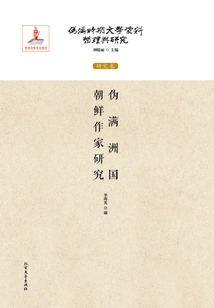
伪满洲国朝鲜作家研究(伪满时期文学资料整理与研究:研究卷)
Li Haiying
This book is the first large-scale book at home and abroad that comprehensively combs and details the literature and research results of the Puppet Manchukuo period. It aims to reflect the literary history of the Puppet Manchukuo period systematically, comprehensively and accurately. The book is divided into three parts: works volume, historical materials volume and research volume. It comprehensively and clearly presents the literary appearance and context of this special historical period, as well as the most representative and influential research results in this field at home and abroad. (The book has 34 episodes in total)
This book is the first large-scale book at home and abroad that comprehensively combs and details the literature and research results of the Puppet Manchukuo period. It aims to reflect the literary history of the Puppet Manchukuo period systematically, comprehensively and accurately. The book is divided into three parts: works volume, historical materials volume and research volume. It comprehensively and clearly presents the literary appearance and context of this special historical period, as well as the most representative and influential research results in this field at home and abroad. (The book has 34 episodes in total)
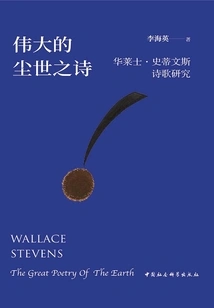
伟大的尘世之诗:华莱士·史蒂文斯诗歌研究
Li Haiying
"The Great Earthly Poetry" depicts Wallace Stevens, the most powerful poet in the history of modern American poetry. From textual capture to poetic argumentation, it runs through Li Haiying's keen awareness of issues, vivid ability to be present, and wise insights. Between transcendence and empiricism, on observation and imagination, Stevens explores the "reality" of the "highest fiction", explores new physical properties and new spirituality, and achieves a "great earthly poetry", thus achieving two kinds of success: the successful realization of poetic meaning and the successful interpretation of poetics, and at the same time he obtains two kinds of values: poetic value and poetic value. "The Great Earthly Poetry" explains Stevens from three aspects: observing the poet's position in the context of modern poetry and the hidden and lasting influence it has had both locally and abroad; exploring the poet's posture and intention, and considering the poet's specific characteristics from the perspectives of ironclad thinking, observation methods, theme selection, lyrical dilemmas, and modern narratives. The author explores the essence of modern poetry as a whole, focusing on the long poems "Blue Guitar", "Imaginary Notes" and "Autumn Aurora", taking into account other texts and poetic conceptions, analyzing how the poet creates contemporary poetry that satisfies both reason and imagination, and establishes a poetry theory with the structure of reality as the central reference.
"The Great Earthly Poetry" depicts Wallace Stevens, the most powerful poet in the history of modern American poetry. From textual capture to poetic argumentation, it runs through Li Haiying's keen awareness of issues, vivid ability to be present, and wise insights. Between transcendence and empiricism, on observation and imagination, Stevens explores the "reality" of the "highest fiction", explores new physical properties and new spirituality, and achieves a "great earthly poetry", thus achieving two kinds of success: the successful realization of poetic meaning and the successful interpretation of poetics, and at the same time he obtains two kinds of values: poetic value and poetic value. "The Great Earthly Poetry" explains Stevens from three aspects: observing the poet's position in the context of modern poetry and the hidden and lasting influence it has had both locally and abroad; exploring the poet's posture and intention, and considering the poet's specific characteristics from the perspectives of ironclad thinking, observation methods, theme selection, lyrical dilemmas, and modern narratives. The author explores the essence of modern poetry as a whole, focusing on the long poems "Blue Guitar", "Imaginary Notes" and "Autumn Aurora", taking into account other texts and poetic conceptions, analyzing how the poet creates contemporary poetry that satisfies both reason and imagination, and establishes a poetry theory with the structure of reality as the central reference.
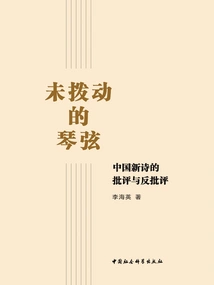
未拨动的琴弦:中国新诗的批评与反批评
Li Haiying
This book contains a total of 14 articles, divided into three parts: critical dilemmas, texts and adventures, focusing on many important issues in Chinese new poetry. The first part mainly discusses the current problems in poetry creation, and examines the writing of poetry history, long poem writing, modern lyrical spirit, and poetry writing in the context of new media; the second part explores the artistic effects achieved by poetic experience, and the main research objects are Chang Yao, Duoduo, Xiao Kaiyu, Sun Wenbo, and Jin Xiaojing; the third part clarifies the role of "place in poetry" based on a scientific analysis and historical attitude, and the main research objects include Xu Yunuo, Su Jinsan, Mori Zi, and Luo Yu.
This book contains a total of 14 articles, divided into three parts: critical dilemmas, texts and adventures, focusing on many important issues in Chinese new poetry. The first part mainly discusses the current problems in poetry creation, and examines the writing of poetry history, long poem writing, modern lyrical spirit, and poetry writing in the context of new media; the second part explores the artistic effects achieved by poetic experience, and the main research objects are Chang Yao, Duoduo, Xiao Kaiyu, Sun Wenbo, and Jin Xiaojing; the third part clarifies the role of "place in poetry" based on a scientific analysis and historical attitude, and the main research objects include Xu Yunuo, Su Jinsan, Mori Zi, and Luo Yu.