Library
Browse and search books
4 novels found
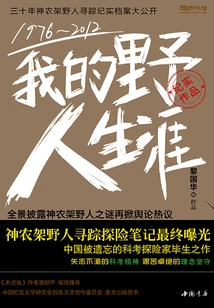
My Savage Career from 1976-2012
Literature1976-2012我的野人生涯
Li Guohua
This is an adventure documentary that records the author's more than 30 years of experience in exploring the mystery of "savages" in Shennongjia. The "savages" of Shennongjia are the first of four natural mysteries that fascinate all mankind. The author of this book, Li Guohua, is a member of the China Scientific Exploration Association. He has lived in the deep mountain caves of Shennongjia for more than 30 years, sleeping in the open air. In the vast forests of Shennongjia and the surrounding Daba Mountains, we explored hundreds of caves and grottoes, lived in more than 200 remote mountain families in more than 90 natural villages with information about savages, interviewed more than 400 savage witnesses, and recorded a total of nearly one million words of scientific expedition notes. "My Savage Career from 1976 to 2012" is compiled and refined by the author from nearly one million words of scientific expedition notes, with a total of more than 200,000 words in the book. It is divided into 34 chapters, and multiple photos, illustrations and text are combined to increase the readability of the work. The book truly, vividly and vividly reveals the author's little-known experience of tracking "savages" in the primitive deep forests for more than 30 years. It will reappear to readers the thrilling and difficult adventure life in the primitive deep forests of Shennongjia where there are poisonous snakes and beasts, flash floods and landslides, summer hail, and October snow.
This is an adventure documentary that records the author's more than 30 years of experience in exploring the mystery of "savages" in Shennongjia. The "savages" of Shennongjia are the first of four natural mysteries that fascinate all mankind. The author of this book, Li Guohua, is a member of the China Scientific Exploration Association. He has lived in the deep mountain caves of Shennongjia for more than 30 years, sleeping in the open air. In the vast forests of Shennongjia and the surrounding Daba Mountains, we explored hundreds of caves and grottoes, lived in more than 200 remote mountain families in more than 90 natural villages with information about savages, interviewed more than 400 savage witnesses, and recorded a total of nearly one million words of scientific expedition notes. "My Savage Career from 1976 to 2012" is compiled and refined by the author from nearly one million words of scientific expedition notes, with a total of more than 200,000 words in the book. It is divided into 34 chapters, and multiple photos, illustrations and text are combined to increase the readability of the work. The book truly, vividly and vividly reveals the author's little-known experience of tracking "savages" in the primitive deep forests for more than 30 years. It will reappear to readers the thrilling and difficult adventure life in the primitive deep forests of Shennongjia where there are poisonous snakes and beasts, flash floods and landslides, summer hail, and October snow.
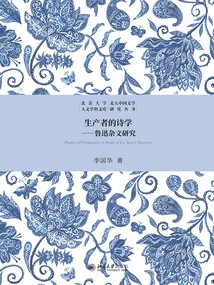
生产者的诗学:鲁迅杂文研究
Li Guohua
This book examines the inherent rhetorical logic, article form, context of production, and the author's subjective position in Lu Xun's essays. It takes the concepts of "producer" and "consumer" inherent in Lu Xun's essays as the core, opens up new research perspectives, and pursues the construction of a "holistic understanding" of Lu Xun's essays. It once again approaches or even enters Lu Xun's essays in the sense of continuous trial and error, and innovates the theoretical and discourse resources for us to enter Lu Xun and 20th-century China.
This book examines the inherent rhetorical logic, article form, context of production, and the author's subjective position in Lu Xun's essays. It takes the concepts of "producer" and "consumer" inherent in Lu Xun's essays as the core, opens up new research perspectives, and pursues the construction of a "holistic understanding" of Lu Xun's essays. It once again approaches or even enters Lu Xun's essays in the sense of continuous trial and error, and innovates the theoretical and discourse resources for us to enter Lu Xun and 20th-century China.
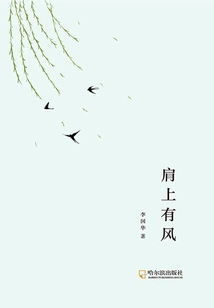
There is Wind on Shoulders
Literature肩上有风
Li Guohua
"The Wind on the Shoulder" is a work of local prose and educational essays that Li Guohua has devoted himself to creating in recent years. The book is divided into five series: "Light dust on the road rises with the wind", "Breathe deeply in the wind", "Wind and rain make a cassock", "Let the wind blow in your ears" and "The breeze comes from left and right", covering topics such as hometown, family relationships, life, childhood, education and so on. Through this work, the author strives to recall the beauty and vicissitudes of a village, restore the innocence and memory of a childhood, witness the past and present life of a group of villagers, listen to a hymn and symphony of family love, and support a kind of heart and temperature of education... As far as the eye can see, it covers the remaining territory of people and people, people and nature, striving to highlight the humanistic spirit, the spirit of reality and the spirit of art. Trying to make your life as vast, colorful and majestic as the sky in your hometown, showing the innocence, kindness and frankness of a child. The author uses his own ideas, his own soul, his own wisdom and actions to not only help others but also help them grow. He tastes education, reflects on education, explores education with everyone, calls for the return of education, looks for the loss of education, watches for the ideal of education, and spends the good times accompanied by education. It has the significance of gathering strength and conveying emotions to carry forward the excellent traditional Chinese culture and realize the educational dream together, and lead readers to the future. In theory and practice, it fills a shortcoming in happiness education - walking with others and living poetically.
"The Wind on the Shoulder" is a work of local prose and educational essays that Li Guohua has devoted himself to creating in recent years. The book is divided into five series: "Light dust on the road rises with the wind", "Breathe deeply in the wind", "Wind and rain make a cassock", "Let the wind blow in your ears" and "The breeze comes from left and right", covering topics such as hometown, family relationships, life, childhood, education and so on. Through this work, the author strives to recall the beauty and vicissitudes of a village, restore the innocence and memory of a childhood, witness the past and present life of a group of villagers, listen to a hymn and symphony of family love, and support a kind of heart and temperature of education... As far as the eye can see, it covers the remaining territory of people and people, people and nature, striving to highlight the humanistic spirit, the spirit of reality and the spirit of art. Trying to make your life as vast, colorful and majestic as the sky in your hometown, showing the innocence, kindness and frankness of a child. The author uses his own ideas, his own soul, his own wisdom and actions to not only help others but also help them grow. He tastes education, reflects on education, explores education with everyone, calls for the return of education, looks for the loss of education, watches for the ideal of education, and spends the good times accompanied by education. It has the significance of gathering strength and conveying emotions to carry forward the excellent traditional Chinese culture and realize the educational dream together, and lead readers to the future. In theory and practice, it fills a shortcoming in happiness education - walking with others and living poetically.
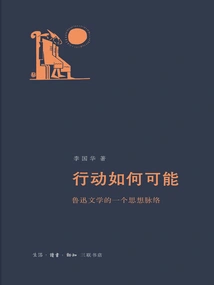
行动如何可能:鲁迅文学的一个思想脉络
Li Guohua
Lu Xun is the cornerstone and pinnacle of modern Chinese literature, and the ideas behind his literature also have cornerstone and pinnacle significance. But no matter which one is more important, his thought or his literature, for readers, the unavoidable entanglement is that Lu Xun's thoughts are often expressed in specific literary forms, and Lu Xun's literature is often rooted in specific logical constants in his thoughts. Therefore, how to reach the secret of Lu Xun's thought through the literary form created by Lu Xun has become a very important topic. This book focuses on this, carefully combing through the relationship between literary forms and ideas in various texts left by Lu Xun, and exploring an important ideological context of Lu Xun's literature, that is, in modern China, faced with the changes and turmoil brought about by the intersection between ancient and modern China and the West, how is action possible? This book first discusses the basic aspects of Lu Xun's thoughts during his stay in Japan, outlines the relationship with Zhang Taiyan's "self-nature", and demonstrates Lu Xun's understanding and desire for action at the ideological level. It then discusses the subject construction issues related to "self-nature" in "Weeds", "New Stories" and old-style poems, focusing on analyzing the relationship between thought and literature, and developing Lu Xun's reconstruction. Ideological dilemmas, historical philosophy and self-comfort when action is possible, and finally, in the context of literary analysis, we discuss some of Lu Xun's novels in the novel collections such as "The Scream" and "Wandering", start a close reading of the novels in a specific historical context, clarify Lu Xun's understanding of the Revolution of 1911, and discuss his thinking on how action is possible from the perspective of historical practice and the characteristics of the corresponding literary form. In short, this book attempts to trace the basic ideological thread behind Lu Xun's literature based on the basic question of "how is action possible", with a view to triggering different discussions on Lu Xun and modern Chinese thought and literature.
Lu Xun is the cornerstone and pinnacle of modern Chinese literature, and the ideas behind his literature also have cornerstone and pinnacle significance. But no matter which one is more important, his thought or his literature, for readers, the unavoidable entanglement is that Lu Xun's thoughts are often expressed in specific literary forms, and Lu Xun's literature is often rooted in specific logical constants in his thoughts. Therefore, how to reach the secret of Lu Xun's thought through the literary form created by Lu Xun has become a very important topic. This book focuses on this, carefully combing through the relationship between literary forms and ideas in various texts left by Lu Xun, and exploring an important ideological context of Lu Xun's literature, that is, in modern China, faced with the changes and turmoil brought about by the intersection between ancient and modern China and the West, how is action possible? This book first discusses the basic aspects of Lu Xun's thoughts during his stay in Japan, outlines the relationship with Zhang Taiyan's "self-nature", and demonstrates Lu Xun's understanding and desire for action at the ideological level. It then discusses the subject construction issues related to "self-nature" in "Weeds", "New Stories" and old-style poems, focusing on analyzing the relationship between thought and literature, and developing Lu Xun's reconstruction. Ideological dilemmas, historical philosophy and self-comfort when action is possible, and finally, in the context of literary analysis, we discuss some of Lu Xun's novels in the novel collections such as "The Scream" and "Wandering", start a close reading of the novels in a specific historical context, clarify Lu Xun's understanding of the Revolution of 1911, and discuss his thinking on how action is possible from the perspective of historical practice and the characteristics of the corresponding literary form. In short, this book attempts to trace the basic ideological thread behind Lu Xun's literature based on the basic question of "how is action possible", with a view to triggering different discussions on Lu Xun and modern Chinese thought and literature.