Library
Browse and search books
4 novels found

Break Out of the Cocoon
Literature破茧而出
Li Dongmei
The ugly caterpillar forms a chrysalis and then emerges as a butterfly. It has to go through a heart-wrenching struggle before it can emerge from the cocoon. This is tempering, growth, and the price it has to pay to become a beautiful butterfly. If we want to realize our dreams and achieve success, why don't we have to go through some hardships? ! Each of the wonderful short chapters in "Emerging from the Cocoon" reveals the philosophy of life. Li Dongmei is good at writing big articles into small ones, and she is also good at writing small articles into big ones. This is all due to her skillful language skills and narrative style.
The ugly caterpillar forms a chrysalis and then emerges as a butterfly. It has to go through a heart-wrenching struggle before it can emerge from the cocoon. This is tempering, growth, and the price it has to pay to become a beautiful butterfly. If we want to realize our dreams and achieve success, why don't we have to go through some hardships? ! Each of the wonderful short chapters in "Emerging from the Cocoon" reveals the philosophy of life. Li Dongmei is good at writing big articles into small ones, and she is also good at writing small articles into big ones. This is all due to her skillful language skills and narrative style.

鲍·艾亨鲍姆文艺思想研究
Li Dongmei
Paul Eichenbaum is an important representative of the Russian formalism school in the 20th century. Starting from the historical context of the development of Russian society, this book not only horizontally compares the commonalities and differences between Eichenbaum and formalist scholars such as Shklovsky and Tyanov from a synchronic perspective, and explores his unique contribution to formalist poetics, but also longitudinally combs the literary theories expounded by Eichenbaum in different periods from a diachronic perspective, and explores the inner logic of his late realization of transcendental formalist poetics. This book not only points out that the Russian Formalist School does not advertise the so-called "formalism only", but also comments on the influence of Eichenbaum's literary thoughts on contemporary literary theory.
Paul Eichenbaum is an important representative of the Russian formalism school in the 20th century. Starting from the historical context of the development of Russian society, this book not only horizontally compares the commonalities and differences between Eichenbaum and formalist scholars such as Shklovsky and Tyanov from a synchronic perspective, and explores his unique contribution to formalist poetics, but also longitudinally combs the literary theories expounded by Eichenbaum in different periods from a diachronic perspective, and explores the inner logic of his late realization of transcendental formalist poetics. This book not only points out that the Russian Formalist School does not advertise the so-called "formalism only", but also comments on the influence of Eichenbaum's literary thoughts on contemporary literary theory.
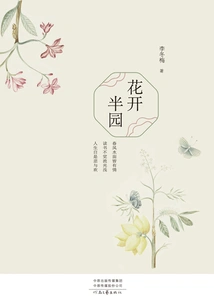
Half the Flowers Bloom in the Garden
Literature花开半园
Li Dongmei
This book contains dozens of essays written by junior high school Chinese teachers, divided into three series: "Spring breeze and water are full of love", "Reading without realizing the light flow" and "Life is full of sorrow and joy", which are the author's thoughts and feelings on travel, reading and teaching experience, and life insights. In Li Dongmei's writing, the natural scenery has a spotless beauty. Five thousand years of Chinese civilization has been deposited in the cultural landscape, which reflects the love and awe of culture.
This book contains dozens of essays written by junior high school Chinese teachers, divided into three series: "Spring breeze and water are full of love", "Reading without realizing the light flow" and "Life is full of sorrow and joy", which are the author's thoughts and feelings on travel, reading and teaching experience, and life insights. In Li Dongmei's writing, the natural scenery has a spotless beauty. Five thousand years of Chinese civilization has been deposited in the cultural landscape, which reflects the love and awe of culture.

The Wild Carpenter and the Little Nun
General Fiction野木匠与小尼姑
Li Dongmei
There is a village at the foot of Ziyun Mountain called Doujiao Village. There is a farmer named Shengfa at the west end of Doujiao Village. He is in his fifties and has a short and chubby figure. He has a oily bald head, broom eyebrows, and black bean eyes. Every time he speaks a word, he blinks his eyes at least three times, and every time he blinks, a "dot" appears in his stomach. All in all, he looked strong and smart. In the past few years, Shanda has opened restaurants, opened shops, and made a fortune through business. He has ten thousand to eight thousand yuan in hand. When you are rich, you become angry. His family built a house, married a wife, and was very grand. The villagers looked red-eyed. They respected him on the surface, but secretly called him "Lao Facai" with jealousy. Yesterday was the wedding day of Jin Zhu, the eldest son of the Sheng family. Lao Facai set up thirteen tables for a banquet for guests.
There is a village at the foot of Ziyun Mountain called Doujiao Village. There is a farmer named Shengfa at the west end of Doujiao Village. He is in his fifties and has a short and chubby figure. He has a oily bald head, broom eyebrows, and black bean eyes. Every time he speaks a word, he blinks his eyes at least three times, and every time he blinks, a "dot" appears in his stomach. All in all, he looked strong and smart. In the past few years, Shanda has opened restaurants, opened shops, and made a fortune through business. He has ten thousand to eight thousand yuan in hand. When you are rich, you become angry. His family built a house, married a wife, and was very grand. The villagers looked red-eyed. They respected him on the surface, but secretly called him "Lao Facai" with jealousy. Yesterday was the wedding day of Jin Zhu, the eldest son of the Sheng family. Lao Facai set up thirteen tables for a banquet for guests.