Library
Browse and search books
7 novels found
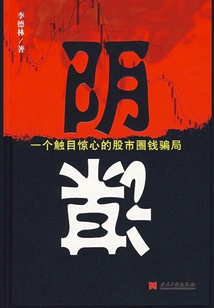
Conspiracy: a Shocking Money-making Scam in the Stock Market
General Fiction阴谋:一个触目惊心的股市圈钱骗局
Li Delin
A shocking money-making scam in the stock market. Li Delin is another masterpiece that exposes the dark side of the stock market after "Insider of Delong". Sexual traps, packaging and listing, rat warehouses, bankrolling, insider trading, and money laundering. This book tells the story of a small county-owned winery in Northeast China that lost money and stopped production. It was manipulated by local officials and interest groups. It falsified performance, misappropriated funds illegally, packaged for listing, built a rat warehouse, set up a bank, insider trading, manipulated stock prices, laundered money, drew blood to escape, stock delisting and other inside stories of a series of operations full of conspiracies and traps.
A shocking money-making scam in the stock market. Li Delin is another masterpiece that exposes the dark side of the stock market after "Insider of Delong". Sexual traps, packaging and listing, rat warehouses, bankrolling, insider trading, and money laundering. This book tells the story of a small county-owned winery in Northeast China that lost money and stopped production. It was manipulated by local officials and interest groups. It falsified performance, misappropriated funds illegally, packaged for listing, built a rat warehouse, set up a bank, insider trading, manipulated stock prices, laundered money, drew blood to escape, stock delisting and other inside stories of a series of operations full of conspiracies and traps.
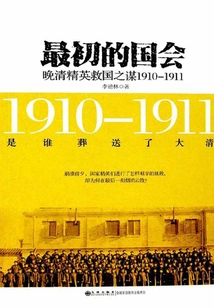
最初的国会:晚清精英救国之谋1910-1911
Li Delin
This book tells the story of the arduous rescue effort carried out by the national elite on the eve of the collapse of the Qing Dynasty, but why did it disappear at the last moment? From 1910 to 1911, the Manchu Qing Zizhengyuan held a meeting to prepare for amending the constitution and promoting the monarchy. However, the results disappointed the people. In despair, the constitutionalists changed course and moved towards a republic. Although the Manchu Qing regime eventually collapsed, the top-level design and governance ideals of the elites of the Zizhengyuan in many aspects such as politics, education, and economy left a rich legacy that China could learn from later on.
This book tells the story of the arduous rescue effort carried out by the national elite on the eve of the collapse of the Qing Dynasty, but why did it disappear at the last moment? From 1910 to 1911, the Manchu Qing Zizhengyuan held a meeting to prepare for amending the constitution and promoting the monarchy. However, the results disappointed the people. In despair, the constitutionalists changed course and moved towards a republic. Although the Manchu Qing regime eventually collapsed, the top-level design and governance ideals of the elites of the Zizhengyuan in many aspects such as politics, education, and economy left a rich legacy that China could learn from later on.
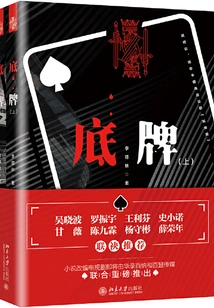
Trump Card (complete Collection)
General Fiction底牌(全集)
Li Delin
Far East Securities suddenly exploded with an own index, and the stock market was turned upside down. Amid the chaos, Huang Tiansha, the boss of Nanhai Longteng Group, bought the shares of Pangu Real Estate, a major listed real estate company in China. Qiao Zhiyuan, chairman of Pangu Real Estate, met Huang Tiansha secretly in Beijing, and the two broke up on bad terms. Huang Tiansha became angry and determined to take control of Pangu, and a life-and-death battle for control of listed companies began...
Far East Securities suddenly exploded with an own index, and the stock market was turned upside down. Amid the chaos, Huang Tiansha, the boss of Nanhai Longteng Group, bought the shares of Pangu Real Estate, a major listed real estate company in China. Qiao Zhiyuan, chairman of Pangu Real Estate, met Huang Tiansha secretly in Beijing, and the two broke up on bad terms. Huang Tiansha became angry and determined to take control of Pangu, and a life-and-death battle for control of listed companies began...
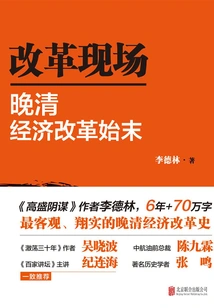
改革现场:晚清经济改革始末
Li Delin
In 1862, the economic reforms of the late Qing Dynasty kicked off. In the process of the struggle for power between the ruling group and the Han armed groups, two major military projects, Mawei Shipyard and Jiangnan Manufacturing Administration, were launched. The operational efficiency of government-run state-owned enterprises was extremely low. During an anti-corruption campaign against state-owned enterprises that began in 1872, the door to reform was opened to private capital. Since then, 1872 has become a starting point for the reform from state-owned to private and partial to overall. It is also the starting point for the late Qing Dynasty to lay hidden dangers for itself. The powerful official faction headed by Yi , Zeng Guofan, Li Hongzhang, Zuo Zongtang, Yuan Shikai, and Zhang Zhidong became the protagonists of the reform, and the old and new businessmen headed by Tang Tingshu, Hu Xueyan, Sheng Xuanhuai, and Zheng Guanying became the vanguard of the reform. The battle between the imperial court and businessmen, and the years of confrontation between the state and the people, and the people and the state, eventually forced economic reform to force political reform. In a constitutional reform promoted by commercial forces, the late Qing Dynasty came to an end in 1911.
In 1862, the economic reforms of the late Qing Dynasty kicked off. In the process of the struggle for power between the ruling group and the Han armed groups, two major military projects, Mawei Shipyard and Jiangnan Manufacturing Administration, were launched. The operational efficiency of government-run state-owned enterprises was extremely low. During an anti-corruption campaign against state-owned enterprises that began in 1872, the door to reform was opened to private capital. Since then, 1872 has become a starting point for the reform from state-owned to private and partial to overall. It is also the starting point for the late Qing Dynasty to lay hidden dangers for itself. The powerful official faction headed by Yi , Zeng Guofan, Li Hongzhang, Zuo Zongtang, Yuan Shikai, and Zhang Zhidong became the protagonists of the reform, and the old and new businessmen headed by Tang Tingshu, Hu Xueyan, Sheng Xuanhuai, and Zheng Guanying became the vanguard of the reform. The battle between the imperial court and businessmen, and the years of confrontation between the state and the people, and the people and the state, eventually forced economic reform to force political reform. In a constitutional reform promoted by commercial forces, the late Qing Dynasty came to an end in 1911.
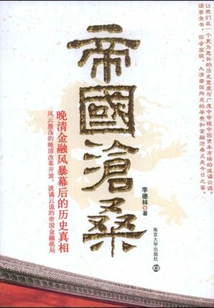
The Vicissitudes of Empire: the Historical Truth Behind the Financial Crisis of the Late Qing Dynasty
General Fiction帝国沧桑:晚清金融风暴幕后的历史真相
Li Delin
This book tells that in 1872, the Qing Dynasty launched a magnificent reform and opening up. Empress Cixi, Li Hongzhang, Sheng Xuanhuai, Tang Tingshu, Ito Hirobumi, Hoover... All the influential figures appeared in costumes one by one, and together they sang the last elegy of the Aisin Gioro Dynasty. Behind this tragic elegy a hundred years ago, who was promoting the reform and opening up of the Qing Dynasty? Who is manipulating the immature Qing Dynasty stock market? On the turbulent road to the revival of the Qing Dynasty, who is directing the series of financial turmoil? This book recreates the capital market of the late Qing Dynasty from 1872 to 1911, like a mirror reflecting the past and present. Chinese bureaucrats and capitalists, joint-stock reform, insider trading, financial scams, lack of national integrity, etc., Have led us to find the growth genes of today's Chinese capital market. How does the invisible hand of financial capital work? After reading the whole book, you will find that the tuition fees and financial vicissitudes of the Qing Empire are lessons for today.
This book tells that in 1872, the Qing Dynasty launched a magnificent reform and opening up. Empress Cixi, Li Hongzhang, Sheng Xuanhuai, Tang Tingshu, Ito Hirobumi, Hoover... All the influential figures appeared in costumes one by one, and together they sang the last elegy of the Aisin Gioro Dynasty. Behind this tragic elegy a hundred years ago, who was promoting the reform and opening up of the Qing Dynasty? Who is manipulating the immature Qing Dynasty stock market? On the turbulent road to the revival of the Qing Dynasty, who is directing the series of financial turmoil? This book recreates the capital market of the late Qing Dynasty from 1872 to 1911, like a mirror reflecting the past and present. Chinese bureaucrats and capitalists, joint-stock reform, insider trading, financial scams, lack of national integrity, etc., Have led us to find the growth genes of today's Chinese capital market. How does the invisible hand of financial capital work? After reading the whole book, you will find that the tuition fees and financial vicissitudes of the Qing Empire are lessons for today.
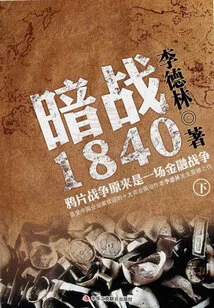
暗战1840:鸦片战争原来是一场金融战争(下)
Li Delin
A British merchant ship sailed into Huangpu Port, but a roaring salute led to a murder. The reckless governor of Guangdong issued a secret arrest warrant. An international murder case was tried in court, and the poor old man was killed. The root of the problem was buried in the Chinese court where the mirror was high. Lord Marshalny suddenly received an order from the Foreign Minister. Spies from the Forbidden City thousands of miles away have been sent to London. In the turbulent Beijing, spies gather: three kneels and nine After the great gift of Kou, conspiracies arose, but an army of 100,000 pirates appeared on the sea of eastern Guangdong. The naval alliance of China, Britain and Portugal was finally defeated by a beautiful woman. Emperor Daoguang was shocked. Lieutenant-General Lin Zexu's memorial completely exposed the methods of foreign exchange speculation and cash-out. The emperor finally discovered the conspiracy behind the opium trade, and numismatist Lin Zexu naturally became the emperor's best candidate to ban smoking. When Lin Zexu fainted and headed south at night, the "Nine Elders' Association" in London was plotting a bigger conspiracy, and a brutal "Nine Elders' Association" showdown began...
A British merchant ship sailed into Huangpu Port, but a roaring salute led to a murder. The reckless governor of Guangdong issued a secret arrest warrant. An international murder case was tried in court, and the poor old man was killed. The root of the problem was buried in the Chinese court where the mirror was high. Lord Marshalny suddenly received an order from the Foreign Minister. Spies from the Forbidden City thousands of miles away have been sent to London. In the turbulent Beijing, spies gather: three kneels and nine After the great gift of Kou, conspiracies arose, but an army of 100,000 pirates appeared on the sea of eastern Guangdong. The naval alliance of China, Britain and Portugal was finally defeated by a beautiful woman. Emperor Daoguang was shocked. Lieutenant-General Lin Zexu's memorial completely exposed the methods of foreign exchange speculation and cash-out. The emperor finally discovered the conspiracy behind the opium trade, and numismatist Lin Zexu naturally became the emperor's best candidate to ban smoking. When Lin Zexu fainted and headed south at night, the "Nine Elders' Association" in London was plotting a bigger conspiracy, and a brutal "Nine Elders' Association" showdown began...
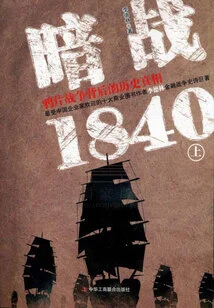
暗战1840:鸦片战争背后的历史真相(上)
Li Delin
From an economic perspective, this book cuts through key time points to explore the entire process of the three hundred years before the Opium War, when China gradually became enemies with Europe and the United States in the economic field, and gradually escalated to political conflicts between countries. This book begins in the second year after the death of Zhang Juzheng, the chief minister of Wanli, when Queen Elizabeth of England wanted to join forces with the Ming Empire when she was facing internal and external troubles. After the first Sino-British bloody battle at Humen, the British colonial America launched an independence movement, and China also changed dynasties and entered the era of the Qing Empire. In the intricate North American battlefield and the treacherous Tibetan Plateau, ancient China is still repeating its thousand-year-old diplomatic path, forging bloody feuds with the West time and time again, and conspiracies are sweeping through it.
From an economic perspective, this book cuts through key time points to explore the entire process of the three hundred years before the Opium War, when China gradually became enemies with Europe and the United States in the economic field, and gradually escalated to political conflicts between countries. This book begins in the second year after the death of Zhang Juzheng, the chief minister of Wanli, when Queen Elizabeth of England wanted to join forces with the Ming Empire when she was facing internal and external troubles. After the first Sino-British bloody battle at Humen, the British colonial America launched an independence movement, and China also changed dynasties and entered the era of the Qing Empire. In the intricate North American battlefield and the treacherous Tibetan Plateau, ancient China is still repeating its thousand-year-old diplomatic path, forging bloody feuds with the West time and time again, and conspiracies are sweeping through it.