Library
Browse and search books
1 novel found
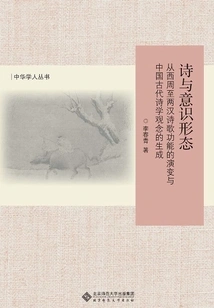
诗与意识形态:从西周至两汉诗歌功能的演变与中国古代诗学观念的生成(修订版)
Li Chunqing
This book examines the evolution of poetic functions from the beginning of the Western Zhou Dynasty to the Han Dynasty and the generation process of ancient Chinese poetic concepts from the perspective of historical and ideological evolution. It reveals the complex interactive relationship between poetic functions, poetic concepts, political history, and intellectual history during this period. The book is divided into three parts: Part One, Middle and Part Two. The Part One explains the important political significance of poetry at that time from the perspective of the ideological construction of the Zhou people after the founding of the country. The author believes that from the Western Zhou Dynasty to the Spring and Autumn Period, the function of poetry was transformed in three contexts: the relationship between humans and gods, the relationship between monarch and ministers, and the relationship between nobles. "Part 2" explains the formation of the Confucian discourse system on the basis of Zhou people's ritual and music culture and the transformation process of poetry from official discourse to folk discourse. "Part Two" specifically examines the process of "collusion" between the scholar class and the monarchy group in the Han Dynasty to construct a unified national ideology, as well as the various characteristics of the scholar-official class as a social "middleman", and reveals the importance of the Book of Songs in the process of ideological construction.
This book examines the evolution of poetic functions from the beginning of the Western Zhou Dynasty to the Han Dynasty and the generation process of ancient Chinese poetic concepts from the perspective of historical and ideological evolution. It reveals the complex interactive relationship between poetic functions, poetic concepts, political history, and intellectual history during this period. The book is divided into three parts: Part One, Middle and Part Two. The Part One explains the important political significance of poetry at that time from the perspective of the ideological construction of the Zhou people after the founding of the country. The author believes that from the Western Zhou Dynasty to the Spring and Autumn Period, the function of poetry was transformed in three contexts: the relationship between humans and gods, the relationship between monarch and ministers, and the relationship between nobles. "Part 2" explains the formation of the Confucian discourse system on the basis of Zhou people's ritual and music culture and the transformation process of poetry from official discourse to folk discourse. "Part Two" specifically examines the process of "collusion" between the scholar class and the monarchy group in the Han Dynasty to construct a unified national ideology, as well as the various characteristics of the scholar-official class as a social "middleman", and reveals the importance of the Book of Songs in the process of ideological construction.