Library
Browse and search books
5 novels found
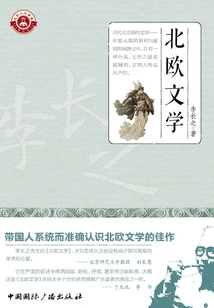
Nordic Literature
Literature北欧文学
Li Changzhi
"Nordic Literature" takes the context of time as the warp and national and national literature as the latitude, starting from the languages and myths of ancient northern Europe. It first describes Icelandic literature, then Danish literature, then Norwegian literature, then Swedish literature, and finally ends with the literature of the four small Baltic countries. The writings are well organized and well-narrated. When describing the literature of different countries and nations, it pays attention to the meridians of literary evolution, takes into account the different expression forms of literature, and highlights the main writers and works. It is elegantly written and highly readable. It is a masterpiece of world literature history with both academic taste and pioneering value.
"Nordic Literature" takes the context of time as the warp and national and national literature as the latitude, starting from the languages and myths of ancient northern Europe. It first describes Icelandic literature, then Danish literature, then Norwegian literature, then Swedish literature, and finally ends with the literature of the four small Baltic countries. The writings are well organized and well-narrated. When describing the literature of different countries and nations, it pays attention to the meridians of literary evolution, takes into account the different expression forms of literature, and highlights the main writers and works. It is elegantly written and highly readable. It is a masterpiece of world literature history with both academic taste and pioneering value.
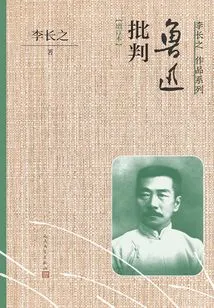
Criticism of Lu Xun (updated Edition)
Literature鲁迅批判(增订本)
Li Changzhi
During Lu Xun's lifetime, there were not many research monographs on Lu Xun. Li Changzhi's "Criticism of Lu Xun" is a very distinctive monograph on Lu Xun. In addition to the preface, the book has five chapters. It starts from the relationship between "Lu Xun's ideological character and environment", analyzes Lu Xun's "several stages of spiritual development", then focuses on examining Lu Xun's achievements in literary creation, and finally boils down to "the essence of Lu Xun", forming a strict and complete system. This time, some new articles about Lu Xun written after the last century have been specially added, such as talking about Lu Xun's translation, a preliminary study of Lu Xun's aesthetic thought, literary historians Lu Xun, Lu Xun and Ji Kang, etc.
During Lu Xun's lifetime, there were not many research monographs on Lu Xun. Li Changzhi's "Criticism of Lu Xun" is a very distinctive monograph on Lu Xun. In addition to the preface, the book has five chapters. It starts from the relationship between "Lu Xun's ideological character and environment", analyzes Lu Xun's "several stages of spiritual development", then focuses on examining Lu Xun's achievements in literary creation, and finally boils down to "the essence of Lu Xun", forming a strict and complete system. This time, some new articles about Lu Xun written after the last century have been specially added, such as talking about Lu Xun's translation, a preliminary study of Lu Xun's aesthetic thought, literary historians Lu Xun, Lu Xun and Ji Kang, etc.
Criticism of Lu Xun
Literature鲁迅批判
Li Changzhi
There were about four or five kinds of works that evaluated Lu Xun published during his lifetime, most of which were informational and truly systematic research. "Criticism of Lu Xun" by the modern poet and critic Li Changzhi may be the only one, and naturally it became the earliest monograph on Lu Xun. This book starts from the relationship between "Lu Xun's ideological character and environment", analyzes Lu Xun's "several stages of spiritual development", then focuses on examining Lu Xun's achievements in literary creation, and finally boils down to "the essence of Lu Xun", forming a strict and complete system.
There were about four or five kinds of works that evaluated Lu Xun published during his lifetime, most of which were informational and truly systematic research. "Criticism of Lu Xun" by the modern poet and critic Li Changzhi may be the only one, and naturally it became the earliest monograph on Lu Xun. This book starts from the relationship between "Lu Xun's ideological character and environment", analyzes Lu Xun's "several stages of spiritual development", then focuses on examining Lu Xun's achievements in literary creation, and finally boils down to "the essence of Lu Xun", forming a strict and complete system.
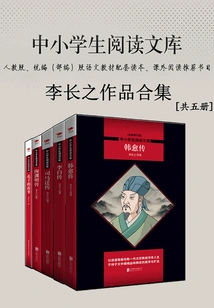
李长之作品合集(套装共五册)
Li Changzhi
"The Biography of Li Bai" is a masterpiece written by Li Changzhi, one of the "Five Great Literary Critics in China", who has been sharpening his sword for ten years. It is divided into two parts. The first part focuses on Li Bai's life story, narrating his life-long wandering life in chronological order; the second part tells the life of Li Bai's conflict between seeking Taoism and becoming an official. "The Biography of Li Bai" takes Li Bai's life as the content and Li Bai's thoughts as the theme. It outlines Li Bai's spiritual world with delicate brushwork and tells us a unique Li Bai. "The Biography of Sima Qian" is a masterpiece of literary criticism written by Li Changzhi, one of the "Five Great Literary Critics in China". It tells the story of the era in which the literary historian Sima Qian lived and the tortuous life he experienced. "Historical Records" written by Sima Qian wrote nearly three thousand years of history before the Qin and Han Dynasties, depicting a great, strong, and enterprising era. Lu Xun called it "the swan song of historians, the rhymeless "Li Sao"". This book will start from Sima Qian's era and based on historical facts, explore the origin of his family education, explore Sima Qian's inner world, deeply explore the compatibility between Sima Qian and "Historical Records" and Confucius' thoughts, and experience Sima Qian's joy and sorrow. "The Biography of Tao Yuanming" mainly explains the origin of Tao Yuanming's political attitude and ideological attitude by introducing two important ancestors of Tao Yuanming - Tao Kan and Meng Jia, as well as their life experiences and works. The information in this book is informative and reliable, the content is rich and profound, the viewpoints are clear, and there are many new insights. It is a highly valuable and rare biographical literary work. Let us further understand his political and ideological attitudes based on our understanding and familiarity with Tao Yuanming and his works. "The Biography of Han Yu" is the biography of Han Yu, the "head of the Eight Great Masters of the Tang and Song Dynasties". As the pioneer of the Han and Mencius School of Poetry in the mid-Tang Dynasty, the leader of the ancient prose movement, and a great Confucian who inherited the past and the future in Confucianism, Han Yu occupies a lofty position in the history of Chinese literature and thought. Based on a large number of historical materials, Mr. Li Changzhi reorganized Han Yu's life history, profoundly expounded the development of Han Yu's philosophical thoughts and literary thoughts, and gave readers a panoramic view of Han Yu's glorious but ups and downs life as a generation of thinkers and writers. "The Story of Confucius" is a novella written by Li Changzhi, which tells the life of Confucius, a famous thinker, educator and founder of the Confucian school in ancient my country. From the motherland to a foreign country, from frustration to indifference, from budding to prosperity, the author narrates Confucius's experience and changes in thought, and the face of Confucius more than 2,500 years ago is vividly visible at his fingertips. The language of this book is popular and the textual research is careful. It is a classic work with great educational significance.
"The Biography of Li Bai" is a masterpiece written by Li Changzhi, one of the "Five Great Literary Critics in China", who has been sharpening his sword for ten years. It is divided into two parts. The first part focuses on Li Bai's life story, narrating his life-long wandering life in chronological order; the second part tells the life of Li Bai's conflict between seeking Taoism and becoming an official. "The Biography of Li Bai" takes Li Bai's life as the content and Li Bai's thoughts as the theme. It outlines Li Bai's spiritual world with delicate brushwork and tells us a unique Li Bai. "The Biography of Sima Qian" is a masterpiece of literary criticism written by Li Changzhi, one of the "Five Great Literary Critics in China". It tells the story of the era in which the literary historian Sima Qian lived and the tortuous life he experienced. "Historical Records" written by Sima Qian wrote nearly three thousand years of history before the Qin and Han Dynasties, depicting a great, strong, and enterprising era. Lu Xun called it "the swan song of historians, the rhymeless "Li Sao"". This book will start from Sima Qian's era and based on historical facts, explore the origin of his family education, explore Sima Qian's inner world, deeply explore the compatibility between Sima Qian and "Historical Records" and Confucius' thoughts, and experience Sima Qian's joy and sorrow. "The Biography of Tao Yuanming" mainly explains the origin of Tao Yuanming's political attitude and ideological attitude by introducing two important ancestors of Tao Yuanming - Tao Kan and Meng Jia, as well as their life experiences and works. The information in this book is informative and reliable, the content is rich and profound, the viewpoints are clear, and there are many new insights. It is a highly valuable and rare biographical literary work. Let us further understand his political and ideological attitudes based on our understanding and familiarity with Tao Yuanming and his works. "The Biography of Han Yu" is the biography of Han Yu, the "head of the Eight Great Masters of the Tang and Song Dynasties". As the pioneer of the Han and Mencius School of Poetry in the mid-Tang Dynasty, the leader of the ancient prose movement, and a great Confucian who inherited the past and the future in Confucianism, Han Yu occupies a lofty position in the history of Chinese literature and thought. Based on a large number of historical materials, Mr. Li Changzhi reorganized Han Yu's life history, profoundly expounded the development of Han Yu's philosophical thoughts and literary thoughts, and gave readers a panoramic view of Han Yu's glorious but ups and downs life as a generation of thinkers and writers. "The Story of Confucius" is a novella written by Li Changzhi, which tells the life of Confucius, a famous thinker, educator and founder of the Confucian school in ancient my country. From the motherland to a foreign country, from frustration to indifference, from budding to prosperity, the author narrates Confucius's experience and changes in thought, and the face of Confucius more than 2,500 years ago is vividly visible at his fingertips. The language of this book is popular and the textual research is careful. It is a classic work with great educational significance.
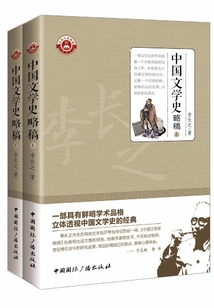
中国文学史略稿(全集)
Li Changzhi
The history of Chinese literature is permeated with the ambition and beliefs of Chinese literati. "A Brief History of Chinese Literature" is based on the broad perspective of world literature, accurately grasps the evolution and context of Chinese literary history, and provides concise and profound analysis of important writers and important works. It is full of insights, allowing readers to appreciate the beauty of literature and understand the spirit behind history and humanity. "A Brief History of Chinese Literature" is a college textbook for exploring and researching the history of Chinese literature published by Mr. Li Changzhi in the 1950s and best-selling. It is based on a broad world literature perspective and avoids the shortcomings of some literary history books that "only know Chinese literature but not world literature." It highlights the context and clues of literary evolution, and weighs details and weight according to this standard. It is a literary history classic with distinctive academic character and high academic value.
The history of Chinese literature is permeated with the ambition and beliefs of Chinese literati. "A Brief History of Chinese Literature" is based on the broad perspective of world literature, accurately grasps the evolution and context of Chinese literary history, and provides concise and profound analysis of important writers and important works. It is full of insights, allowing readers to appreciate the beauty of literature and understand the spirit behind history and humanity. "A Brief History of Chinese Literature" is a college textbook for exploring and researching the history of Chinese literature published by Mr. Li Changzhi in the 1950s and best-selling. It is based on a broad world literature perspective and avoids the shortcomings of some literary history books that "only know Chinese literature but not world literature." It highlights the context and clues of literary evolution, and weighs details and weight according to this standard. It is a literary history classic with distinctive academic character and high academic value.