Library
Browse and search books
2 novels found
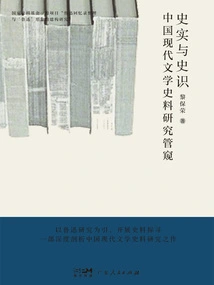
史实与史识:中国现代文学史料研究管窥
Li Baorong
This is a monograph on the study of modern literary historical materials with the theme of "historical facts and historical knowledge". This book conducts a relatively systematic study and discussion of various issues and fields of modern Chinese literature from three aspects: historical data research, historical data collation, and historical knowledge extraction. The author believes that both historical facts and historical knowledge are inseparable from logical thinking and academic vision, and advocates that the study of historical materials should not be satisfied with the "obsession with bones" of searching for marginal materials, but also have historical vision, historical speculation and historical feelings. The whole book focuses on "taking historical facts as the basis and historical knowledge as the purpose", advocating what Wang Yuanhua calls "ideological scholarship" and "academic thinking", and refining literary historical views such as "writer's conceptual history", which has certain ideological originality and academic value.
This is a monograph on the study of modern literary historical materials with the theme of "historical facts and historical knowledge". This book conducts a relatively systematic study and discussion of various issues and fields of modern Chinese literature from three aspects: historical data research, historical data collation, and historical knowledge extraction. The author believes that both historical facts and historical knowledge are inseparable from logical thinking and academic vision, and advocates that the study of historical materials should not be satisfied with the "obsession with bones" of searching for marginal materials, but also have historical vision, historical speculation and historical feelings. The whole book focuses on "taking historical facts as the basis and historical knowledge as the purpose", advocating what Wang Yuanhua calls "ideological scholarship" and "academic thinking", and refining literary historical views such as "writer's conceptual history", which has certain ideological originality and academic value.
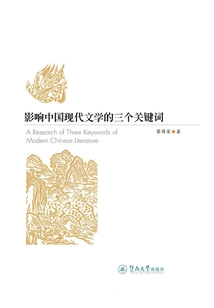
影响中国现代文学的三个关键词
Li Baorong
Keyword research is not just a research method, but a way of thinking. It can be said that a keyword means an ideological concept. But this kind of ideological concept is not just the thought itself, it is inextricably linked with history, era, culture, tradition, experience, etc. The three key words of modern Chinese literature, "enlightenment", "science" and "humanism", are both representative and able to integrate Chinese and Western ancient and modern times. They seem to come from foreign lands, but in fact they are soaked in the juice of traditional Chinese culture. In terms of its logical relationship, "Enlightenment" is the general theory (politics, humanities), the latter two are sub-themes, "Science" is from the scientific and cultural perspective, and "Humanism" is discussed from the perspective of human nature and individuals. There is a red line running through these three keywords, that is, they all have the foundation of the traditional cultural spirit that has been obscured by the West, that is, the elite consciousness of modern Chinese writers like scholar-bureaucrats and the practical rationality of actively engaging with the world and applying it to the world, because in the final analysis, tradition is not "rupture", but "growth".
Keyword research is not just a research method, but a way of thinking. It can be said that a keyword means an ideological concept. But this kind of ideological concept is not just the thought itself, it is inextricably linked with history, era, culture, tradition, experience, etc. The three key words of modern Chinese literature, "enlightenment", "science" and "humanism", are both representative and able to integrate Chinese and Western ancient and modern times. They seem to come from foreign lands, but in fact they are soaked in the juice of traditional Chinese culture. In terms of its logical relationship, "Enlightenment" is the general theory (politics, humanities), the latter two are sub-themes, "Science" is from the scientific and cultural perspective, and "Humanism" is discussed from the perspective of human nature and individuals. There is a red line running through these three keywords, that is, they all have the foundation of the traditional cultural spirit that has been obscured by the West, that is, the elite consciousness of modern Chinese writers like scholar-bureaucrats and the practical rationality of actively engaging with the world and applying it to the world, because in the final analysis, tradition is not "rupture", but "growth".