Library
Browse and search books
3 novels found
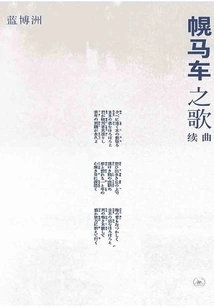
Continuation of the Song of the Carriage
Literature幌马车之歌续曲
Lan Bozhou
This book presents to us the life stories of three Taiwanese youths, Li Cangjiang, Lan Minggu, and Qiu Lianqiu, who died during the white terror period in Taiwan in the 1950s. They were born in colonial Taiwan under Japanese occupation and had to accept the "imperial" and "enslavement" education implemented by Japan. They had personal feelings about national oppression and had a strong anti-Japanese spirit and awareness of the motherland since they were young. After the outbreak of the Anti-Japanese War, they worked hard to join the historical wave of resisting foreign invaders and striving for national independence and self-strength through various channels, closely linking their ideals with the liberation of the motherland and the return of Taiwan. It was also during this process that they saw the hardship of the people under the rule of the Kuomintang, so they took the initiative to move closer to communism ideologically and participated in the Communist Party's underground organization in Taiwan. As a result, they were eventually arrested, tortured and executed by the Kuomintang intelligence agency during the white terror period in the 1950s. In order to prevent the history of the predecessors from being obliterated and distorted, Lan Bozhou, the author of "The Song of the Carriage", continued to pursue the life footprints and imprints of the predecessors, painstakingly searched in the cruel silence of history, tried every means to collect historical materials and witness, and finally In the end, these figures buried and forgotten by the dust of time are unfolded as testimonies of the times, witnessing the passionate lives of three young Taiwanese people, Li Cangjiang, Lan Minggu, and Qiu Lianqiu, who sacrificed their lives for their ideals, as well as the historical traces that cannot be erased or edited.
This book presents to us the life stories of three Taiwanese youths, Li Cangjiang, Lan Minggu, and Qiu Lianqiu, who died during the white terror period in Taiwan in the 1950s. They were born in colonial Taiwan under Japanese occupation and had to accept the "imperial" and "enslavement" education implemented by Japan. They had personal feelings about national oppression and had a strong anti-Japanese spirit and awareness of the motherland since they were young. After the outbreak of the Anti-Japanese War, they worked hard to join the historical wave of resisting foreign invaders and striving for national independence and self-strength through various channels, closely linking their ideals with the liberation of the motherland and the return of Taiwan. It was also during this process that they saw the hardship of the people under the rule of the Kuomintang, so they took the initiative to move closer to communism ideologically and participated in the Communist Party's underground organization in Taiwan. As a result, they were eventually arrested, tortured and executed by the Kuomintang intelligence agency during the white terror period in the 1950s. In order to prevent the history of the predecessors from being obliterated and distorted, Lan Bozhou, the author of "The Song of the Carriage", continued to pursue the life footprints and imprints of the predecessors, painstakingly searched in the cruel silence of history, tried every means to collect historical materials and witness, and finally In the end, these figures buried and forgotten by the dust of time are unfolded as testimonies of the times, witnessing the passionate lives of three young Taiwanese people, Li Cangjiang, Lan Minggu, and Qiu Lianqiu, who sacrificed their lives for their ideals, as well as the historical traces that cannot be erased or edited.
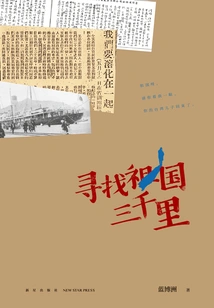
寻找祖国三千里
Lan Bozhou
"Every Taiwanese's experience of searching for their motherland is a narrative poem with tens of millions of lines." Taiwanese writer Lan Bozhou has devoted himself to the study of Taiwan's popular history for more than thirty years. He has salvaged forgotten history and forgotten people from dusty confidential archives and interviews from various places. In "Searching for the Motherland Three Thousand Miles", there is Wu Sihan who gave up his studies at Kyoto Imperial University School of Medicine, crossed the Korean Peninsula, crossed the Yalu River, sneaked into the occupied areas of Northeast and North China, and finally arrived in Chongqing; Lin Ruyu who traveled alone from Shanghai, via the Zhoushan Islands to Wenzhou and Yongjia, and finally found the anti-Japanese organization in Fuzhou; and two brothers, Li Zhongzhi and Zhang Jinhai, who went to Japan to study and then joined the army in order to participate in the anti-Japanese war, and organized revolutionary activities after returning to Taiwan.
"Every Taiwanese's experience of searching for their motherland is a narrative poem with tens of millions of lines." Taiwanese writer Lan Bozhou has devoted himself to the study of Taiwan's popular history for more than thirty years. He has salvaged forgotten history and forgotten people from dusty confidential archives and interviews from various places. In "Searching for the Motherland Three Thousand Miles", there is Wu Sihan who gave up his studies at Kyoto Imperial University School of Medicine, crossed the Korean Peninsula, crossed the Yalu River, sneaked into the occupied areas of Northeast and North China, and finally arrived in Chongqing; Lin Ruyu who traveled alone from Shanghai, via the Zhoushan Islands to Wenzhou and Yongjia, and finally found the anti-Japanese organization in Fuzhou; and two brothers, Li Zhongzhi and Zhang Jinhai, who went to Japan to study and then joined the army in order to participate in the anti-Japanese war, and organized revolutionary activities after returning to Taiwan.
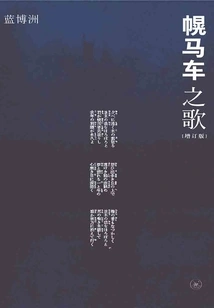
幌马车之歌(增订版)
Lan Bozhou
Based on interviews with survivors, their relatives and friends, and the collection and review of a large number of confidential files, this book uses the form of reportage to describe the short but fiery life of Taiwanese revolutionary youth Chung Ho-tung of Hakka origin - from resisting Japanese colonial rule, to returning from a narrow escape to join the anti-Japanese war, to dedicating himself to education to reform Taiwanese society, to finally dying generously for the liberation of Taiwan and sacrificing his ideals. Using many similar "Chung Ho-tungs" as a background, and through the intertwining of historical materials, records, and literature, the author strives to restore and reconstruct Taiwan's modern history that has been deliberately annihilated or even distorted since the first half of the twentieth century. In the process of tracing the revolutionary career and life trajectory of these young people, this book firmly conveys to us the power contained in the depths of history. With the help of this power, readers can get close to the memories on both sides of the Taiwan Strait that are full of pain and regret from a new perspective. This book was selected as the best novel in Taiwan in 1988 (Hong Xingfu Novel Award). In 1991, it ranked first in the "United Literature" top ten best book writers. Hou Hsiao-hsien created the movies "Sad City" and "Good Men and Good Women" based on part of the prototype of this story, and won the Golden Lion Award at the 46th Venice International Film Festival.
Based on interviews with survivors, their relatives and friends, and the collection and review of a large number of confidential files, this book uses the form of reportage to describe the short but fiery life of Taiwanese revolutionary youth Chung Ho-tung of Hakka origin - from resisting Japanese colonial rule, to returning from a narrow escape to join the anti-Japanese war, to dedicating himself to education to reform Taiwanese society, to finally dying generously for the liberation of Taiwan and sacrificing his ideals. Using many similar "Chung Ho-tungs" as a background, and through the intertwining of historical materials, records, and literature, the author strives to restore and reconstruct Taiwan's modern history that has been deliberately annihilated or even distorted since the first half of the twentieth century. In the process of tracing the revolutionary career and life trajectory of these young people, this book firmly conveys to us the power contained in the depths of history. With the help of this power, readers can get close to the memories on both sides of the Taiwan Strait that are full of pain and regret from a new perspective. This book was selected as the best novel in Taiwan in 1988 (Hong Xingfu Novel Award). In 1991, it ranked first in the "United Literature" top ten best book writers. Hou Hsiao-hsien created the movies "Sad City" and "Good Men and Good Women" based on part of the prototype of this story, and won the Golden Lion Award at the 46th Venice International Film Festival.