Library
Browse and search books
3 novels found
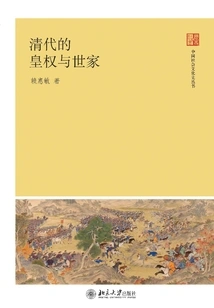
清代的皇权与世家
Lai Huimin
"Imperial Power and Families in the Qing Dynasty" tells the story of the Chen family and Zha family in Haining, the Zhang family in Tongcheng, the Kong family in Shandong, and the Niu Hulu family in Manchuria, all of which were famous aristocratic families in the Qing Dynasty. "Imperial Power and Families in the Qing Dynasty" provides an in-depth and comprehensive discussion on the family form, population growth, geographical distribution, and its relationship with imperial power. Based on a full grasp of historical materials, the author draws on sociological research methods such as demographics and genealogy analysis, thereby breaking out of the traditional historical research methods and providing a novel and unique perspective for understanding the history of the Qing Dynasty.
"Imperial Power and Families in the Qing Dynasty" tells the story of the Chen family and Zha family in Haining, the Zhang family in Tongcheng, the Kong family in Shandong, and the Niu Hulu family in Manchuria, all of which were famous aristocratic families in the Qing Dynasty. "Imperial Power and Families in the Qing Dynasty" provides an in-depth and comprehensive discussion on the family form, population growth, geographical distribution, and its relationship with imperial power. Based on a full grasp of historical materials, the author draws on sociological research methods such as demographics and genealogy analysis, thereby breaking out of the traditional historical research methods and providing a novel and unique perspective for understanding the history of the Qing Dynasty.
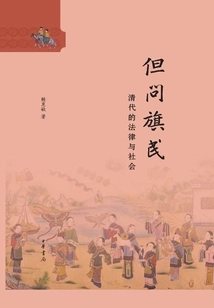
但问旗民:清代的法律与社会(精装)
Lai Huimin
"Asking the Banner People: Law and Society in the Qing Dynasty" is another masterpiece about Qing history by researcher Lai Huimin after "Emperor Qianlong's Purse". "But ask the banner people", which means "there is no distinction between Manchu and Han people, but ask the banner people", is an expression used by the rulers of the Qing Dynasty to distinguish between the banner people and the people (Han people) in terms of political and social status through legal means. This book focuses on the differences in the treatment of ethnic groups and genders in the laws of the Qing Dynasty. It starts from the dualistic social characteristics of the banner people in the Qing Dynasty, takes the relationship between law and society as the central axis, and systematically compares the differences of banner women in the fields of family status, family disputes, property rights, legal proceedings, family forms, and social organizations from three aspects: administrative organization, ethnic group and law, gender, and judicial trials. It truly reproduces the social life of women in the Qing Dynasty.
"Asking the Banner People: Law and Society in the Qing Dynasty" is another masterpiece about Qing history by researcher Lai Huimin after "Emperor Qianlong's Purse". "But ask the banner people", which means "there is no distinction between Manchu and Han people, but ask the banner people", is an expression used by the rulers of the Qing Dynasty to distinguish between the banner people and the people (Han people) in terms of political and social status through legal means. This book focuses on the differences in the treatment of ethnic groups and genders in the laws of the Qing Dynasty. It starts from the dualistic social characteristics of the banner people in the Qing Dynasty, takes the relationship between law and society as the central axis, and systematically compares the differences of banner women in the fields of family status, family disputes, property rights, legal proceedings, family forms, and social organizations from three aspects: administrative organization, ethnic group and law, gender, and judicial trials. It truly reproduces the social life of women in the Qing Dynasty.
Emperor Qianlong's Purse
History乾隆皇帝的荷包
Lai Huimin
"Emperor Qianlong's Purse" is the academic result of Professor Lai Huimin's decades of painstaking research on the financial history of the Qing Dynasty. This book focuses on the Qianlong Emperor's purse, the income and expenses of the royal family's "little treasury." The author believes that the difference between royal finance and national finance is that land tax is the main source of income for the country. Although the Qing imperial family owned more than one million acres of land, its important income came from commercial aspects, such as land rent, tariffs, pawn shops, interest income from merchants, and additional expenditures from salt merchants. The income of the Ministry of Internal Affairs of the Qianlong Dynasty was astonishing, and Emperor Qianlong used this to build a large number of Tibetan temples in Beijing, Rehe and other places, driving economic activities in the temples. At the same time, Tibetan Buddhism was cleverly used to achieve the purpose of ordering all Mongolian and Tibetan tribes, integrating Mongolian and Tibetan society, and maintaining rule. However, while the Qing Dynasty's foreign aggression problems were alleviated, internal problems caused by the royal family's accumulation of wealth continued to emerge, which laid the foundation for the future decline of the Qing Dynasty.
"Emperor Qianlong's Purse" is the academic result of Professor Lai Huimin's decades of painstaking research on the financial history of the Qing Dynasty. This book focuses on the Qianlong Emperor's purse, the income and expenses of the royal family's "little treasury." The author believes that the difference between royal finance and national finance is that land tax is the main source of income for the country. Although the Qing imperial family owned more than one million acres of land, its important income came from commercial aspects, such as land rent, tariffs, pawn shops, interest income from merchants, and additional expenditures from salt merchants. The income of the Ministry of Internal Affairs of the Qianlong Dynasty was astonishing, and Emperor Qianlong used this to build a large number of Tibetan temples in Beijing, Rehe and other places, driving economic activities in the temples. At the same time, Tibetan Buddhism was cleverly used to achieve the purpose of ordering all Mongolian and Tibetan tribes, integrating Mongolian and Tibetan society, and maintaining rule. However, while the Qing Dynasty's foreign aggression problems were alleviated, internal problems caused by the royal family's accumulation of wealth continued to emerge, which laid the foundation for the future decline of the Qing Dynasty.