Library
Browse and search books
3 novels found
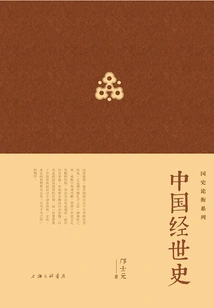
Chinese Economic History
History中国经世史
Kwong Shi-yuan
Applying knowledge to the world is a fine tradition for Chinese intellectuals to learn. It dates back to Confucius, following the end of the Spring and Autumn Period, matured in the Ming and Qing Dynasties, and runs throughout the development of Chinese culture. They pay attention to social reality, face social contradictions, and use what they have learned to solve social problems in order to achieve the effectiveness of national security and public security. This thought embodies the ideological characteristics of traditional Chinese intellectuals who emphasize utilitarianism, truth-seeking, and pragmatism, as well as the sentiment of "taking the world as their own responsibility." From this perspective, the author elaborates on the development of China's economy, politics, military, transportation and other aspects over the past dynasties. In the economic aspect, the focus is on the land tax system and commercial economy; in the political aspect, the focus is on the gains and losses of the central and local political systems, imperial examinations, education, and supervisory administration; in the military aspect, the focus is on the review of the gains and losses of the military systems of the past dynasties; as for the transportation aspect, the development of politics, economy, and culture is involved, and key points are analyzed, and new and old historical materials are combined for detailed discussions.
Applying knowledge to the world is a fine tradition for Chinese intellectuals to learn. It dates back to Confucius, following the end of the Spring and Autumn Period, matured in the Ming and Qing Dynasties, and runs throughout the development of Chinese culture. They pay attention to social reality, face social contradictions, and use what they have learned to solve social problems in order to achieve the effectiveness of national security and public security. This thought embodies the ideological characteristics of traditional Chinese intellectuals who emphasize utilitarianism, truth-seeking, and pragmatism, as well as the sentiment of "taking the world as their own responsibility." From this perspective, the author elaborates on the development of China's economy, politics, military, transportation and other aspects over the past dynasties. In the economic aspect, the focus is on the land tax system and commercial economy; in the political aspect, the focus is on the gains and losses of the central and local political systems, imperial examinations, education, and supervisory administration; in the military aspect, the focus is on the review of the gains and losses of the military systems of the past dynasties; as for the transportation aspect, the development of politics, economy, and culture is involved, and key points are analyzed, and new and old historical materials are combined for detailed discussions.
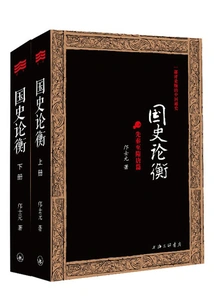
国史论衡:一部评论版的中国通史(套装共2册)
Kwong Shi-yuan
"On the History of the Country - A Commentary Edition of the General History of China" is divided into two volumes. The first volume is the first volume: The Theory of the Country's History - from the pre-Qin to the Sui and Tang Dynasties. The second volume: from the Song Dynasty to the Ming and Qing Dynasties, it is mainly in the form of direct narrative, that is, in the order of the past dynasties, from the Zhou Dynasty to the end of the Qing Dynasty, about the rise and fall of the war, national development and important political commentaries on the dynasty and the finance and economy of the past dynasties; Central Committee , local political ups and downs, important wars in the past, military systems; transportation, the evolution of Chinese and Western culture and scholarship, as well as the gains and losses of the rise and fall of emperors and governors, and party disputes, etc. Its content analysis generally eliminates the shortcomings of the general history in the form of a running account, and can better cater to the needs of domestic readers for reading general history. The compilation method of "National History Lunheng" is based on history. In addition to referring to popular or hard-to-see general histories and hundreds of related chronological histories, it mainly absorbs hundreds of academic papers on historical events in the past century. Therefore, this book is not a work that "comes together", but a historical theory that collects the essence of hundreds of schools of thought.
"On the History of the Country - A Commentary Edition of the General History of China" is divided into two volumes. The first volume is the first volume: The Theory of the Country's History - from the pre-Qin to the Sui and Tang Dynasties. The second volume: from the Song Dynasty to the Ming and Qing Dynasties, it is mainly in the form of direct narrative, that is, in the order of the past dynasties, from the Zhou Dynasty to the end of the Qing Dynasty, about the rise and fall of the war, national development and important political commentaries on the dynasty and the finance and economy of the past dynasties; Central Committee , local political ups and downs, important wars in the past, military systems; transportation, the evolution of Chinese and Western culture and scholarship, as well as the gains and losses of the rise and fall of emperors and governors, and party disputes, etc. Its content analysis generally eliminates the shortcomings of the general history in the form of a running account, and can better cater to the needs of domestic readers for reading general history. The compilation method of "National History Lunheng" is based on history. In addition to referring to popular or hard-to-see general histories and hundreds of related chronological histories, it mainly absorbs hundreds of academic papers on historical events in the past century. Therefore, this book is not a work that "comes together", but a historical theory that collects the essence of hundreds of schools of thought.
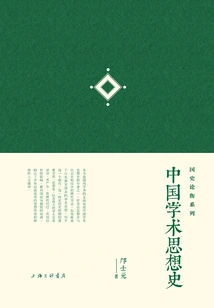
中国学术思想史
Kwong Shi-yuan
"Chinese Academic Thought" is the first monograph in China to comprehensively discuss the history of Chinese academic and intellectual history. The author uses a research method that combines intellectual history and social history to systematically expound the academic development and ideological context from the pre-Qin Dynasty to the late Qing Dynasty. He also has a profound and unique discussion of the important schools and thinkers of each dynasty and each specific historical period, as well as major academic exchange activities, their emergence and development, and their impact on later generations. It demonstrates the excellent ideological tradition and brilliant humanistic spirit of the Chinese nation.
"Chinese Academic Thought" is the first monograph in China to comprehensively discuss the history of Chinese academic and intellectual history. The author uses a research method that combines intellectual history and social history to systematically expound the academic development and ideological context from the pre-Qin Dynasty to the late Qing Dynasty. He also has a profound and unique discussion of the important schools and thinkers of each dynasty and each specific historical period, as well as major academic exchange activities, their emergence and development, and their impact on later generations. It demonstrates the excellent ideological tradition and brilliant humanistic spirit of the Chinese nation.