Library
Browse and search books
3 novels found
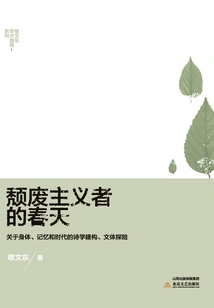
Spring of the Decadent
Literature颓废主义者的春天
Jing Wendong
"Spring of the Decadentists" is a collection of essays published by the author in recent years. The works are scattered in publications such as "Reading", "Wangyuan", and "Tianya". The themes involve many aspects of life, society, history, academics, etc. "Spring of the Decadents" is divided into four small volumes, namely "Notes from Fengyi Bridge", "Voice of Gratitude", "Some Questions, Some Random Thoughts", and "Fiction and Reality". In some chapters, the author adopts a clever quotation style; in some chapters, the author makes in-depth comments on specific texts and phenomena; while in other chapters, he develops large-scale fictions and metaphors.
"Spring of the Decadentists" is a collection of essays published by the author in recent years. The works are scattered in publications such as "Reading", "Wangyuan", and "Tianya". The themes involve many aspects of life, society, history, academics, etc. "Spring of the Decadents" is divided into four small volumes, namely "Notes from Fengyi Bridge", "Voice of Gratitude", "Some Questions, Some Random Thoughts", and "Fiction and Reality". In some chapters, the author adopts a clever quotation style; in some chapters, the author makes in-depth comments on specific texts and phenomena; while in other chapters, he develops large-scale fictions and metaphors.
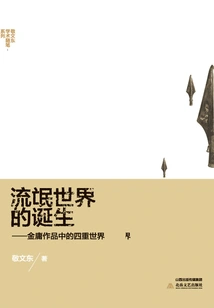
The Birth of the Gangster World
Literature流氓世界的诞生
Jing Wendong
"The Birth of the Gangster World" is a critical study of Jin Yong's works, and it is also an in-depth interpretation of Chinese traditional culture. "The Birth of the Rogue World" summarizes the world of Jin Yong's works into four worlds: through the world of official history, the world of unofficial history; through the world of unofficial history, the world of Buddhism and Zen; and through the first three worlds, the world of rogues. The book "The Birth of the Gangster World" believes that "The Deer and the Cauldron" and its protagonist Wei Xiaobao are Jin Yong's major contributions to Chinese culture in his reflection and creation. It profoundly reveals the inevitable trend of Chinese traditional culture. "The Birth of the Rogue World" also puts forward some other concepts, such as "Jianghu Utopia", "Grudge\u002F Killing Mode", etc., Which well supports the logical rigor between the four worlds.
"The Birth of the Gangster World" is a critical study of Jin Yong's works, and it is also an in-depth interpretation of Chinese traditional culture. "The Birth of the Rogue World" summarizes the world of Jin Yong's works into four worlds: through the world of official history, the world of unofficial history; through the world of unofficial history, the world of Buddhism and Zen; and through the first three worlds, the world of rogues. The book "The Birth of the Gangster World" believes that "The Deer and the Cauldron" and its protagonist Wei Xiaobao are Jin Yong's major contributions to Chinese culture in his reflection and creation. It profoundly reveals the inevitable trend of Chinese traditional culture. "The Birth of the Rogue World" also puts forward some other concepts, such as "Jianghu Utopia", "Grudge\u002F Killing Mode", etc., Which well supports the logical rigor between the four worlds.
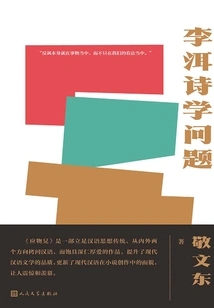
Questions About Li Er's Poetry
Literature李洱诗学问题
Jing Wendong
The title of the book "Problems in Li Er's Poetics" intentionally imitates Mikhail Bakhtin's treatise "Problems in Dostoevsky's Poetics". The author believes that Li Er is a particularly important writer, and the views discussed in "Problems on Li Er's Poetics" are universal. This is a monograph that comprehensively discusses all of Li Er's works so far. Li Er's works profoundly reveal the subject of irony in an era of irony; but the book mainly analyzes the tone shift that Li Er has experienced in his creative career of more than thirty years, and how the tone shift helps novelists deal with increasingly complex realities and the relationship with his mother tongue. The book has a clear structure and plentiful references, trying to break down the differences between China and the West and ancient and modern times. Compared with orthodox and authentic academic works, the book is highly readable.
The title of the book "Problems in Li Er's Poetics" intentionally imitates Mikhail Bakhtin's treatise "Problems in Dostoevsky's Poetics". The author believes that Li Er is a particularly important writer, and the views discussed in "Problems on Li Er's Poetics" are universal. This is a monograph that comprehensively discusses all of Li Er's works so far. Li Er's works profoundly reveal the subject of irony in an era of irony; but the book mainly analyzes the tone shift that Li Er has experienced in his creative career of more than thirty years, and how the tone shift helps novelists deal with increasingly complex realities and the relationship with his mother tongue. The book has a clear structure and plentiful references, trying to break down the differences between China and the West and ancient and modern times. Compared with orthodox and authentic academic works, the book is highly readable.