Library
Browse and search books
3 novels found
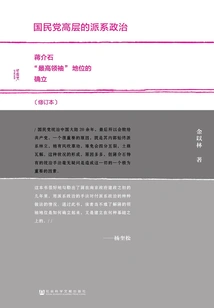
国民党高层的派系政治(修订本)(甲骨文系列)
Jin Yilin
This book focuses on the evolution of China's political situation in 1931, examining the rise and fall of power among the top three factions in the party, namely Chiang, Wang, and Hu, in the intra-party struggle after the reorganization of the Kuomintang. In particular, through Chiang Kai-shek's resignation and resurgence, it explores the complex process of separation and reunification among the three men and the reasons why Chiang Kai-shek finally obtained the status of the "supreme leader" within the party. This is used to explain the development of previous conflicts within the Kuomintang.
This book focuses on the evolution of China's political situation in 1931, examining the rise and fall of power among the top three factions in the party, namely Chiang, Wang, and Hu, in the intra-party struggle after the reorganization of the Kuomintang. In particular, through Chiang Kai-shek's resignation and resurgence, it explores the complex process of separation and reunification among the three men and the reasons why Chiang Kai-shek finally obtained the status of the "supreme leader" within the party. This is used to explain the development of previous conflicts within the Kuomintang.
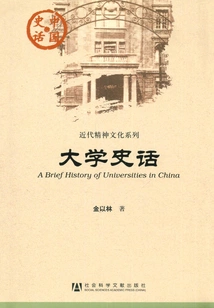
University History
History大学史话
Jin Yilin
Higher education in modern China sprouted in the mid-to-late 19th century. The rulers at that time, while learning about the strength of ships and artillery from the Western powers, began to gradually accept the material civilization achievements of Western society. Since the 1960s, the Westernizationists first established a number of practical-centered junior colleges in several metropolitan areas. However, the imperial examination system in traditional education still occupied an absolute dominant position in society at that time. After the founding of the Republic of China, the development of modern university education was still very slow. After the May 4th Movement, with the spread of democracy and scientific ideas, especially the development of modern national industry and commerce, society's demand for new talents has greatly increased. China's higher education has also developed rapidly, laying a good foundation for the gradual development of universities in the future.
Higher education in modern China sprouted in the mid-to-late 19th century. The rulers at that time, while learning about the strength of ships and artillery from the Western powers, began to gradually accept the material civilization achievements of Western society. Since the 1960s, the Westernizationists first established a number of practical-centered junior colleges in several metropolitan areas. However, the imperial examination system in traditional education still occupied an absolute dominant position in society at that time. After the founding of the Republic of China, the development of modern university education was still very slow. After the May 4th Movement, with the spread of democracy and scientific ideas, especially the development of modern national industry and commerce, society's demand for new talents has greatly increased. China's higher education has also developed rapidly, laying a good foundation for the gradual development of universities in the future.
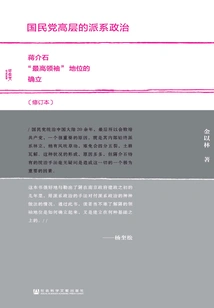
国民党高层的派系政治(修订本):蒋介石“最高领袖”地位的确立
Jin Yilin
This book focuses on the evolution of China's political situation in 1931, examining the rise and fall of power among the top three factions in the party, namely Chiang, Wang, and Hu, in the intra-party struggle after the reorganization of the Kuomintang. In particular, through Chiang Kai-shek's resignation and resurgence, it explores the complex process of separation and reunification among the three men and the reasons why Chiang Kai-shek finally obtained the status of the "supreme leader" within the party. This is used to explain the development of previous conflicts within the Kuomintang.
This book focuses on the evolution of China's political situation in 1931, examining the rise and fall of power among the top three factions in the party, namely Chiang, Wang, and Hu, in the intra-party struggle after the reorganization of the Kuomintang. In particular, through Chiang Kai-shek's resignation and resurgence, it explores the complex process of separation and reunification among the three men and the reasons why Chiang Kai-shek finally obtained the status of the "supreme leader" within the party. This is used to explain the development of previous conflicts within the Kuomintang.