Library
Browse and search books
12 novels found
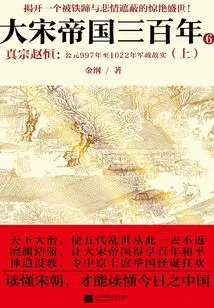
大宋帝国三百年6:真宗赵恒(上)
Jin Gang
The signing of a contract turned the two hostile countries into friendship and became brothers. During the Song Zhenzong era, the most important historical event was the signing of the "Chanyuan Alliance" with the Khitan. This is also one of the major events in the entire history of China. In 997 AD, Zhenzong Zhao Heng succeeded to the throne. At this time, it had been more than thirty years since the founding of the Song Dynasty, and peace began to appear in the empire. Compared with Taizu Taizong's commitment to world peace, Zhenzong went further. Before the "Alliance of Chanyuan", the legacy of "powerful rebellion" in the troubled times of the Five Dynasties still existed. The rebellions of Liu Wei and Wang Jun in Sichuan, the robbery of Changshou by King Chenliu, and the rebellion of Chen Jin in Guangxi brought some disturbances from time to time; the Khitan in the north continued to be the enemy of the Song Dynasty, and there was the "Battle of Guannan" consisting of a series of battles, and the "Battle of the Great Wall Entrance" in which the Song Dynasty mobilized nearly 50,000 cavalry. Despite this, Zhenzong still "summoned the harmony of heaven and earth", opened up a wide range of admonitions, promoted outstanding talents, helped disadvantaged groups, and planned a path to peace step by step with all living things.
The signing of a contract turned the two hostile countries into friendship and became brothers. During the Song Zhenzong era, the most important historical event was the signing of the "Chanyuan Alliance" with the Khitan. This is also one of the major events in the entire history of China. In 997 AD, Zhenzong Zhao Heng succeeded to the throne. At this time, it had been more than thirty years since the founding of the Song Dynasty, and peace began to appear in the empire. Compared with Taizu Taizong's commitment to world peace, Zhenzong went further. Before the "Alliance of Chanyuan", the legacy of "powerful rebellion" in the troubled times of the Five Dynasties still existed. The rebellions of Liu Wei and Wang Jun in Sichuan, the robbery of Changshou by King Chenliu, and the rebellion of Chen Jin in Guangxi brought some disturbances from time to time; the Khitan in the north continued to be the enemy of the Song Dynasty, and there was the "Battle of Guannan" consisting of a series of battles, and the "Battle of the Great Wall Entrance" in which the Song Dynasty mobilized nearly 50,000 cavalry. Despite this, Zhenzong still "summoned the harmony of heaven and earth", opened up a wide range of admonitions, promoted outstanding talents, helped disadvantaged groups, and planned a path to peace step by step with all living things.
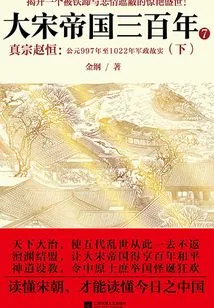
大宋帝国三百年7:真宗赵恒(下)
Jin Gang
The second half of the Shinsong era was almost a wonderful drama, drama, and farce. In this unprecedented political drama performance, Zhenzong Zhao Heng used the Central Plains as the stage under the script theme of "Shinto teachings", and the game was so exciting that it made him feel out of his body. The "Chanyuan Alliance" won a century of peace for China, truly enabled the people of the Central Plains to live and work in peace and contentment, and had a profound influence on China. However, the peaceful scene of "all nations coming to court" after the "peace negotiation" did not make Zhenzong happy. When he learned that the Khitan called itself the "Northern Dynasty" and the Song Dynasty the "Southern Dynasty" and was blessed by the gods, Zhao Heng realized that he had to do something great to have any hope of showing the world, mainly the Khitan, the rationality, legality, and legitimacy of the Song Empire, and that he was the true dragon emperor who was "ordered by heaven." Under this concept, Zhenzong successively directed four major "Shinto education" events including the emperor's letter, the Zen ceremony, the worship of Fenyin, and the construction of Taoist temples.
The second half of the Shinsong era was almost a wonderful drama, drama, and farce. In this unprecedented political drama performance, Zhenzong Zhao Heng used the Central Plains as the stage under the script theme of "Shinto teachings", and the game was so exciting that it made him feel out of his body. The "Chanyuan Alliance" won a century of peace for China, truly enabled the people of the Central Plains to live and work in peace and contentment, and had a profound influence on China. However, the peaceful scene of "all nations coming to court" after the "peace negotiation" did not make Zhenzong happy. When he learned that the Khitan called itself the "Northern Dynasty" and the Song Dynasty the "Southern Dynasty" and was blessed by the gods, Zhao Heng realized that he had to do something great to have any hope of showing the world, mainly the Khitan, the rationality, legality, and legitimacy of the Song Empire, and that he was the true dragon emperor who was "ordered by heaven." Under this concept, Zhenzong successively directed four major "Shinto education" events including the emperor's letter, the Zen ceremony, the worship of Fenyin, and the construction of Taoist temples.
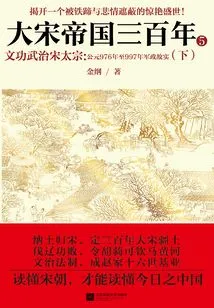
Three Hundred Years of the Song Empire 5: Literary and Military Governance of Song Taizong (part 2)
History大宋帝国三百年5:文功武治宋太宗(下)
Jin Gang
"Three Hundred Years of the Song Empire" has a total of 8 volumes and 17 volumes. It breaks through the writing pattern of pure research or drama, and integrates historical statements and ideological exploration. It is not only a big history, but also an ideological monograph that analyzes the decline and prosperity of Chinese society. The whole book is faithful to history, the research and rendering complement each other, and it is also meticulous in judgment and full of insights. The narrative is grand and broad, vivid and interesting, and has endless aftertaste. It provides a new model for interpreting history.
"Three Hundred Years of the Song Empire" has a total of 8 volumes and 17 volumes. It breaks through the writing pattern of pure research or drama, and integrates historical statements and ideological exploration. It is not only a big history, but also an ideological monograph that analyzes the decline and prosperity of Chinese society. The whole book is faithful to history, the research and rendering complement each other, and it is also meticulous in judgment and full of insights. The narrative is grand and broad, vivid and interesting, and has endless aftertaste. It provides a new model for interpreting history.
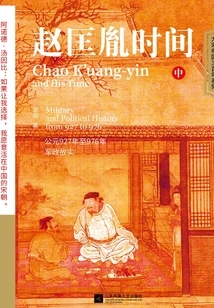
赵匡胤时间(中册)
Jin Gang
Chenqiaoyi was the most important station in Zhao Kuangyin's life. At this station, he completed a dynasty change in a bloodless way. From 951 to 960 AD, the chaotic Five Dynasties and Ten Kingdoms were coming to an end, and an unprecedentedly prosperous Song Empire began to emerge on the historical horizon. Ten years before the founding of the Song Dynasty, Guo Wei, Taizu of the Later Zhou Dynasty, eliminated the bad governance of the previous dynasty, bringing the first glimmer of light in the troubled times; Chai Rong, the great emperor who was heroic and full of royal ideals, went on a personal expedition, defeated the Khitan coalition forces of the Northern Han Dynasty, and began civilized government affairs ; The peerless master Wang Puxian's "Pingbian Policy", "the road map for the Central Plains"; after the Battle of Gaoping, Zhao Kuangyin entered the ranks of senior officers of the Later Zhou Dynasty; the incredible "Wei Nang" and the mysterious Chenqiao Mutiny brought an astonishing turning point in history. The history of the first ten years before the founding of the Song Dynasty was a history of refining troops and simplifying administration, opening up channels of public opinion, handling disputes between feudal vassals and towns, pacifying local bandits, sweeping the Yangtze and Huaihe rivers from the south, and attacking Khitan from the north. It was a history of the evolution of the Central Plains regime's return to its homeland, and it was also the starting point for the founding of the Song Dynasty by the great emperor Zhao Kuangyin.
Chenqiaoyi was the most important station in Zhao Kuangyin's life. At this station, he completed a dynasty change in a bloodless way. From 951 to 960 AD, the chaotic Five Dynasties and Ten Kingdoms were coming to an end, and an unprecedentedly prosperous Song Empire began to emerge on the historical horizon. Ten years before the founding of the Song Dynasty, Guo Wei, Taizu of the Later Zhou Dynasty, eliminated the bad governance of the previous dynasty, bringing the first glimmer of light in the troubled times; Chai Rong, the great emperor who was heroic and full of royal ideals, went on a personal expedition, defeated the Khitan coalition forces of the Northern Han Dynasty, and began civilized government affairs ; The peerless master Wang Puxian's "Pingbian Policy", "the road map for the Central Plains"; after the Battle of Gaoping, Zhao Kuangyin entered the ranks of senior officers of the Later Zhou Dynasty; the incredible "Wei Nang" and the mysterious Chenqiao Mutiny brought an astonishing turning point in history. The history of the first ten years before the founding of the Song Dynasty was a history of refining troops and simplifying administration, opening up channels of public opinion, handling disputes between feudal vassals and towns, pacifying local bandits, sweeping the Yangtze and Huaihe rivers from the south, and attacking Khitan from the north. It was a history of the evolution of the Central Plains regime's return to its homeland, and it was also the starting point for the founding of the Song Dynasty by the great emperor Zhao Kuangyin.
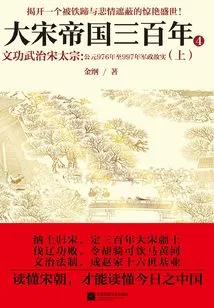
Three Hundred Years of the Song Empire 4: Literary and Military Governance of Song Taizong (part 1)
History大宋帝国三百年4:文功武治宋太宗(上)
Jin Gang
"Three Hundred Years of the Song Empire" has a total of 8 volumes and 17 volumes. It breaks through the writing pattern of pure research or drama, and integrates historical statements and ideological exploration. It is not only a big history, but also an ideological monograph that analyzes the decline and prosperity of Chinese society. The whole book is faithful to history, the research and rendering complement each other, and it is also meticulous in judgment and full of insights. The narrative is grand and broad, vivid and interesting, and has endless aftertaste. It provides a new model for interpreting history.
"Three Hundred Years of the Song Empire" has a total of 8 volumes and 17 volumes. It breaks through the writing pattern of pure research or drama, and integrates historical statements and ideological exploration. It is not only a big history, but also an ideological monograph that analyzes the decline and prosperity of Chinese society. The whole book is faithful to history, the research and rendering complement each other, and it is also meticulous in judgment and full of insights. The narrative is grand and broad, vivid and interesting, and has endless aftertaste. It provides a new model for interpreting history.
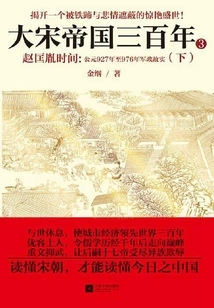
大宋帝国三百年3:赵匡胤时间(下)
Jin Gang
In 960 AD, Zhao Kuangyin and Jian Zuo ascended the throne, marking the founding of the Song Empire. When the army entered the city, "the market was not easy to operate" in Bianliang, Tokyo. If unruly people took advantage of the chaos and looted, "several generations would be killed in the city, and the officials who were plundered would pay their dues." The respect and protection of private property indicates that a generation of holy kings will open the most glorious chapter of traditional China. From 960 AD to 976 AD, it was Zhao Kuangyin's "Emperor Time". History ushered in the "Jianlong Rule" when the people were wealthy and the army was strong. In the next 16 years, he practiced virtuous government, practiced martial arts and cultivated literature, but finally passed away mysteriously amid the sound of an ax and the shadow of candles with his unfinished ambition. At the beginning of the founding of the Song Dynasty, Zhao Kuangyin conquered Luzhou and Pingyangzhou successively when he was caring for the world and practicing martial arts. He adopted Prime Minister Zhao Pu's brilliant strategy to "invade the feudal towns", sent troops to quell the chaos, and even brought peace to the world...
In 960 AD, Zhao Kuangyin and Jian Zuo ascended the throne, marking the founding of the Song Empire. When the army entered the city, "the market was not easy to operate" in Bianliang, Tokyo. If unruly people took advantage of the chaos and looted, "several generations would be killed in the city, and the officials who were plundered would pay their dues." The respect and protection of private property indicates that a generation of holy kings will open the most glorious chapter of traditional China. From 960 AD to 976 AD, it was Zhao Kuangyin's "Emperor Time". History ushered in the "Jianlong Rule" when the people were wealthy and the army was strong. In the next 16 years, he practiced virtuous government, practiced martial arts and cultivated literature, but finally passed away mysteriously amid the sound of an ax and the shadow of candles with his unfinished ambition. At the beginning of the founding of the Song Dynasty, Zhao Kuangyin conquered Luzhou and Pingyangzhou successively when he was caring for the world and practicing martial arts. He adopted Prime Minister Zhao Pu's brilliant strategy to "invade the feudal towns", sent troops to quell the chaos, and even brought peace to the world...
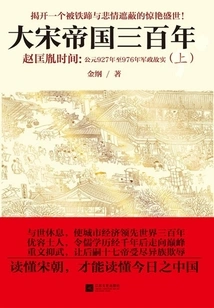
大宋帝国三百年1:赵匡胤时间(上)
Jin Gang
Looking around, there are wolves everywhere. There are vassal towns that cannot be controlled by the king's law, there are vassal towns that are resisting the rule of law, there are vassal towns that are about to be moved, and there are even wanton plundering by Khitan cavalry. Although the imperial court was there at that time, the world was already dead. From AD 927 to AD 951, the thirty years before the Song Dynasty, it was the dark age of Chinese history. If you understand these thirty years, you will understand what barbarism and cruelty are, and you will understand why the Song Dynasty is called a prosperous civilization. Thirty years before the founding of the Song Dynasty, it was a military battlefield where wolves roamed and cavalry raged. It was a place where vassal towns were divided, factions fought against each other, and conspiracies and brutal crimes took place. It was a purgatory where civilization was ruined, morality was lost, and the world had constant nightmares. The history of the thirty years before the founding of the Song Dynasty was a history of turmoil caused by usurpation and disaster, and a history of Chinese people's suffering covered by blood and tragedy. If you understand these thirty years of history and see clearly the cause and effect of the troubled times of the Five Dynasties, you will understand the origin of the Song Dynasty Empire and Zhao Kuangyin's good intentions in constructing and deducing the Song Dynasty civilization...
Looking around, there are wolves everywhere. There are vassal towns that cannot be controlled by the king's law, there are vassal towns that are resisting the rule of law, there are vassal towns that are about to be moved, and there are even wanton plundering by Khitan cavalry. Although the imperial court was there at that time, the world was already dead. From AD 927 to AD 951, the thirty years before the Song Dynasty, it was the dark age of Chinese history. If you understand these thirty years, you will understand what barbarism and cruelty are, and you will understand why the Song Dynasty is called a prosperous civilization. Thirty years before the founding of the Song Dynasty, it was a military battlefield where wolves roamed and cavalry raged. It was a place where vassal towns were divided, factions fought against each other, and conspiracies and brutal crimes took place. It was a purgatory where civilization was ruined, morality was lost, and the world had constant nightmares. The history of the thirty years before the founding of the Song Dynasty was a history of turmoil caused by usurpation and disaster, and a history of Chinese people's suffering covered by blood and tragedy. If you understand these thirty years of history and see clearly the cause and effect of the troubled times of the Five Dynasties, you will understand the origin of the Song Dynasty Empire and Zhao Kuangyin's good intentions in constructing and deducing the Song Dynasty civilization...
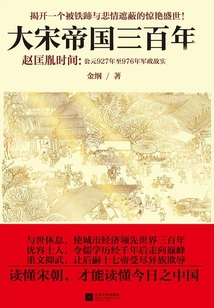
大宋帝国三百年:赵匡胤时间(全3册)
Jin Gang
The first panoramic decryption of the epic poetry of the Song Dynasty, revealing a stunning and prosperous age obscured by iron hoofs and tragedy! Rest in peace and make the city's economy lead the world for 300 years! The beauty of scholars brought Confucianism to its peak after thousands of years! Emphasizing culture and suppressing military power, the seventeen emperors who followed him were humiliated by foreign races! Battlefield killings, imperial power, curtains and traps, legendary secrets, ideological wisdom... Every page in "Three Hundred Years of the Song Empire" is full of moving thoughts! It is a strategy for governing the world, a business and war art, a political manual, and it is also the code of destiny for the great era.
The first panoramic decryption of the epic poetry of the Song Dynasty, revealing a stunning and prosperous age obscured by iron hoofs and tragedy! Rest in peace and make the city's economy lead the world for 300 years! The beauty of scholars brought Confucianism to its peak after thousands of years! Emphasizing culture and suppressing military power, the seventeen emperors who followed him were humiliated by foreign races! Battlefield killings, imperial power, curtains and traps, legendary secrets, ideological wisdom... Every page in "Three Hundred Years of the Song Empire" is full of moving thoughts! It is a strategy for governing the world, a business and war art, a political manual, and it is also the code of destiny for the great era.
赵匡胤时间(下册)
Jin Gang
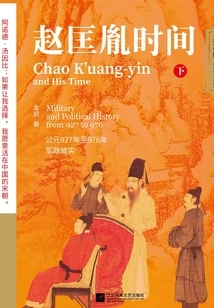
In 960 AD, Zhao Kuangyin and Jian Zuo ascended the throne, marking the founding of the Song Empire. When the army entered the city, "the market was not easy to operate" in Bianliang, Tokyo. If unruly people took advantage of the chaos and looted, "several generations would be killed in the city, and the officials who were plundered would pay their dues." The respect and protection of private property indicates that a generation of holy kings is about to open the most glorious chapter of traditional China. From 960 to 976 AD was Zhao Kuangyin's "Emperor Time". History ushered in the "Jianlong Rule" when the people were wealthy and the army was strong. For 16 years, he practiced virtuous government, practiced martial arts and cultivated literature. However, he passed away mysteriously amid the sound of an ax and the shadow of candles with his unfinished ambition. At the beginning of the founding of the Song Dynasty, Song Taizu Zhao Kuangyin granted amnesty to the world but did not pardon corruption. He successively conquered Luzhou and Pingyangzhou, adopted Prime Minister Zhao Pu's brilliant strategy to "invade the feudal towns", sent troops to quell the chaos, and even brought peace to the world; only love The lyrics are about the late emperor Li Yu of the Southern Tang Dynasty who was ignorant of politics and came to the throne. The monarch only wanted to spend money to buy peace when he went to a brothel. The regime of the Southern Han Dynasty was extremely cruel and even "all the dynasties were filled with eunuchs", which caused Emperor Taizu to exclaim "I must save the people of this area." Taizu of the Song Dynasty rested with the people, treated the scholars with dignity, emphasized culture and suppressed military affairs, and roughly defined the pattern of the empire. Finally, there was the "Taizu Oath Stele" that set an example for future generations and established the "civilization trend", and the Song Dynasty enjoyed everlasting glory from then on.
In 960 AD, Zhao Kuangyin and Jian Zuo ascended the throne, marking the founding of the Song Empire. When the army entered the city, "the market was not easy to operate" in Bianliang, Tokyo. If unruly people took advantage of the chaos and looted, "several generations would be killed in the city, and the officials who were plundered would pay their dues." The respect and protection of private property indicates that a generation of holy kings is about to open the most glorious chapter of traditional China. From 960 to 976 AD was Zhao Kuangyin's "Emperor Time". History ushered in the "Jianlong Rule" when the people were wealthy and the army was strong. For 16 years, he practiced virtuous government, practiced martial arts and cultivated literature. However, he passed away mysteriously amid the sound of an ax and the shadow of candles with his unfinished ambition. At the beginning of the founding of the Song Dynasty, Song Taizu Zhao Kuangyin granted amnesty to the world but did not pardon corruption. He successively conquered Luzhou and Pingyangzhou, adopted Prime Minister Zhao Pu's brilliant strategy to "invade the feudal towns", sent troops to quell the chaos, and even brought peace to the world; only love The lyrics are about the late emperor Li Yu of the Southern Tang Dynasty who was ignorant of politics and came to the throne. The monarch only wanted to spend money to buy peace when he went to a brothel. The regime of the Southern Han Dynasty was extremely cruel and even "all the dynasties were filled with eunuchs", which caused Emperor Taizu to exclaim "I must save the people of this area." Taizu of the Song Dynasty rested with the people, treated the scholars with dignity, emphasized culture and suppressed military affairs, and roughly defined the pattern of the empire. Finally, there was the "Taizu Oath Stele" that set an example for future generations and established the "civilization trend", and the Song Dynasty enjoyed everlasting glory from then on.
大宋帝国三百年2:赵匡胤时间(中)
Jin Gang
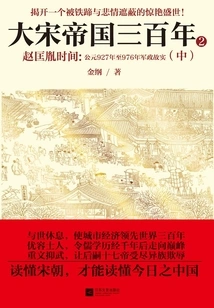
Chenqiaoyi was the most important station in Zhao Kuangyin's life. At this station, he completed a dynasty change in a bloodless way. From AD 951 to AD 960, the chaotic Five Dynasties and Ten Kingdoms were coming to an end, and an unprecedentedly prosperous Song Empire began to emerge on the historical horizon. Ten years before the founding of the Song Dynasty, Zhou Taizu Guo Wei eliminated the bad governance of the previous dynasty, bringing the first glimmer of light in the troubled times; Chai Rong, the great emperor who was heroic and full of royal ideals, led a personal expedition, defeated the Khitan coalition forces of the Northern Han Dynasty, and started civilized government affairs; The peerless master Wang Puxian's "Pingbian Policy" "determined the road map of the Central Plains"; after the Battle of Gaoping, Zhao Kuangyin entered the ranks of senior officers in the Later Zhou Dynasty; the incredible "Wei Nang" and the mysterious Chenqiao Mutiny brought an astonishing turning point in history...
Chenqiaoyi was the most important station in Zhao Kuangyin's life. At this station, he completed a dynasty change in a bloodless way. From AD 951 to AD 960, the chaotic Five Dynasties and Ten Kingdoms were coming to an end, and an unprecedentedly prosperous Song Empire began to emerge on the historical horizon. Ten years before the founding of the Song Dynasty, Zhou Taizu Guo Wei eliminated the bad governance of the previous dynasty, bringing the first glimmer of light in the troubled times; Chai Rong, the great emperor who was heroic and full of royal ideals, led a personal expedition, defeated the Khitan coalition forces of the Northern Han Dynasty, and started civilized government affairs; The peerless master Wang Puxian's "Pingbian Policy" "determined the road map of the Central Plains"; after the Battle of Gaoping, Zhao Kuangyin entered the ranks of senior officers in the Later Zhou Dynasty; the incredible "Wei Nang" and the mysterious Chenqiao Mutiny brought an astonishing turning point in history...
赵匡胤时间(上册)
Jin Gang
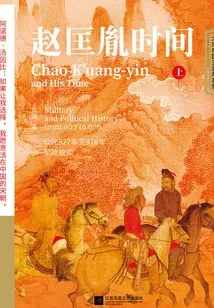
Looking around, there are wolves everywhere. There are vassal towns that cannot be controlled by the king's law, there are vassal towns that are fighting against each other, there are vassal towns that are ready to take action, and there are even Khitan cavalry who wantonly plunder. Although the imperial court was there at that time, the world was already dead. The thirty years before the founding of the Song Dynasty were the dark ages of Chinese history. If you understand these thirty years, you will understand what barbarism and cruelty are, and you will understand why the Song Dynasty is called a prosperous civilization. Thirty years before the founding of the Song Dynasty, it was a military battlefield where wolves roamed and cavalry raged. It was a place where vassal towns were divided, factions fought against each other, and conspiracies and brutal crimes took place. It was a purgatory where civilization was ruined, morality was lost, and the world had constant nightmares. The history of the thirty years before the founding of the Song Dynasty was a history of turmoil caused by usurpation and disaster, and a history of Chinese people's suffering covered by blood and tragedy. If you understand these thirty years of history and see the cause and effect of the troubled times of the Five Dynasties, you will understand the origin of the Song Dynasty Empire, understand Zhao Kuangyin's good intentions in constructing and deducing the Song Dynasty civilization, and understand why China has evolved into what it is today. The author has read tens of thousands of volumes and read them for ten years. Using official history as basis and unofficial history as material, in chronological order, through the perspectives of soldiers, counselors, generals and civilians, he presents slices of the era in the thirty years before the founding of the Song Dynasty in detail. By connecting these slices, you may be able to see a different history.
Looking around, there are wolves everywhere. There are vassal towns that cannot be controlled by the king's law, there are vassal towns that are fighting against each other, there are vassal towns that are ready to take action, and there are even Khitan cavalry who wantonly plunder. Although the imperial court was there at that time, the world was already dead. The thirty years before the founding of the Song Dynasty were the dark ages of Chinese history. If you understand these thirty years, you will understand what barbarism and cruelty are, and you will understand why the Song Dynasty is called a prosperous civilization. Thirty years before the founding of the Song Dynasty, it was a military battlefield where wolves roamed and cavalry raged. It was a place where vassal towns were divided, factions fought against each other, and conspiracies and brutal crimes took place. It was a purgatory where civilization was ruined, morality was lost, and the world had constant nightmares. The history of the thirty years before the founding of the Song Dynasty was a history of turmoil caused by usurpation and disaster, and a history of Chinese people's suffering covered by blood and tragedy. If you understand these thirty years of history and see the cause and effect of the troubled times of the Five Dynasties, you will understand the origin of the Song Dynasty Empire, understand Zhao Kuangyin's good intentions in constructing and deducing the Song Dynasty civilization, and understand why China has evolved into what it is today. The author has read tens of thousands of volumes and read them for ten years. Using official history as basis and unofficial history as material, in chronological order, through the perspectives of soldiers, counselors, generals and civilians, he presents slices of the era in the thirty years before the founding of the Song Dynasty in detail. By connecting these slices, you may be able to see a different history.
大宋帝国三百年(套装共七册)
Jin Gang
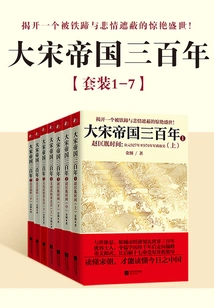
"Three Hundred Years of the Song Empire" is based on official history and uses unofficial history and folklore as materials to panoramically reproduce the historical facts of Zhao Kuangyin's creation of the world for more than fifty years. It is faithful to the original appearance of history, and the textual research and rendering complement each other. It is also full of insights and has profound implications between the lines. The details are meticulous and the grand parts are thrilling, presenting a turbulent historical picture.
"Three Hundred Years of the Song Empire" is based on official history and uses unofficial history and folklore as materials to panoramically reproduce the historical facts of Zhao Kuangyin's creation of the world for more than fifty years. It is faithful to the original appearance of history, and the textual research and rendering complement each other. It is also full of insights and has profound implications between the lines. The details are meticulous and the grand parts are thrilling, presenting a turbulent historical picture.