Library
Browse and search books
7 novels found
二十世纪中国史纲(全集)
Jin Chongji
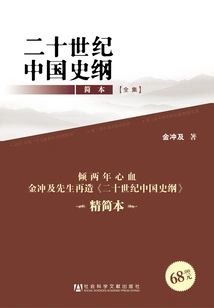
A history of China in the 20th century can also be said to be a collection of practical records of the Chinese people during this century. It has experienced tragic encounters and enjoyed the joy of victory; in the process of achieving victory, it has experienced great successes and serious setbacks. All opinions and opinions have been tested in such rich practice. It can explain better than any eloquent words what is correct and what is fallacious, and leaves endless enlightenment to future generations. Throughout the history of China in the 20th century, a clear theme runs throughout: striving for the great rejuvenation of the Chinese nation. The Chinese nation faces two major historical tasks: one is to seek national independence and people's liberation, and the other is to realize the prosperity of the country and the common prosperity of the people. It must be carried out in two steps: the latter is the goal that people long for and strive for, and the former is the necessary prerequisite for the latter.
A history of China in the 20th century can also be said to be a collection of practical records of the Chinese people during this century. It has experienced tragic encounters and enjoyed the joy of victory; in the process of achieving victory, it has experienced great successes and serious setbacks. All opinions and opinions have been tested in such rich practice. It can explain better than any eloquent words what is correct and what is fallacious, and leaves endless enlightenment to future generations. Throughout the history of China in the 20th century, a clear theme runs throughout: striving for the great rejuvenation of the Chinese nation. The Chinese nation faces two major historical tasks: one is to seek national independence and people's liberation, and the other is to realize the prosperity of the country and the common prosperity of the people. It must be carried out in two steps: the latter is the goal that people long for and strive for, and the former is the necessary prerequisite for the latter.
二十世纪中国史纲(上册)
Jin Chongji
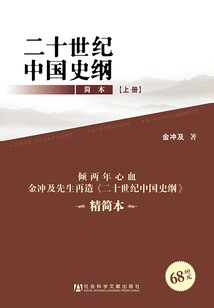
A history of China in the 20th century can also be said to be a collection of practical records of the Chinese people during this century. It has experienced tragic encounters and enjoyed the joy of victory; in the process of achieving victory, it has experienced great successes and serious setbacks. All opinions and opinions have been tested in such rich practice. It can explain better than any eloquent words what is correct and what is fallacious, and leaves endless enlightenment to future generations. Throughout the history of China in the 20th century, a clear theme runs throughout: striving for the great rejuvenation of the Chinese nation. The Chinese nation faces two major historical tasks: one is to seek national independence and people's liberation, and the other is to realize the prosperity of the country and the common prosperity of the people. It must be carried out in two steps: the latter is the goal that people long for and strive for, and the former is the necessary prerequisite for the latter.
A history of China in the 20th century can also be said to be a collection of practical records of the Chinese people during this century. It has experienced tragic encounters and enjoyed the joy of victory; in the process of achieving victory, it has experienced great successes and serious setbacks. All opinions and opinions have been tested in such rich practice. It can explain better than any eloquent words what is correct and what is fallacious, and leaves endless enlightenment to future generations. Throughout the history of China in the 20th century, a clear theme runs throughout: striving for the great rejuvenation of the Chinese nation. The Chinese nation faces two major historical tasks: one is to seek national independence and people's liberation, and the other is to realize the prosperity of the country and the common prosperity of the people. It must be carried out in two steps: the latter is the goal that people long for and strive for, and the former is the necessary prerequisite for the latter.
向开国领袖学习工作方法
Jin Chongji
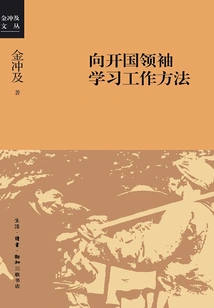
During the period of China's revolution and construction, leaders such as Mao Zedong, Zhou Enlai, Zhu De, Liu Shaoqi, Chen Yun, and Deng Xiaoping accumulated valuable working methods in practical work and played important roles in different periods. The value of these working methods has not lost its effect due to the passage of time and changes in conditions. Today we should fully explore it, inherit it, use it and develop it under the new historical conditions to speed up the process of promoting the great rejuvenation of the Chinese nation. Learning is also a better way to inherit the fine traditions of the older generation of proletarian revolutionaries, so that they can play a greater role in our practical work. Under the current situation, this is a high-quality reading book for national conditions education for our country's cadres.
During the period of China's revolution and construction, leaders such as Mao Zedong, Zhou Enlai, Zhu De, Liu Shaoqi, Chen Yun, and Deng Xiaoping accumulated valuable working methods in practical work and played important roles in different periods. The value of these working methods has not lost its effect due to the passage of time and changes in conditions. Today we should fully explore it, inherit it, use it and develop it under the new historical conditions to speed up the process of promoting the great rejuvenation of the Chinese nation. Learning is also a better way to inherit the fine traditions of the older generation of proletarian revolutionaries, so that they can play a greater role in our practical work. Under the current situation, this is a high-quality reading book for national conditions education for our country's cadres.
决战:毛泽东、蒋介石是如何应对三大战役的
Jin Chongji
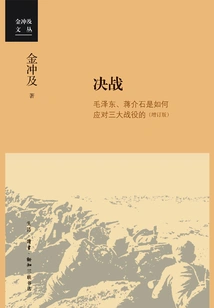
"Decisive Battle: How Mao Zedong and Chiang Kai-shek Viewed the Three Battles" Content summary: In the three major battles of Liaoshen, Huaihai, and Pingjin, the National Army suffered more than 1.54 Million casualties and the Communist Army suffered more than 242,000 casualties. The casualty ratio was almost 6:1. Why did the Chinese soldiers who had experienced the baptism of the Anti-Japanese War in the war against the relatively inexperienced Communist Army in just 142 days be so vulnerable and even defeated? To clarify this issue, we have to return to Mao Zedong and Chiang Kai-shek, the supreme commanders of the two armies, that is, how they responded to the three major strategic decisive battles.
"Decisive Battle: How Mao Zedong and Chiang Kai-shek Viewed the Three Battles" Content summary: In the three major battles of Liaoshen, Huaihai, and Pingjin, the National Army suffered more than 1.54 Million casualties and the Communist Army suffered more than 242,000 casualties. The casualty ratio was almost 6:1. Why did the Chinese soldiers who had experienced the baptism of the Anti-Japanese War in the war against the relatively inexperienced Communist Army in just 142 days be so vulnerable and even defeated? To clarify this issue, we have to return to Mao Zedong and Chiang Kai-shek, the supreme commanders of the two armies, that is, how they responded to the three major strategic decisive battles.
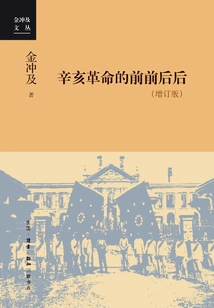
辛亥革命的前前后后(增订版)
Jin Chongji
This book is divided into two parts. The first part, "The Before and After of the Revolution of 1911", provides a systematic historical explanation of the entire process of the occurrence, development, victory and defeat of the Revolution of 1911. The second part, "Research on the Revolution of 1911," selects research articles on the Revolution of 1911 written by the author over the past forty years, and examines various topics such as the formation and development of Sun Yat-sen's revolutionary thought, the political plans of the Tongmenghui people, and the political forces in the national defense movement.
This book is divided into two parts. The first part, "The Before and After of the Revolution of 1911", provides a systematic historical explanation of the entire process of the occurrence, development, victory and defeat of the Revolution of 1911. The second part, "Research on the Revolution of 1911," selects research articles on the Revolution of 1911 written by the author over the past forty years, and examines various topics such as the formation and development of Sun Yat-sen's revolutionary thought, the political plans of the Tongmenghui people, and the political forces in the national defense movement.
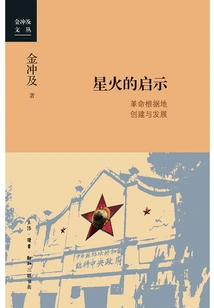
星火的启示:革命根据地创建与发展
Jin Chongji
This book contains five latest research articles that discuss the revolutionary basis of the history of the Communist Party of China. The time spans the three periods of the Agrarian Revolution, the Anti-Japanese War, and the War of Liberation. However, the problems of the five seemingly unrelated articles are fundamentally the same. They are all at critical junctures when the enemy is strong and we are weak, and even the strength of the two sides is disparate. They are all faced with a series of new problems that have never been encountered before. It examines how revolutionary forces, especially important revolutionary base areas, developed or were consolidated from small to large in different environments. This book also includes two historical papers directly related to the issue of revolutionary base areas. Since they do not focus on how to create and develop revolutionary base areas, they are included as appendices to this book. The book starts from newly discovered first-hand historical materials, and has a different explanation and new historical perspective than previous articles discussing the CCP's revolutionary base areas. In addition, this is the latest work of a ninety-year-old man who has been writing non-stop. It is published for the first time, which has a different meaning.
This book contains five latest research articles that discuss the revolutionary basis of the history of the Communist Party of China. The time spans the three periods of the Agrarian Revolution, the Anti-Japanese War, and the War of Liberation. However, the problems of the five seemingly unrelated articles are fundamentally the same. They are all at critical junctures when the enemy is strong and we are weak, and even the strength of the two sides is disparate. They are all faced with a series of new problems that have never been encountered before. It examines how revolutionary forces, especially important revolutionary base areas, developed or were consolidated from small to large in different environments. This book also includes two historical papers directly related to the issue of revolutionary base areas. Since they do not focus on how to create and develop revolutionary base areas, they are included as appendices to this book. The book starts from newly discovered first-hand historical materials, and has a different explanation and new historical perspective than previous articles discussing the CCP's revolutionary base areas. In addition, this is the latest work of a ninety-year-old man who has been writing non-stop. It is published for the first time, which has a different meaning.
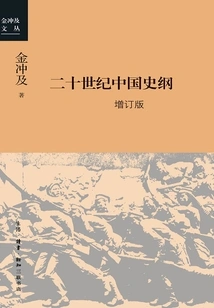
二十世纪中国史纲(全四卷·增订版)
Jin Chongji
A classic historical work that explains China's rejuvenation in the 20th century. The book consists of 4 volumes and more than one million words. This royal masterpiece begins with China's disastrous defeat in the Sino-Japanese War of 1894, and goes through the Boxer Rebellion, the Revolution of 1911, the May 4th Movement, the Anti-Japanese War, the Civil War between the Kuomintang and the Communist Party, as well as various social movements after the founding of New China, and reaches China in 2000. In this expanded edition, the author has revised the original book and also includes the wonderful comments on the book by eight famous historical figures: Qi Shirong, Li Wenhai, Luo Zhitian, Wang Qisheng, Yang Kuisong, Huang Daoxuan, Cheng Zhongyuan, and Zhou Suyuan, which will guide readers to fully understand the essence of the book.
A classic historical work that explains China's rejuvenation in the 20th century. The book consists of 4 volumes and more than one million words. This royal masterpiece begins with China's disastrous defeat in the Sino-Japanese War of 1894, and goes through the Boxer Rebellion, the Revolution of 1911, the May 4th Movement, the Anti-Japanese War, the Civil War between the Kuomintang and the Communist Party, as well as various social movements after the founding of New China, and reaches China in 2000. In this expanded edition, the author has revised the original book and also includes the wonderful comments on the book by eight famous historical figures: Qi Shirong, Li Wenhai, Luo Zhitian, Wang Qisheng, Yang Kuisong, Huang Daoxuan, Cheng Zhongyuan, and Zhou Suyuan, which will guide readers to fully understand the essence of the book.