Library
Browse and search books
2 novels found

Tibetan Tianbao Chinese Tianbao
General Fiction藏族天宝 中华天宝
Jiangbian Gyatso
Sangyue Yuesi joined the Red Army in 1935 and experienced the 25,000-mile Long March; in September 1949, he attended the first plenary session of the first Chinese People's Political Consultative Conference and became the first Tibetan member of the National Committee of the Chinese People's Political Consultative Conference. He also spoke at the conference on behalf of the Tibetan compatriots, wholeheartedly supporting the leadership of the Communist Party of China and Chairman Mao, supporting the "Common Program", unequivocally safeguarding the unity of the motherland and ethnic unity, and warmly applauding the founding of New China. On the morning of October 1, 1949, he stood on the Tiananmen viewing platform and witnessed Chairman Mao personally pressing the button to raise the five-star red flag; he actively participated in the preparations for the establishment of the Xikang Tibetan Autonomous Region, the first ethnic autonomous region in New China, and served as the first chairman. At the same time, he also served as the chairman of the People's Government of the Sichuan Tibetan Autonomous Region.
Sangyue Yuesi joined the Red Army in 1935 and experienced the 25,000-mile Long March; in September 1949, he attended the first plenary session of the first Chinese People's Political Consultative Conference and became the first Tibetan member of the National Committee of the Chinese People's Political Consultative Conference. He also spoke at the conference on behalf of the Tibetan compatriots, wholeheartedly supporting the leadership of the Communist Party of China and Chairman Mao, supporting the "Common Program", unequivocally safeguarding the unity of the motherland and ethnic unity, and warmly applauding the founding of New China. On the morning of October 1, 1949, he stood on the Tiananmen viewing platform and witnessed Chairman Mao personally pressing the button to raise the five-star red flag; he actively participated in the preparations for the establishment of the Xikang Tibetan Autonomous Region, the first ethnic autonomous region in New China, and served as the first chairman. At the same time, he also served as the chairman of the People's Government of the Sichuan Tibetan Autonomous Region.
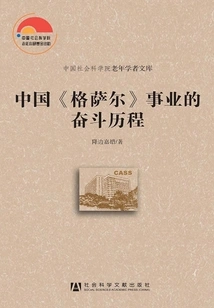
The Struggle of China's "gesar" Cause
Literature中国《格萨尔》事业的奋斗历程
Jiangbian Gyatso
Hegel once asserted in "Aesthetics": "There is no epic in China." This sentence once made some people feel angry and criticized. However, if you think about it carefully, this cannot be blamed on Hegel. The responsibility lies with us. It is we who did not discover such a great epic as "Gesar" and introduce it to the whole of China and the world in a perfect form, so that it can become the common spiritual wealth of the Chinese nation and all mankind. This made Hegel, a great scholar and wise man hailed by Engels as the "Giant on Mount Olympus", say such words. After the founding of the People's Republic of China, the profound significance of our country's great achievements in the "Gesar" cause is that it allows the world to re-examine this nation surrounded by snow-capped mountains, its history, and its culture with reverence. It has also completely changed the cultural landscape of world epics. In the history of the development of world epics, it has firmly established the lofty and unshakable status of "Gesar" and is known as the "Iliad of the East." "Gesar" and Homer's epic, one representing ancient Eastern civilization and the other representing ancient Western civilization, complement each other. They can be called two brilliant pearls in the history of human civilization and have won honors for the great motherland in the academic and cultural fields. This book comprehensively reflects the struggles of several generations of "Gesar" people in New China, with a high sense of responsibility and mission, with the "tenacity" fighting spirit advocated by Lu Xun, with the persistence of not letting go, perseverance, perseverance, and passing on the fire from generation to generation. This is the development of an epic. This is the development process of a national culture.
Hegel once asserted in "Aesthetics": "There is no epic in China." This sentence once made some people feel angry and criticized. However, if you think about it carefully, this cannot be blamed on Hegel. The responsibility lies with us. It is we who did not discover such a great epic as "Gesar" and introduce it to the whole of China and the world in a perfect form, so that it can become the common spiritual wealth of the Chinese nation and all mankind. This made Hegel, a great scholar and wise man hailed by Engels as the "Giant on Mount Olympus", say such words. After the founding of the People's Republic of China, the profound significance of our country's great achievements in the "Gesar" cause is that it allows the world to re-examine this nation surrounded by snow-capped mountains, its history, and its culture with reverence. It has also completely changed the cultural landscape of world epics. In the history of the development of world epics, it has firmly established the lofty and unshakable status of "Gesar" and is known as the "Iliad of the East." "Gesar" and Homer's epic, one representing ancient Eastern civilization and the other representing ancient Western civilization, complement each other. They can be called two brilliant pearls in the history of human civilization and have won honors for the great motherland in the academic and cultural fields. This book comprehensively reflects the struggles of several generations of "Gesar" people in New China, with a high sense of responsibility and mission, with the "tenacity" fighting spirit advocated by Lu Xun, with the persistence of not letting go, perseverance, perseverance, and passing on the fire from generation to generation. This is the development of an epic. This is the development process of a national culture.