Library
Browse and search books
5 novels found
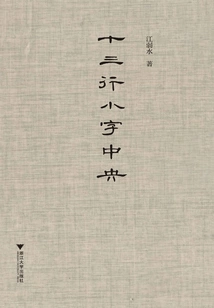
十三行小字中央
Jiang Ruoshui
From an inconspicuous auction item, an eye-catching romantic poem from ancient China is revealed: in the center of thirteen lines of small characters, there is such a subtle and thrilling emotional code hidden! From Cao Zhi to Wang Xizhi to Zhu Yizun, from poetry to calligraphy to history, the author uses delicate and considerate writing to allow readers to most truly feel a love model and emotional expression in ancient China. About the author: Jiang Ruoshui, born in 1963, is from Qingyang, Anhui. Doctor of Philosophy from the Chinese University of Hong Kong, and is currently a professor and doctoral supervisor at the School of Media and International Culture, Zhejiang University. Mainly engaged in the study of comparative poetry, he has authored "Research on Bian Zhilin's Poetry", "Synchronization and Displacement between China and the West", "Modernity of Classical Poetry", etc. He also writes poems and essays, including the collection of poems "The Mood of Threads", the collection of essays "From Wang Xifeng to Potosi", "Inland Visitors to Taiwan", "Lying in Bed", "Records of Blowing Water on the Lake", etc. In 2017, he was awarded the "Literary Critic of the Year" at the 15th Chinese Literature Media Awards. His "Eight Lessons from Poetry" was named the "China's Good Book" in 2017, and the China Reading Newspaper's Top Ten Best Books in 2017.
From an inconspicuous auction item, an eye-catching romantic poem from ancient China is revealed: in the center of thirteen lines of small characters, there is such a subtle and thrilling emotional code hidden! From Cao Zhi to Wang Xizhi to Zhu Yizun, from poetry to calligraphy to history, the author uses delicate and considerate writing to allow readers to most truly feel a love model and emotional expression in ancient China. About the author: Jiang Ruoshui, born in 1963, is from Qingyang, Anhui. Doctor of Philosophy from the Chinese University of Hong Kong, and is currently a professor and doctoral supervisor at the School of Media and International Culture, Zhejiang University. Mainly engaged in the study of comparative poetry, he has authored "Research on Bian Zhilin's Poetry", "Synchronization and Displacement between China and the West", "Modernity of Classical Poetry", etc. He also writes poems and essays, including the collection of poems "The Mood of Threads", the collection of essays "From Wang Xifeng to Potosi", "Inland Visitors to Taiwan", "Lying in Bed", "Records of Blowing Water on the Lake", etc. In 2017, he was awarded the "Literary Critic of the Year" at the 15th Chinese Literature Media Awards. His "Eight Lessons from Poetry" was named the "China's Good Book" in 2017, and the China Reading Newspaper's Top Ten Best Books in 2017.
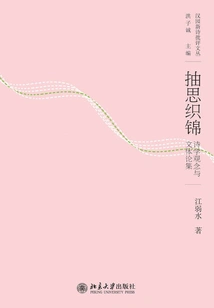
抽思织锦:诗学观念与文体论集
Jiang Ruoshui
"Thinking about the Tapestry: A Collection of Poetic Concepts and Style" discusses poetry, essays, novels and even translation, which is quite messy, but it still has one center and two basic points. For example, discussing Eliot's "self-dramatization" technique, Bian Zhilin's classicism spirit, or analyzing the dilemma between Wen Yiduo's poetry and reality, and Frost's dilemma between birth and human life, are studies at the conceptual level, which are called "thinking"; as for analyzing Jiang Baishi's words, poems by Dai Wangshu and others, prose by Hu Lancheng and Dong Qiao, and Babel's novels, they are studies at the stylistic level, which is called "weaving tapestry." They all run through a poetic purpose.
"Thinking about the Tapestry: A Collection of Poetic Concepts and Style" discusses poetry, essays, novels and even translation, which is quite messy, but it still has one center and two basic points. For example, discussing Eliot's "self-dramatization" technique, Bian Zhilin's classicism spirit, or analyzing the dilemma between Wen Yiduo's poetry and reality, and Frost's dilemma between birth and human life, are studies at the conceptual level, which are called "thinking"; as for analyzing Jiang Baishi's words, poems by Dai Wangshu and others, prose by Hu Lancheng and Dong Qiao, and Babel's novels, they are studies at the stylistic level, which is called "weaving tapestry." They all run through a poetic purpose.
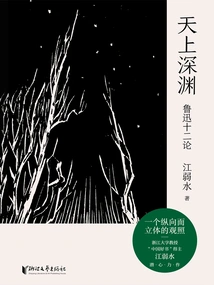
天上深渊:鲁迅十二论
Jiang Ruoshui
"Abyss in the Sky: Twelve Essays on Lu Xun" is a comprehensive review of Lu Xun. It is the masterpiece of Jiang Zuoshui, a professor at Zhejiang University and winner of the "Chinese Good Book". The book is divided into twelve chapters, from "The Scream" to "Wandering", from "Picking Up Flowers at Morning and Evening" to "New Stories", from the modern prose poem "Wild Grass" to Lu Xun's old-style poems, from Lu Xun's life dilemma to the discourse dilemma, to the concept of language, it provides a vertical and three-dimensional view of Lu Xun's writing. This book breaks down many stereotypes about Lu Xun's works and provides a new way to interpret Lu Xun. At the same time, it also provides a more detailed and complete analysis based on previous research, such as the comparison of Lu Xun's and Hu Shi's views on language, the discussion of the artistic charm of Lu Xun's old poems, etc. Today, when there are so many studies on Lu Xun, this book is full of original ideas and inventions, and provides many refreshing interpretations of Lu Xun.
"Abyss in the Sky: Twelve Essays on Lu Xun" is a comprehensive review of Lu Xun. It is the masterpiece of Jiang Zuoshui, a professor at Zhejiang University and winner of the "Chinese Good Book". The book is divided into twelve chapters, from "The Scream" to "Wandering", from "Picking Up Flowers at Morning and Evening" to "New Stories", from the modern prose poem "Wild Grass" to Lu Xun's old-style poems, from Lu Xun's life dilemma to the discourse dilemma, to the concept of language, it provides a vertical and three-dimensional view of Lu Xun's writing. This book breaks down many stereotypes about Lu Xun's works and provides a new way to interpret Lu Xun. At the same time, it also provides a more detailed and complete analysis based on previous research, such as the comparison of Lu Xun's and Hu Shi's views on language, the discussion of the artistic charm of Lu Xun's old poems, etc. Today, when there are so many studies on Lu Xun, this book is full of original ideas and inventions, and provides many refreshing interpretations of Lu Xun.
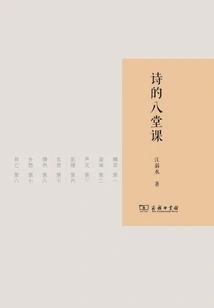
Eight Lessons in Poetry
Literature诗的八堂课
Jiang Ruoshui
What do poets write about when they write poems? How is it written? How to read it? In the form of a series of lectures, this book cites poetry and poetic theory from ancient and modern times, both at home and abroad, to launch meaningful and interesting discussions on topics such as games, taste, voice, texture, speculation, erotica, nostalgia, and death. Each lecture uses unique charming works and unique analysis to give readers both emotional and intellectual satisfaction. It can be used as an introduction to poetry, or as an advanced level in poetry.
What do poets write about when they write poems? How is it written? How to read it? In the form of a series of lectures, this book cites poetry and poetic theory from ancient and modern times, both at home and abroad, to launch meaningful and interesting discussions on topics such as games, taste, voice, texture, speculation, erotica, nostalgia, and death. Each lecture uses unique charming works and unique analysis to give readers both emotional and intellectual satisfaction. It can be used as an introduction to poetry, or as an advanced level in poetry.
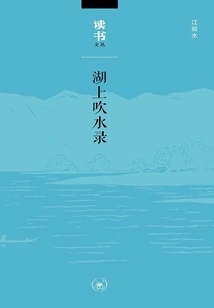
湖上吹水录(读书文丛)
Jiang Ruoshui
This book is roughly divided into three series according to its content: the first series contains comments from Chinese and foreign literati, some commenting on ideas and some on literary style. The second volume generally revolves around language issues, arising from different topics such as translation style, and unfolds some thoughts. The third volume is mainly a close reading of the texts of classical poetry, which are all unknown and wonderful words. The author wants to write an enjoyable work that breaks down the main points. "Blowing water" means idle talk in Cantonese. The article is just like Jiang Ruoshui's writing state for "Dushu" in the past ten years. There is no fixed topic or subject matter. He follows his heart without going beyond the rules. What is stable is his good knowledge and writing style: chic, elegant, and accessible. Not only does he have a dual knowledge background of China and the West, but his reading purpose is not limited to literature and language, and his vision covers society and thought. It is refreshing and amazing to read.
This book is roughly divided into three series according to its content: the first series contains comments from Chinese and foreign literati, some commenting on ideas and some on literary style. The second volume generally revolves around language issues, arising from different topics such as translation style, and unfolds some thoughts. The third volume is mainly a close reading of the texts of classical poetry, which are all unknown and wonderful words. The author wants to write an enjoyable work that breaks down the main points. "Blowing water" means idle talk in Cantonese. The article is just like Jiang Ruoshui's writing state for "Dushu" in the past ten years. There is no fixed topic or subject matter. He follows his heart without going beyond the rules. What is stable is his good knowledge and writing style: chic, elegant, and accessible. Not only does he have a dual knowledge background of China and the West, but his reading purpose is not limited to literature and language, and his vision covers society and thought. It is refreshing and amazing to read.