Library
Browse and search books
8 novels found

Jin Yin Xiang Yangsheng
Modern Romance锦茵向阳生
Jiang Ming
This article is not a novel. The first few chapters are novels and have not been deleted. The following chapters are about writing about my own life and some random thoughts. If you don't like to see it, don't click in.
This article is not a novel. The first few chapters are novels and have not been deleted. The following chapters are about writing about my own life and some random thoughts. If you don't like to see it, don't click in.
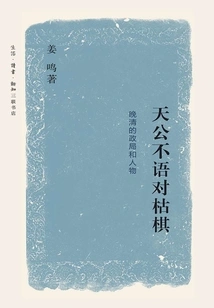
天公不语对枯棋:晚清的政局和人物
Jiang Ming
This is a historical reading that closely focuses on important events and key figures and tells the political situation of the late Qing Dynasty. The scenic spots in Beijing described by the author, including the imperial palaces, gardens, palaces, and streets, were once the stage for the activities of the undead in history. The author uses highly contagious detailed narratives to reproduce the difficult choices and complex and ever-changing inner worlds of the Empress Dowager Cixi, Emperor Guangxu, Li Hongzhang and other princes and ministers, and reformers such as Kang and Liang, at historical junctures. The author outlines a vivid image of that era. It is not only a leisurely and boring Beijing anecdote, but also imbued with the kung fu of historians, old thoughts and new ideas.
This is a historical reading that closely focuses on important events and key figures and tells the political situation of the late Qing Dynasty. The scenic spots in Beijing described by the author, including the imperial palaces, gardens, palaces, and streets, were once the stage for the activities of the undead in history. The author uses highly contagious detailed narratives to reproduce the difficult choices and complex and ever-changing inner worlds of the Empress Dowager Cixi, Emperor Guangxu, Li Hongzhang and other princes and ministers, and reformers such as Kang and Liang, at historical junctures. The author outlines a vivid image of that era. It is not only a leisurely and boring Beijing anecdote, but also imbued with the kung fu of historians, old thoughts and new ideas.
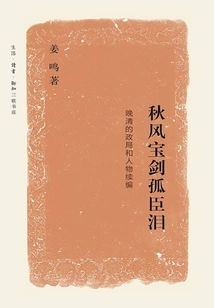
秋风宝剑孤臣泪:晚清的政局和人物续编
Jiang Ming
This book is another work written by Mr. Jiang Ming that details the political situation and characters of the late Qing Dynasty after "The God of Silence and Kuqi". The late Qing Dynasty was the transition between the old and new eras in China. During this change, there was both attachment to old things and desire and curiosity for new things. In this era, culture, ideas, systems, technology, etc. Were constantly changing, changing and colliding with the thinking of those in power. It is this kind of collision that gives special attention to the characters of this era, paying attention to the subtle changes in the current situation and characters. It is worth reading for every reader who is interested in history.
This book is another work written by Mr. Jiang Ming that details the political situation and characters of the late Qing Dynasty after "The God of Silence and Kuqi". The late Qing Dynasty was the transition between the old and new eras in China. During this change, there was both attachment to old things and desire and curiosity for new things. In this era, culture, ideas, systems, technology, etc. Were constantly changing, changing and colliding with the thinking of those in power. It is this kind of collision that gives special attention to the characters of this era, paying attention to the subtle changes in the current situation and characters. It is worth reading for every reader who is interested in history.
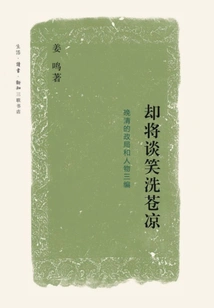
却将谈笑洗苍凉:晚清的政局和人物三编
Jiang Ming
Following "The God is Silent to the Dry Chess" and "The Autumn Wind Sword Lonely Tears", this is the third volume of late Qing historical essays written by Jiang Ming, including thirteen articles. There is a long and colorful textual research, which reveals the diplomatic failure of the Qing court after the "Ma Jiali Incident", the potential impact of "Jiashen Yishu" on the defeat of the Sino-Japanese War of 1894-1899, and the ups and downs of the "Qingliu" represented by Zhang Peilun in the political arena at that time. These events just foreshadowed the defeat of the Sino-Japanese War of 1894-1895. There are also essays with novel and interesting angles, from Hu Xueyan's bankruptcy to Sun Yat-sen's kidnapping in London; from Li Hongzhang's final residence to Zhang Peilun's love and marriage life; from the poetry and influence of Prince Chun's inspection of the Beiyang Navy to a spoonful of beef soup for health - touching on all aspects of politics, economy and life in the late Qing Dynasty. Jiang Ming is good at presenting the delicate and macroscopic sense of depth behind historical events from point to point. He combines rigorous historical research with interesting on-site visits, coupled with brisk and moving writing, to give a novel interpretation of important historical events and figures in the late Qing Dynasty. In the blend of history and reality, the true picture of that turbulent era is reproduced.
Following "The God is Silent to the Dry Chess" and "The Autumn Wind Sword Lonely Tears", this is the third volume of late Qing historical essays written by Jiang Ming, including thirteen articles. There is a long and colorful textual research, which reveals the diplomatic failure of the Qing court after the "Ma Jiali Incident", the potential impact of "Jiashen Yishu" on the defeat of the Sino-Japanese War of 1894-1899, and the ups and downs of the "Qingliu" represented by Zhang Peilun in the political arena at that time. These events just foreshadowed the defeat of the Sino-Japanese War of 1894-1895. There are also essays with novel and interesting angles, from Hu Xueyan's bankruptcy to Sun Yat-sen's kidnapping in London; from Li Hongzhang's final residence to Zhang Peilun's love and marriage life; from the poetry and influence of Prince Chun's inspection of the Beiyang Navy to a spoonful of beef soup for health - touching on all aspects of politics, economy and life in the late Qing Dynasty. Jiang Ming is good at presenting the delicate and macroscopic sense of depth behind historical events from point to point. He combines rigorous historical research with interesting on-site visits, coupled with brisk and moving writing, to give a novel interpretation of important historical events and figures in the late Qing Dynasty. In the blend of history and reality, the true picture of that turbulent era is reproduced.
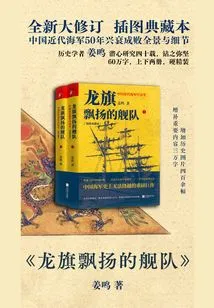
龙旗飘扬的舰队:中国近代海军兴衰史(插图典藏本)(全2册)
Jiang Ming
This book records and analyzes in detail the tortuous history of the creation, development and decline of China's modern navy in the fifty years of the late Qing Dynasty (1861-1911). It makes unique observations and analyzes on naval ship purchase, education, training, base construction, revenue and expenditure, naval strategy and other fields, and clearly demonstrates the close connection between the modern navy and the development of Chinese society. As a leading work in the study of my country's modern naval history, this book has both independent insights into major historical events and elucidation of little-known behind-the-scenes issues; it has a broad vision to oversee the overall situation and precise efforts to verify details; it has both a dynamic study of the development process of the modern navy and a static thematic analysis of issues such as ship performance; it is both a history of the development of the modern navy and a map of the political ecology of the late Qing Dynasty. This book based on history is not to be missed for the officers and soldiers of the three armed forces who are fighting on the front line of military modernization and for readers who are interested in naval history and modern history. In this updated edition, the author specially researched the Dragon Flag in the late Qing Dynasty and added the representative photos of the two dragon flags collected by the former residence of Li Hongzhang in Hefei and the British Maritime Museum, as well as precious old photos such as a group photo of officers and soldiers of the Beiyang Navy's "Jingyuan" ship. There are more than 400 illustrations in the book. In addition, the addition of the section "Recovering Dongsha and Patrolling Xisha" enriches the historical research on the Guangdong Navy and pays tribute to the ancestors who defended the country's rights and interests in the South China Sea and the military currently fighting on the front lines of the South China Sea.
This book records and analyzes in detail the tortuous history of the creation, development and decline of China's modern navy in the fifty years of the late Qing Dynasty (1861-1911). It makes unique observations and analyzes on naval ship purchase, education, training, base construction, revenue and expenditure, naval strategy and other fields, and clearly demonstrates the close connection between the modern navy and the development of Chinese society. As a leading work in the study of my country's modern naval history, this book has both independent insights into major historical events and elucidation of little-known behind-the-scenes issues; it has a broad vision to oversee the overall situation and precise efforts to verify details; it has both a dynamic study of the development process of the modern navy and a static thematic analysis of issues such as ship performance; it is both a history of the development of the modern navy and a map of the political ecology of the late Qing Dynasty. This book based on history is not to be missed for the officers and soldiers of the three armed forces who are fighting on the front line of military modernization and for readers who are interested in naval history and modern history. In this updated edition, the author specially researched the Dragon Flag in the late Qing Dynasty and added the representative photos of the two dragon flags collected by the former residence of Li Hongzhang in Hefei and the British Maritime Museum, as well as precious old photos such as a group photo of officers and soldiers of the Beiyang Navy's "Jingyuan" ship. There are more than 400 illustrations in the book. In addition, the addition of the section "Recovering Dongsha and Patrolling Xisha" enriches the historical research on the Guangdong Navy and pays tribute to the ancestors who defended the country's rights and interests in the South China Sea and the military currently fighting on the front lines of the South China Sea.
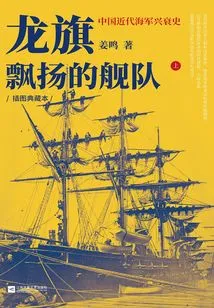
龙旗飘扬的舰队:中国近代海军兴衰史(上)(插图典藏本)
Jiang Ming
This book records and analyzes in detail the tortuous history of the creation, development and decline of China's modern navy in the fifty years of the late Qing Dynasty (1861-1911). It makes unique observations and analyzes on naval ship purchase, education, training, base construction, revenue and expenditure, naval strategy and other fields, and clearly demonstrates the close connection between the modern navy and the development of Chinese society. As a leading work in the study of my country's modern naval history, this book has both independent insights into major historical events and elucidation of little-known behind-the-scenes issues; it has a broad vision to oversee the overall situation and precise efforts to verify details; it has both a dynamic study of the development process of the modern navy and a static thematic analysis of issues such as ship performance; it is both a history of the development of the modern navy and a map of the political ecology of the late Qing Dynasty. In this updated edition, the author specially researched the Dragon Flag in the late Qing Dynasty and added the representative photos of the two dragon flags collected by the former residence of Li Hongzhang in Hefei and the British Maritime Museum, as well as precious old photos such as a group photo of officers and soldiers of the Beiyang Navy's "Jingyuan" ship. There are more than 400 illustrations in the book. In addition, the addition of the section "Recovering Dongsha and Patrolling Xisha" enriches the historical research on the Guangdong Navy and pays tribute to the ancestors who defended the country's rights and interests in the South China Sea and the military currently fighting on the front lines of the South China Sea.
This book records and analyzes in detail the tortuous history of the creation, development and decline of China's modern navy in the fifty years of the late Qing Dynasty (1861-1911). It makes unique observations and analyzes on naval ship purchase, education, training, base construction, revenue and expenditure, naval strategy and other fields, and clearly demonstrates the close connection between the modern navy and the development of Chinese society. As a leading work in the study of my country's modern naval history, this book has both independent insights into major historical events and elucidation of little-known behind-the-scenes issues; it has a broad vision to oversee the overall situation and precise efforts to verify details; it has both a dynamic study of the development process of the modern navy and a static thematic analysis of issues such as ship performance; it is both a history of the development of the modern navy and a map of the political ecology of the late Qing Dynasty. In this updated edition, the author specially researched the Dragon Flag in the late Qing Dynasty and added the representative photos of the two dragon flags collected by the former residence of Li Hongzhang in Hefei and the British Maritime Museum, as well as precious old photos such as a group photo of officers and soldiers of the Beiyang Navy's "Jingyuan" ship. There are more than 400 illustrations in the book. In addition, the addition of the section "Recovering Dongsha and Patrolling Xisha" enriches the historical research on the Guangdong Navy and pays tribute to the ancestors who defended the country's rights and interests in the South China Sea and the military currently fighting on the front lines of the South China Sea.
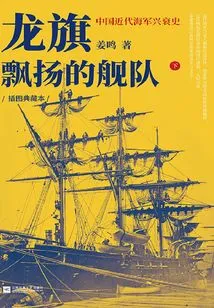
龙旗飘扬的舰队:中国近代海军兴衰史(下)(插图典藏本)
Jiang Ming
This book records and analyzes in detail the tortuous history of the creation, development and decline of China's modern navy in the fifty years of the late Qing Dynasty (1861-1911). It makes unique observations and analyzes on naval ship purchase, education, training, base construction, revenue and expenditure, naval strategy and other fields, and clearly demonstrates the close connection between the modern navy and the development of Chinese society. As a leading work in the study of my country's modern naval history, this book has both independent insights into major historical events and elucidation of little-known behind-the-scenes issues; it has a broad vision to oversee the overall situation and precise efforts to verify details; it has both a dynamic study of the development process of the modern navy and a static thematic analysis of issues such as ship performance; it is both a history of the development of the modern navy and a map of the political ecology of the late Qing Dynasty. In this updated edition, the author specially researched the Dragon Flag in the late Qing Dynasty and added the representative photos of the two dragon flags collected by the former residence of Li Hongzhang in Hefei and the British Maritime Museum, as well as precious old photos such as a group photo of officers and soldiers of the Beiyang Navy's "Jingyuan" ship. There are more than 400 illustrations in the book. In addition, the addition of the section "Recovering Dongsha and Patrolling Xisha" enriches the historical research on the Guangdong Navy and pays tribute to the ancestors who defended the country's rights and interests in the South China Sea and the military currently fighting on the front lines of the South China Sea.
This book records and analyzes in detail the tortuous history of the creation, development and decline of China's modern navy in the fifty years of the late Qing Dynasty (1861-1911). It makes unique observations and analyzes on naval ship purchase, education, training, base construction, revenue and expenditure, naval strategy and other fields, and clearly demonstrates the close connection between the modern navy and the development of Chinese society. As a leading work in the study of my country's modern naval history, this book has both independent insights into major historical events and elucidation of little-known behind-the-scenes issues; it has a broad vision to oversee the overall situation and precise efforts to verify details; it has both a dynamic study of the development process of the modern navy and a static thematic analysis of issues such as ship performance; it is both a history of the development of the modern navy and a map of the political ecology of the late Qing Dynasty. In this updated edition, the author specially researched the Dragon Flag in the late Qing Dynasty and added the representative photos of the two dragon flags collected by the former residence of Li Hongzhang in Hefei and the British Maritime Museum, as well as precious old photos such as a group photo of officers and soldiers of the Beiyang Navy's "Jingyuan" ship. There are more than 400 illustrations in the book. In addition, the addition of the section "Recovering Dongsha and Patrolling Xisha" enriches the historical research on the Guangdong Navy and pays tribute to the ancestors who defended the country's rights and interests in the South China Sea and the military currently fighting on the front lines of the South China Sea.

You Are Still in the World of Flowers Blooming
Modern Romance你还在花开的世界里
Jiang Ming
One day, nine-year-old Xiaoya rescued five boys. Xiaoya's mission is to protect them and let them grow up safely.
One day, nine-year-old Xiaoya rescued five boys. Xiaoya's mission is to protect them and let them grow up safely.