Library
Browse and search books
1 novel found
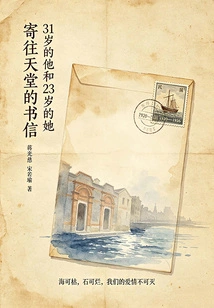
31岁的他和23岁的她:寄往天堂的书信
Jiang Guangci Song Ruoyu
"The sea can dry up, the stone can break, but my love for you will never die." This is a testimony of love that spans a hundred years. Jiang Guangci, a pioneer of modern Chinese revolutionary literature, met his lover Song Ruoyu during the May Fourth Movement. The 96 letters record a deep love that has been affected by the times but remains unswerving. One of them is a revolutionary poet, and the other is a like-minded new woman; they use their pen and ink to fight against distance, and use their faith to protect love. However, fate was cruel. Just one month after her wedding, Song Ruoyu suffered from a recurrence of lung disease and soon passed away at the age of 23. Five years later, 31-year-old Jiang Guangci also died of lung disease. Their story leaves to future generations an immortal legend about love and loss, revolution and ideals. This book was first published in 1927 and contains all extant letters, not a word changed, presented in their original form. This is a true slice of the love outlook of Chinese intellectuals in the early 20th century, and it is also the longest love letter a person wrote in the rest of his life.
"The sea can dry up, the stone can break, but my love for you will never die." This is a testimony of love that spans a hundred years. Jiang Guangci, a pioneer of modern Chinese revolutionary literature, met his lover Song Ruoyu during the May Fourth Movement. The 96 letters record a deep love that has been affected by the times but remains unswerving. One of them is a revolutionary poet, and the other is a like-minded new woman; they use their pen and ink to fight against distance, and use their faith to protect love. However, fate was cruel. Just one month after her wedding, Song Ruoyu suffered from a recurrence of lung disease and soon passed away at the age of 23. Five years later, 31-year-old Jiang Guangci also died of lung disease. Their story leaves to future generations an immortal legend about love and loss, revolution and ideals. This book was first published in 1927 and contains all extant letters, not a word changed, presented in their original form. This is a true slice of the love outlook of Chinese intellectuals in the early 20th century, and it is also the longest love letter a person wrote in the rest of his life.