Library
Browse and search books
11 novels found
Shorts Party
Literature短裤党
Jiang Guangci
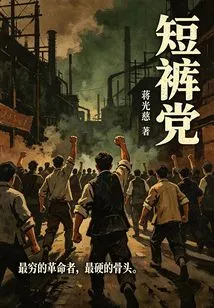
[The first novel in the history of modern literature to express the armed struggle of workers] This is a red classic novel in the history of modern Chinese literature that directly addresses the armed uprising of workers in Shanghai. Jiang Guangci uses fiery documentary writing to restore the passionate struggle of a group of simple-dressed and passionate bottom revolutionaries known as the "Pants Party" during the revolutionary storm of 1927. Female cotton mill workers, steel workers, young people with ideals, tuberculosis revolutionaries... Under the butcher knife of warlords, the iron hoof of imperialism and white terror, they used their flesh and blood as torches and faith as their flags to launch General Alliance strikes and armed riots, using their lives to smash the shackles of darkness. There are no gorgeous words, only hot blood; there are no heroic legends, only the awakening of ordinary people to death. This book is a true slice of the revolutionary era and a monument to the cry of the bottom souls. It is exciting to read and touches people's hearts.
[The first novel in the history of modern literature to express the armed struggle of workers] This is a red classic novel in the history of modern Chinese literature that directly addresses the armed uprising of workers in Shanghai. Jiang Guangci uses fiery documentary writing to restore the passionate struggle of a group of simple-dressed and passionate bottom revolutionaries known as the "Pants Party" during the revolutionary storm of 1927. Female cotton mill workers, steel workers, young people with ideals, tuberculosis revolutionaries... Under the butcher knife of warlords, the iron hoof of imperialism and white terror, they used their flesh and blood as torches and faith as their flags to launch General Alliance strikes and armed riots, using their lives to smash the shackles of darkness. There are no gorgeous words, only hot blood; there are no heroic legends, only the awakening of ordinary people to death. This book is a true slice of the revolutionary era and a monument to the cry of the bottom souls. It is exciting to read and touches people's hearts.
Lisa's Sorrow
Literature丽莎的哀怨
Jiang Guangci
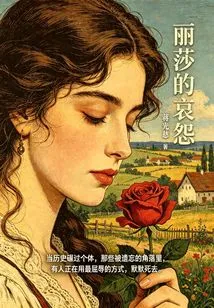
[The woman after the collapse of the old world] She was once a Russian nobleman, the wife of the leader, a delicate white flower. The storm of the October Revolution destroyed her greenhouse and threw her into the foreign country of Shanghai. From lady to dancer, from dancer to prostitute - Lisa exchanged her body for bread, exposed her dignity in front of thousands of people, and buried her love in the arms of countless strangers. After ten years of exile, she lost her country, her husband, her purity, and finally her health. Racked by illness, she was left with only sorrow for her fate and despair for her homeland. Jiang Guangci wrote the history of a woman's sinking in the torrent of revolution with cold and affectionate writing. "Lisa's Lament" is not only the lament of the Belarusian diaspora, but also a complex elegy about class, gender and survival. It allows us to see: when history rolls over individuals, in those forgotten corners, there are people who are dying silently in the most humiliating way.
[The woman after the collapse of the old world] She was once a Russian nobleman, the wife of the leader, a delicate white flower. The storm of the October Revolution destroyed her greenhouse and threw her into the foreign country of Shanghai. From lady to dancer, from dancer to prostitute - Lisa exchanged her body for bread, exposed her dignity in front of thousands of people, and buried her love in the arms of countless strangers. After ten years of exile, she lost her country, her husband, her purity, and finally her health. Racked by illness, she was left with only sorrow for her fate and despair for her homeland. Jiang Guangci wrote the history of a woman's sinking in the torrent of revolution with cold and affectionate writing. "Lisa's Lament" is not only the lament of the Belarusian diaspora, but also a complex elegy about class, gender and survival. It allows us to see: when history rolls over individuals, in those forgotten corners, there are people who are dying silently in the most humiliating way.
The Moon Breaks Out of the Clouds
Literature冲出云围的月亮
Jiang Guangci
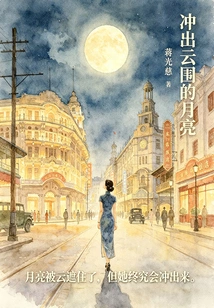
[The Collapse and Rebirth of a Woman] She was once a female soldier in the revolutionary army, full of ideals, and rushed to the battlefield; after her failure, she ended up on the streets of Shanghai, using her body as a weapon to retaliate against society. She teased the comprador's son, humiliated officials, mocked poets, and even gave illness as a gift - in the abyss of despair, she thought she had seen the truth of the world. However, Alian, a little girl who lost her parents, and Li Shangzhi, a revolutionary who has always been loyal, were like two beams of light, shining into her dark life. When the moon finally breaks out of the clouds, can she find her former self? Jiang Guangci is a pioneer of "revolutionary literature". This novel, written in 1930, boldly explores women's mental dilemma and the torn body and soul after the failure of the revolution. Its fiery, rebellious and painful reality is one of the most unique female growth narratives in the history of modern Chinese literature.
[The Collapse and Rebirth of a Woman] She was once a female soldier in the revolutionary army, full of ideals, and rushed to the battlefield; after her failure, she ended up on the streets of Shanghai, using her body as a weapon to retaliate against society. She teased the comprador's son, humiliated officials, mocked poets, and even gave illness as a gift - in the abyss of despair, she thought she had seen the truth of the world. However, Alian, a little girl who lost her parents, and Li Shangzhi, a revolutionary who has always been loyal, were like two beams of light, shining into her dark life. When the moon finally breaks out of the clouds, can she find her former self? Jiang Guangci is a pioneer of "revolutionary literature". This novel, written in 1930, boldly explores women's mental dilemma and the torn body and soul after the failure of the revolution. Its fiery, rebellious and painful reality is one of the most unique female growth narratives in the history of modern Chinese literature.
The Last Cry of Those Who Refuse to Kneel
General Fiction拒绝跪下的人最后的呐喊
Jiang Guangci
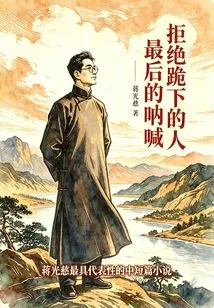
[Jiang Guangci's most representative short and medium-sized novels] He is a pioneer of "revolutionary literature". He dipped the tip of his pen in blood and tears to write down the bottom voices of that era. In Jiang Guangci's short and medium-length novels, there are no whispers of romance, only the roar of the oppressed, the loneliness and anger of the drifters, and the sacrifice of the revolutionaries. From Wang Zhong, whose parents died tragically and wandered around in "Young Wanderers", to Li Menghan, who lost his lover for the independence of Goryeo in "On the Yalu River"; from the two sisters who sacrificed their lives for the revolution in "Jufen", to Chen Jixia, who endlessly regretted his lost lover in "Wild Sacrifice" - every article is a dagger piercing the darkness. This book collects Jiang Guangci's most representative short stories and short stories, spanning his creative career. There is love here, but love is always crushed by the times; there is ideal, but the ideal is always struggling in a pool of blood. When reading his novels, what you hear is not the low chanting of literati, but the suppressed thunder before the storm, the last cry of those who refuse to kneel when an era is about to collapse.
[Jiang Guangci's most representative short and medium-sized novels] He is a pioneer of "revolutionary literature". He dipped the tip of his pen in blood and tears to write down the bottom voices of that era. In Jiang Guangci's short and medium-length novels, there are no whispers of romance, only the roar of the oppressed, the loneliness and anger of the drifters, and the sacrifice of the revolutionaries. From Wang Zhong, whose parents died tragically and wandered around in "Young Wanderers", to Li Menghan, who lost his lover for the independence of Goryeo in "On the Yalu River"; from the two sisters who sacrificed their lives for the revolution in "Jufen", to Chen Jixia, who endlessly regretted his lost lover in "Wild Sacrifice" - every article is a dagger piercing the darkness. This book collects Jiang Guangci's most representative short stories and short stories, spanning his creative career. There is love here, but love is always crushed by the times; there is ideal, but the ideal is always struggling in a pool of blood. When reading his novels, what you hear is not the low chanting of literati, but the suppressed thunder before the storm, the last cry of those who refuse to kneel when an era is about to collapse.
Last Smile
General Fiction最后的微笑
Jiang Guangci
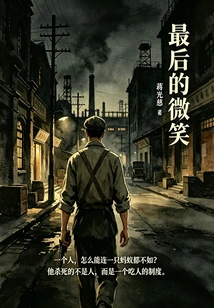
[The rebellious smile of the insulted person] Wang Agui, a 19-year-old cotton mill worker, was fired without reason by the foreman Zhang Jinkui. He was desperate and wanted to be hit by a car in exchange for fifty yuan in pension. But a little ant who was bullied by his own kind but resisted with all his strength awakened his dignity: How can a human be inferior to an ant? From that moment on, he stole a pistol and embarked on the road to revenge. He killed the informers, he killed the scabs, he killed anyone who oppressed the poor. Every gunshot is the last smile of the insulted person. Jiang Guangci is a pioneer of "revolutionary literature". This novel is the first novella in the history of modern Chinese literature that positively describes the workers' resistance struggle. It is rough, fiery, and full of the blood and anger of the people at the bottom. How does a young man who has never killed a chicken turn into a murderer step by step? This is not a crime story but an indictment of one era against another.
[The rebellious smile of the insulted person] Wang Agui, a 19-year-old cotton mill worker, was fired without reason by the foreman Zhang Jinkui. He was desperate and wanted to be hit by a car in exchange for fifty yuan in pension. But a little ant who was bullied by his own kind but resisted with all his strength awakened his dignity: How can a human be inferior to an ant? From that moment on, he stole a pistol and embarked on the road to revenge. He killed the informers, he killed the scabs, he killed anyone who oppressed the poor. Every gunshot is the last smile of the insulted person. Jiang Guangci is a pioneer of "revolutionary literature". This novel is the first novella in the history of modern Chinese literature that positively describes the workers' resistance struggle. It is rough, fiery, and full of the blood and anger of the people at the bottom. How does a young man who has never killed a chicken turn into a murderer step by step? This is not a crime story but an indictment of one era against another.
The Roaring Land
General Fiction咆哮了的土地
Jiang Guangci
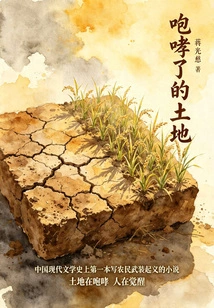
[The pioneering work of the red classic] In the late 1920s, a village ruled by landlords was as dull as a backwater. Miner Zhang Jinde returned to his hometown with the fire of revolution, and young landlord Li Jie also broke with his feudal family and joined the peasant movement. They organized peasant associations, mobilized the poor, and shouted the slogan of "Agrarian Revolution" - reduce rents, resist debts, and overthrow the local tyrants and evil gentry. However, when the guns of the revolutionary army suddenly turned, and the former allies turned into enemies, this group of barefoot farmers had to take up arms and retreat into the mountains to make a final struggle for survival and dignity. "The Roaring Land" is the representative work of Jiang Guangci, the pioneer of "revolutionary literature". It is also the first novel in the history of modern Chinese literature that positively describes the armed struggle of farmers. There is no exquisite rhetoric in the book, only the roar after the land is trampled; there are no perfect heroes, only ordinary people who stand up from the mud. It is rough, fiery and full of idealistic passion, and also records the most real struggles and sacrifices of that era. Open it and you will hear how a land roars and see how a group of people search for their own dawn in the darkness.
[The pioneering work of the red classic] In the late 1920s, a village ruled by landlords was as dull as a backwater. Miner Zhang Jinde returned to his hometown with the fire of revolution, and young landlord Li Jie also broke with his feudal family and joined the peasant movement. They organized peasant associations, mobilized the poor, and shouted the slogan of "Agrarian Revolution" - reduce rents, resist debts, and overthrow the local tyrants and evil gentry. However, when the guns of the revolutionary army suddenly turned, and the former allies turned into enemies, this group of barefoot farmers had to take up arms and retreat into the mountains to make a final struggle for survival and dignity. "The Roaring Land" is the representative work of Jiang Guangci, the pioneer of "revolutionary literature". It is also the first novel in the history of modern Chinese literature that positively describes the armed struggle of farmers. There is no exquisite rhetoric in the book, only the roar after the land is trampled; there are no perfect heroes, only ordinary people who stand up from the mud. It is rough, fiery and full of idealistic passion, and also records the most real struggles and sacrifices of that era. Open it and you will hear how a land roars and see how a group of people search for their own dawn in the darkness.
The Roaring Land (red Classic)
General Fiction咆哮了的土地(红色经典)
Jiang Guangci
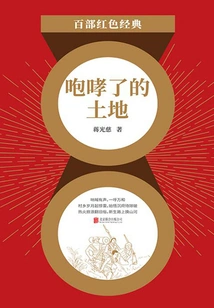
In the storm of the Great Revolution, Zhang Jinde, a Communist Party member and miner, and Li Jie, a revolutionary intellectual from a landlord's family, returned to their hometowns one after another. They brought new ideas to the farmers, sowed the fire of resistance in the countryside, and set off a revolutionary storm in the sleeping fields. The work is based on the sharp and fierce class struggle in rural society before and after the Great Revolution. For the first time in the form of a novel, the work passionately expresses the awakening of farmers, reproduces the process of the peasant revolutionary movement, and foreshadows the prospects for victory after the revolutionary storm. The writer stands at the highest point of the times and uses art to grasp the world, reflecting the problem of the way out for the Chinese revolution: the Chinese revolution is actually a peasant revolution. The peasant revolution must take the Jinggangshan road!
In the storm of the Great Revolution, Zhang Jinde, a Communist Party member and miner, and Li Jie, a revolutionary intellectual from a landlord's family, returned to their hometowns one after another. They brought new ideas to the farmers, sowed the fire of resistance in the countryside, and set off a revolutionary storm in the sleeping fields. The work is based on the sharp and fierce class struggle in rural society before and after the Great Revolution. For the first time in the form of a novel, the work passionately expresses the awakening of farmers, reproduces the process of the peasant revolutionary movement, and foreshadows the prospects for victory after the revolutionary storm. The writer stands at the highest point of the times and uses art to grasp the world, reflecting the problem of the way out for the Chinese revolution: the Chinese revolution is actually a peasant revolution. The peasant revolution must take the Jinggangshan road!
Miscellaneous Works by Jiang Guangci
Literature蒋光慈杂著
Jiang Guangci
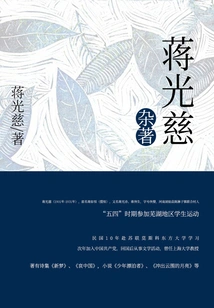
"Miscellaneous Works of Jiang Guangci" contains Jiang Guangci's political commentaries, essays, correspondence and chronology. The political essays include "Changes in Economic Forms and Social Relations", "The Interpretation of Historical Materialism on the Historical Development of Human Society", "Another Argument of Foreign News Advocating for International Management of China", "Communism Must Be Opposed", "It is Not Idle Words". The essays include short introductions, prefaces, prefaces, editors and postscripts written for some works and publications.
"Miscellaneous Works of Jiang Guangci" contains Jiang Guangci's political commentaries, essays, correspondence and chronology. The political essays include "Changes in Economic Forms and Social Relations", "The Interpretation of Historical Materialism on the Historical Development of Human Society", "Another Argument of Foreign News Advocating for International Management of China", "Communism Must Be Opposed", "It is Not Idle Words". The essays include short introductions, prefaces, prefaces, editors and postscripts written for some works and publications.
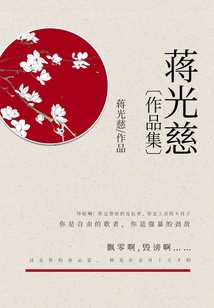
Jiang Guangci's Works Collection
Literature蒋光慈作品集
Jiang Guangci
Goodbye! You are the rebel of darkness, you are the unworthy son of God, you are the singer of freedom, you are the enemy of violence. Drifting, slandering...
Goodbye! You are the rebel of darkness, you are the unworthy son of God, you are the singer of freedom, you are the enemy of violence. Drifting, slandering...
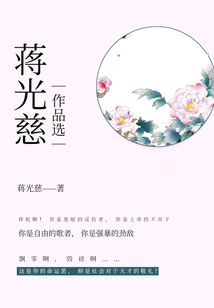
Selected Works of Jiang Guangci
Literature蒋光慈作品选
Jiang Guangci
In the 16th year of the Republic of China, he organized the "Sun Society" with A Ying, Meng Chao and others, edited "Sun Monthly", "Times Literature and Art", "New Current", "Pioneer" and other literary magazines to promote revolutionary literature. He is the author of poetry collections "New Dreams" and "Mourning China", novels "Young Wanderers", "Wild Sacrifice", "The Moon Breaks Out of the Clouds", etc. This book is one of his representative works.
In the 16th year of the Republic of China, he organized the "Sun Society" with A Ying, Meng Chao and others, edited "Sun Monthly", "Times Literature and Art", "New Current", "Pioneer" and other literary magazines to promote revolutionary literature. He is the author of poetry collections "New Dreams" and "Mourning China", novels "Young Wanderers", "Wild Sacrifice", "The Moon Breaks Out of the Clouds", etc. This book is one of his representative works.
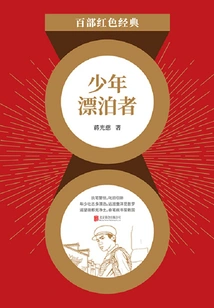
Young Drifter (red Classic)
General Fiction少年漂泊者(红色经典)
Jiang Guangci
This book contains three revolutionary novels by Jiang Guangci: "Young Drifter", "Pants Party" and "Wild Sacrifice". "Young Wanderer" is set in Chinese society after the May 4th Movement. The story of rural young Wang Zhong, whose parents were forced to death by landlords, refused to succumb to the landlords, wandered around, suffered hardships, and finally moved towards revolution. It showed the sharp rural class contradictions and created the image of an outstanding revolutionary youth. "Pants Party" is the first novel to show the armed struggle of the working class led by the Communist Party of China. It commemorates the armed uprising of the Shanghai working class in 1927. It tells the story of the Communist Party leading the Shanghai working class to overthrow the reactionary rule of the Beiyang warlords. "Wild Festival" is the first novel to describe revolution and love. It tells the love story of Chen Jixia and Zhang Shujun during the revolutionary period. It is a "popular literature" work of revolutionary romantic nature.
This book contains three revolutionary novels by Jiang Guangci: "Young Drifter", "Pants Party" and "Wild Sacrifice". "Young Wanderer" is set in Chinese society after the May 4th Movement. The story of rural young Wang Zhong, whose parents were forced to death by landlords, refused to succumb to the landlords, wandered around, suffered hardships, and finally moved towards revolution. It showed the sharp rural class contradictions and created the image of an outstanding revolutionary youth. "Pants Party" is the first novel to show the armed struggle of the working class led by the Communist Party of China. It commemorates the armed uprising of the Shanghai working class in 1927. It tells the story of the Communist Party leading the Shanghai working class to overthrow the reactionary rule of the Beiyang warlords. "Wild Festival" is the first novel to describe revolution and love. It tells the love story of Chen Jixia and Zhang Shujun during the revolutionary period. It is a "popular literature" work of revolutionary romantic nature.