Library
Browse and search books
1 novel found
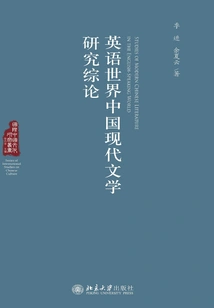
英语世界中国现代文学研究综论
Ji Jin Yu Xiayun
In the past sixty years or so, the study of modern Chinese literature overseas has grown from scratch to a style of its own. Although its marginal position has not changed, the landscape of the discipline has gradually been clarified. It meditates on and debates various possible and impossible "encounters", shuttles among various topics and methods, casts huge variables on "China", "modernity" and "literature", and at the same time reveals details that cannot be concealed. The research paradigms opened by Sinology, China Studies and even Western Anthropology are both founded and broken by them. The confrontation between theoretical demands and reality is not only seen at the level of geography and theory, but also leaves an ethical space for calling a new round of literary criticism. The "globalization of Chinese literature" is destined to have twists and turns. Only by historically rethinking and reconstructing this special history of reading and criticism can we get closer to the West and China in a non-geographic sense, and see from them an academic community and literary republic based on the imaginary interface.
In the past sixty years or so, the study of modern Chinese literature overseas has grown from scratch to a style of its own. Although its marginal position has not changed, the landscape of the discipline has gradually been clarified. It meditates on and debates various possible and impossible "encounters", shuttles among various topics and methods, casts huge variables on "China", "modernity" and "literature", and at the same time reveals details that cannot be concealed. The research paradigms opened by Sinology, China Studies and even Western Anthropology are both founded and broken by them. The confrontation between theoretical demands and reality is not only seen at the level of geography and theory, but also leaves an ethical space for calling a new round of literary criticism. The "globalization of Chinese literature" is destined to have twists and turns. Only by historically rethinking and reconstructing this special history of reading and criticism can we get closer to the West and China in a non-geographic sense, and see from them an academic community and literary republic based on the imaginary interface.