Library
Browse and search books
5 novels found
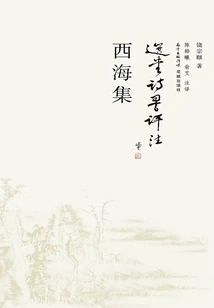
Xihaiji
Literature西海集
Jao Tsung-i
This book is one of Jao Tsung-i's "Commentary on Xuan Tang Poems" series. In 1976, Jao Tsung-I was invited to give lectures in Paris, France. In May, accompanied by the Revian and his wife, he traveled to central and southern France, visited the former residence of the French Enlightenment thinker Montesquieu (1689-1755), and climbed to the top of Puy Mery. In September, he roamed Spain and visited the ancient Islamic holy land of Córdoba and the Ahambre Palace. Along the way, he composed poems and included them in "Collection of the West Sea". The poems combine Chinese and Western styles, are original and unique. This allows readers to follow the story while reading, thus gaining a strong sense of history. At the same time, you can also feel Rao Lao's profound knowledge of Chinese and Western knowledge.
This book is one of Jao Tsung-i's "Commentary on Xuan Tang Poems" series. In 1976, Jao Tsung-I was invited to give lectures in Paris, France. In May, accompanied by the Revian and his wife, he traveled to central and southern France, visited the former residence of the French Enlightenment thinker Montesquieu (1689-1755), and climbed to the top of Puy Mery. In September, he roamed Spain and visited the ancient Islamic holy land of Córdoba and the Ahambre Palace. Along the way, he composed poems and included them in "Collection of the West Sea". The poems combine Chinese and Western styles, are original and unique. This allows readers to follow the story while reading, thus gaining a strong sense of history. At the same time, you can also feel Rao Lao's profound knowledge of Chinese and Western knowledge.
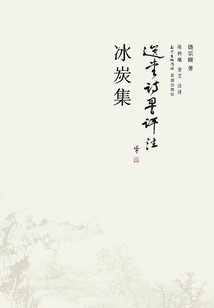
Bingtanji
Literature冰炭集
Jao Tsung-i
This book is one of Jao Tsung-i's "Commentary on Xuan Tang Poems" series. In 1968, Jao Tsung-I was invited by Lin Dabo, President of the National University of Singapore, to serve as the first professor and director of the Chinese Department of the school. In addition to teaching in Singapore, he traveled to Sin Chew, Malacca, and Penang to search for local Chinese inscriptions, becoming the first person to study Malaysian materials. During his stay in Singapore, he wrote 117 poems. He thought that although the living conditions there were very good, deep down in his heart he longed to continue to focus on Chinese culture, and his mood was as cold as charcoal.
This book is one of Jao Tsung-i's "Commentary on Xuan Tang Poems" series. In 1968, Jao Tsung-I was invited by Lin Dabo, President of the National University of Singapore, to serve as the first professor and director of the Chinese Department of the school. In addition to teaching in Singapore, he traveled to Sin Chew, Malacca, and Penang to search for local Chinese inscriptions, becoming the first person to study Malaysian materials. During his stay in Singapore, he wrote 117 poems. He thought that although the living conditions there were very good, deep down in his heart he longed to continue to focus on Chinese culture, and his mood was as cold as charcoal.
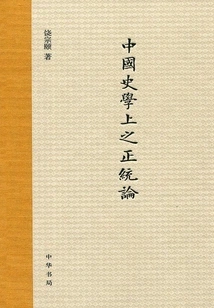
Orthodoxy in Chinese History
History中国史学上之正统论
Jao Tsung-i
From the Qin and Han Dynasties to the Ming and Qing Dynasties, dynasties changed, who was the orthodox one? Is there any destiny? There were heated discussions on this issue throughout the dynasties, and Mr. Jao Tsung-i spent five years investigating the origins. This book is a masterpiece of in-depth study of the history of historical concepts and one of Mr. Jao Tsung-i's masterpieces. Orthodoxy is an important concept in the history of Chinese historiography and has always been hotly debated. Mr. Jao Tsung-i spent five years doing in-depth research to find out the whole story and finally achieved a great success. This book is divided into two parts: general introduction and information. The general part includes thirteen chapters, which roughly sort out the influential orthodox theories in different forms in history in chronological order. The information part consists of three parts, in chronological order, listing texts discussing orthodoxy throughout the ages. The compilation form is unique. It is both a historical monograph and a compilation of historical materials, and the two are organically combined. This book immediately attracted the attention of academic circles after it was first published in 1977 by Longmen Bookstore in Hong Kong. It is one of Mr. Jao Tsung-i's masterpieces.
From the Qin and Han Dynasties to the Ming and Qing Dynasties, dynasties changed, who was the orthodox one? Is there any destiny? There were heated discussions on this issue throughout the dynasties, and Mr. Jao Tsung-i spent five years investigating the origins. This book is a masterpiece of in-depth study of the history of historical concepts and one of Mr. Jao Tsung-i's masterpieces. Orthodoxy is an important concept in the history of Chinese historiography and has always been hotly debated. Mr. Jao Tsung-i spent five years doing in-depth research to find out the whole story and finally achieved a great success. This book is divided into two parts: general introduction and information. The general part includes thirteen chapters, which roughly sort out the influential orthodox theories in different forms in history in chronological order. The information part consists of three parts, in chronological order, listing texts discussing orthodoxy throughout the ages. The compilation form is unique. It is both a historical monograph and a compilation of historical materials, and the two are organically combined. This book immediately attracted the attention of academic circles after it was first published in 1977 by Longmen Bookstore in Hong Kong. It is one of Mr. Jao Tsung-i's masterpieces.
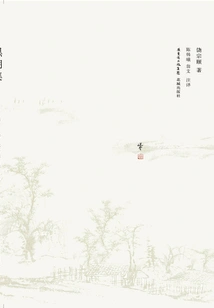
Black Lake Collection
Literature黑湖集
Jao Tsung-i
This book is the third in Jao Tsung-i's "Commentaries on Xuan Tang Poetry" series, consisting of 34 poems from "The Collection of Black Lake" and 46 poems from "The Collection of Nanhai Singing Harmony". Among them, "Black Lake Collection" records travels, and "Nanhai Singhe Collection" provides responses. Travel notes and responses are both ancient genres in classical poetry, but Jao Tsung-i's poems can express the thoughts of today's people, reflect profound humanistic feelings, and have extremely high artistic value. "Black Lake Collection" - In 1966, Jao Tsung-i studied Dunhuang manuscripts at the French National Science Center and traveled to Switzerland with Professor Demiwe. He is the author of a collection of poems "Black Lake Collection" about his travels, which was later translated into French by Professor Dai Miwei and is well-known internationally. "Nanhai Singing Collection" - Jao Tsung-i and famous lyricists Zhao Shuyong and Su Shi's "Si Ming Guan Yang Taoist Xixuan" rhymed to forty-seven times, compiled into "Nanhai Singing Collection". Philosophy, historical chants, lyricism, etc. Are integrated into the two's singing and repartee, which is a masterpiece among singing harmony poems. Jao Tsung-i is "a generation of elites who combine academics and art today" and the only remaining national treasure-level master. His ancient poetry draws on the strengths of others and reaches both ancient and modern times.
This book is the third in Jao Tsung-i's "Commentaries on Xuan Tang Poetry" series, consisting of 34 poems from "The Collection of Black Lake" and 46 poems from "The Collection of Nanhai Singing Harmony". Among them, "Black Lake Collection" records travels, and "Nanhai Singhe Collection" provides responses. Travel notes and responses are both ancient genres in classical poetry, but Jao Tsung-i's poems can express the thoughts of today's people, reflect profound humanistic feelings, and have extremely high artistic value. "Black Lake Collection" - In 1966, Jao Tsung-i studied Dunhuang manuscripts at the French National Science Center and traveled to Switzerland with Professor Demiwe. He is the author of a collection of poems "Black Lake Collection" about his travels, which was later translated into French by Professor Dai Miwei and is well-known internationally. "Nanhai Singing Collection" - Jao Tsung-i and famous lyricists Zhao Shuyong and Su Shi's "Si Ming Guan Yang Taoist Xixuan" rhymed to forty-seven times, compiled into "Nanhai Singing Collection". Philosophy, historical chants, lyricism, etc. Are integrated into the two's singing and repartee, which is a masterpiece among singing harmony poems. Jao Tsung-i is "a generation of elites who combine academics and art today" and the only remaining national treasure-level master. His ancient poetry draws on the strengths of others and reaches both ancient and modern times.
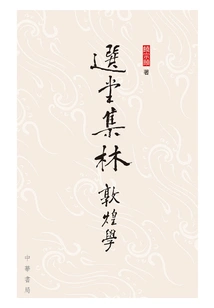
选堂集林·敦煌学
Jao Tsung-i
This book contains more than 50 articles by Mr. Rao Tsung-i on Dunhuang studies. It is the first time that Mr. Rao's articles on Dunhuang studies have been collected and published in a single volume. The articles cover Taoist documents, Buddhist historical materials, Dunhuang literature, Dunhuang music, Dunhuang calligraphy, Dunhuang painting and many other fields. The collected articles are roughly classified according to content, and each category is sorted according to time, so that readers can understand Mr. Rao's various achievements in Dunhuang studies from different angles.
This book contains more than 50 articles by Mr. Rao Tsung-i on Dunhuang studies. It is the first time that Mr. Rao's articles on Dunhuang studies have been collected and published in a single volume. The articles cover Taoist documents, Buddhist historical materials, Dunhuang literature, Dunhuang music, Dunhuang calligraphy, Dunhuang painting and many other fields. The collected articles are roughly classified according to content, and each category is sorted according to time, so that readers can understand Mr. Rao's various achievements in Dunhuang studies from different angles.