Library
Browse and search books
10 novels found

故宫的奇妙之旅
Ink Painting Hermit
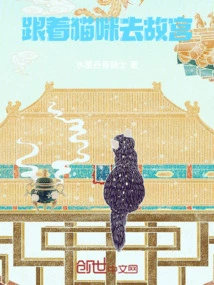
The novel mainly tells the story of a little girl named Zhang Moqing, who travels with a living Forbidden City cultural and creative product called a peacock green and blue glaze cat pillow, a rabbit, and her friends to travel into the world of various cultural relics in the Forbidden City to explore the stories behind the cultural relics. The novel is divided into five volumes. The first volume, "The Rhythm of Ink and Ink Calligraphy," mainly tells the story of "Hai Cuo Picture", "Bird Book", "Poetry on the Leap Mid-Autumn Moon", "Post on the Balcony", as well as the "Autumn Evening Picture on the Pond" collected by the National Palace Museum in Taipei and a set of "Ten Horse Pictures" scrolls by Castiglione and other calligraphy and painting cultural relics; the second volume, "The Charm of Construction", mainly tells the story of It tells the story of Zhang Moqing and three of them, led by the Royal Cats of the Forbidden City, to explore how the Forbidden City was originally built and how the Lei family built royal construction projects such as the Forbidden City, Old Summer Palace, Summer Palace, and Summer Resort, as well as the stories behind some representative ancient buildings in the Forbidden City, and the staff of the Forbidden City who are now tired of repairing them. The process of Qinzhai's panoramic view painting, Yangxin Hall and other constructions; the third volume, "Porcelain Road", tells the development process from pottery to porcelain in ancient China based on the pottery and porcelain in the Forbidden City collection; the fourth volume, "Treasures and Clocks", mainly tells the stories of some representative precious cultural relics in the Treasure Hall and Clock Hall of the Forbidden City, such as the Jin Ou Yonggu The fifth volume, "Memorial Events of the Palace Museum", mainly tells the story of the establishment of the Palace Museum, the story of the cultural relics of the Palace Museum traveling south and some of them to Taiwan, as well as some important special exhibitions held in the Palace Museum after the founding of New China, as well as the restoration and copying of cultural relics such as "Along the River During the Qingming Festival" and "Spring Outing".
The novel mainly tells the story of a little girl named Zhang Moqing, who travels with a living Forbidden City cultural and creative product called a peacock green and blue glaze cat pillow, a rabbit, and her friends to travel into the world of various cultural relics in the Forbidden City to explore the stories behind the cultural relics. The novel is divided into five volumes. The first volume, "The Rhythm of Ink and Ink Calligraphy," mainly tells the story of "Hai Cuo Picture", "Bird Book", "Poetry on the Leap Mid-Autumn Moon", "Post on the Balcony", as well as the "Autumn Evening Picture on the Pond" collected by the National Palace Museum in Taipei and a set of "Ten Horse Pictures" scrolls by Castiglione and other calligraphy and painting cultural relics; the second volume, "The Charm of Construction", mainly tells the story of It tells the story of Zhang Moqing and three of them, led by the Royal Cats of the Forbidden City, to explore how the Forbidden City was originally built and how the Lei family built royal construction projects such as the Forbidden City, Old Summer Palace, Summer Palace, and Summer Resort, as well as the stories behind some representative ancient buildings in the Forbidden City, and the staff of the Forbidden City who are now tired of repairing them. The process of Qinzhai's panoramic view painting, Yangxin Hall and other constructions; the third volume, "Porcelain Road", tells the development process from pottery to porcelain in ancient China based on the pottery and porcelain in the Forbidden City collection; the fourth volume, "Treasures and Clocks", mainly tells the stories of some representative precious cultural relics in the Treasure Hall and Clock Hall of the Forbidden City, such as the Jin Ou Yonggu The fifth volume, "Memorial Events of the Palace Museum", mainly tells the story of the establishment of the Palace Museum, the story of the cultural relics of the Palace Museum traveling south and some of them to Taiwan, as well as some important special exhibitions held in the Palace Museum after the founding of New China, as well as the restoration and copying of cultural relics such as "Along the River During the Qingming Festival" and "Spring Outing".
跟着猫咪去故宫
Ink Painting Hermit
The novel is the sequel to "The Wonderful Journey of the Forbidden City" and continues to tell the story of a little girl named Zhang Moqing who travels with a living cat pillow "Qing Qing", Mo Yu, and the royal cats of the Forbidden City to travel into the world of various cultural relics in the Forbidden City to explore the stories behind the cultural relics. The novel is divided into three volumes. In the first volume "The Charm of Architecture and Cultural Relics", Zhang Moqing and the living cat pillow Qingqing and others explore how the Forbidden City was originally built and the stories of the Lei family's construction of the Forbidden City, Old Summer Palace, Summer Palace, Summer Resort and other royal construction projects, as well as some representative ancient buildings in the Forbidden City. The story behind the building, as well as the process of the Forbidden City staff currently repairing the paintings of Juanqinzhai, Yangxin Hall and other buildings; at the same time, because many buildings in the Forbidden City today have been turned into exhibition halls to display the cultural relics of the Forbidden City, such as calligraphy and painting halls, treasure halls, etc., They will also talk about the Jinou Yonggu Cup, the Writer's Clock, and "Quick Snow Shiqing Tie" , "Mid-Autumn Tie" and other cultural relics; the second volume "The Road to Ceramics" tells the development process from pottery to porcelain in ancient China based on the pottery and porcelain collected by the Forbidden City; the third volume "Memorial Events in the Forbidden City" mainly tells the story of the Forbidden City Museum The establishment of the National Palace Museum, the story of the relocation of cultural relics from the Forbidden City to the south, the relocation of some cultural relics to Taiwan, and some important special exhibitions held in the Forbidden City after the founding of New China, as well as the restoration and copying of cultural relics such as "Along the River During the Qingming Festival" and "Spring Outing".
The novel is the sequel to "The Wonderful Journey of the Forbidden City" and continues to tell the story of a little girl named Zhang Moqing who travels with a living cat pillow "Qing Qing", Mo Yu, and the royal cats of the Forbidden City to travel into the world of various cultural relics in the Forbidden City to explore the stories behind the cultural relics. The novel is divided into three volumes. In the first volume "The Charm of Architecture and Cultural Relics", Zhang Moqing and the living cat pillow Qingqing and others explore how the Forbidden City was originally built and the stories of the Lei family's construction of the Forbidden City, Old Summer Palace, Summer Palace, Summer Resort and other royal construction projects, as well as some representative ancient buildings in the Forbidden City. The story behind the building, as well as the process of the Forbidden City staff currently repairing the paintings of Juanqinzhai, Yangxin Hall and other buildings; at the same time, because many buildings in the Forbidden City today have been turned into exhibition halls to display the cultural relics of the Forbidden City, such as calligraphy and painting halls, treasure halls, etc., They will also talk about the Jinou Yonggu Cup, the Writer's Clock, and "Quick Snow Shiqing Tie" , "Mid-Autumn Tie" and other cultural relics; the second volume "The Road to Ceramics" tells the development process from pottery to porcelain in ancient China based on the pottery and porcelain collected by the Forbidden City; the third volume "Memorial Events in the Forbidden City" mainly tells the story of the Forbidden City Museum The establishment of the National Palace Museum, the story of the relocation of cultural relics from the Forbidden City to the south, the relocation of some cultural relics to Taiwan, and some important special exhibitions held in the Forbidden City after the founding of New China, as well as the restoration and copying of cultural relics such as "Along the River During the Qingming Festival" and "Spring Outing".
我们一起穿过文化的奇幻之旅
Ink Painting Hermit
It mainly tells that in 2017, Xiao Cheng, his sister Xiaoyu, his father, and his mother came to the Forbidden City. The cat in the cultural creation called "Cat Stone Picture" suddenly came to life. Under the leadership of this cat, Xiao Cheng, his sister and others visited many museums and art galleries in Beijing, Chengdu and other places, and they felt as before. Palace of China, National Museum of China, Chengdu Museum, Memory of the Eastern Suburbs, etc., Combined with books collected by the Sichuan Provincial Library and some books purchased by the author myself, to start a journey of exploring culture (many exhibitions mentioned in the novel are based on exhibitions that the author has visited).
It mainly tells that in 2017, Xiao Cheng, his sister Xiaoyu, his father, and his mother came to the Forbidden City. The cat in the cultural creation called "Cat Stone Picture" suddenly came to life. Under the leadership of this cat, Xiao Cheng, his sister and others visited many museums and art galleries in Beijing, Chengdu and other places, and they felt as before. Palace of China, National Museum of China, Chengdu Museum, Memory of the Eastern Suburbs, etc., Combined with books collected by the Sichuan Provincial Library and some books purchased by the author myself, to start a journey of exploring culture (many exhibitions mentioned in the novel are based on exhibitions that the author has visited).
行走在文化的山海之间
Ink Painting Hermit
The novel is divided into two volumes. The first volume is "Shi Shi Lei and Chinese Ancient Architecture". It mainly tells that in 2018, Xiaofang and Xiaoxue came to Beijing and saw information about Shi Lei, a family of royal architects, in the Ancient Building Museum of the Forbidden City. The drawings and stamping samples in the "Style Lei Drawing Files" collected by museums and other institutions will show the legendary experiences of each generation of the Style Lei family, and will also talk about architects such as Liang Sicheng and Lin Huiyin, as well as other ancient Chinese buildings such as Dule Temple and Foguang Temple. The second volume, "Journey in Chengdu", mainly tells the story of Xiaofang and Xiaoxue visiting exhibitions in Chengdu Museum, Jinsha Site Museum, Chengdu Art Museum, Eastern Suburb Memory and other scenic spots after returning from Beijing when they were attending college in Chengdu.
The novel is divided into two volumes. The first volume is "Shi Shi Lei and Chinese Ancient Architecture". It mainly tells that in 2018, Xiaofang and Xiaoxue came to Beijing and saw information about Shi Lei, a family of royal architects, in the Ancient Building Museum of the Forbidden City. The drawings and stamping samples in the "Style Lei Drawing Files" collected by museums and other institutions will show the legendary experiences of each generation of the Style Lei family, and will also talk about architects such as Liang Sicheng and Lin Huiyin, as well as other ancient Chinese buildings such as Dule Temple and Foguang Temple. The second volume, "Journey in Chengdu", mainly tells the story of Xiaofang and Xiaoxue visiting exhibitions in Chengdu Museum, Jinsha Site Museum, Chengdu Art Museum, Eastern Suburb Memory and other scenic spots after returning from Beijing when they were attending college in Chengdu.
大明王朝民族英雄传
Ink Painting Hermit
This book is divided into three volumes. The first volume is "National Hero Qi Jiguang and His Qi Jiajun", which is a revised version of "The Legend of National Hero Qi Jiguang". Qi Jiguang's fourth wife, Yang Yuee, was the granddaughter of Tang Shunzhi's master Yang Song and was changed to the daughter of the famous admonisher Yang Jisheng. Yang Jisheng wrote a letter to impeach the traitor Yan Song in the 26th year of Jiajing (1547 AD). In the 34th year of Jiajing (1555 AD), he was beheaded together with Zhang Jing and Li Tianchong. Yang Jisheng's wife Zhang committed suicide after learning about it. His friend Tang Shunzhi adopted Yang Jisheng's son Yang Tianming and daughter Yang Yuee. Qi Jiguang's teacher Shen Rui adopted Zhang Jing's son Zhang Wenzhong. Zhang Wenzhong and Yang Tianming later became Qi Jiguang's subordinates. It mainly tells about Qi Jiguang's battles such as Longshansuo, Cengang and Huajie during the two battles in Zhejiang in pacifying the Japanese rebellion. With the help of Shen Rui, Tang Shunzhi and others, he successfully formed the Qi family army, as well as the Battle of Hengyu Island, Lindun, Pinghaiwei and Xianyou in Fujian, and the Battle of Nan'ao Island in Guangdong. The middle volume is "The Legend of the Heroes of the Wanli Korean War", which mainly tells the story from the 20th to the 26th year of Wanli (1592 to 1598 AD), when Japanese Taige Toyotomi Hideyoshi launched a war of aggression against Korea, which was called Wanli Korea in China. War, the story of national heroes Li Rusong, Song Yingchang, Wu Weizhong, Deng Zilong, and Qi Jiguang's nephew Qi Jin helped the Korean army and people fight against the Japanese invaders, and also told the anti-Japanese deeds of the Korean national hero Yi Sunchen and other generals. The second volume is "The Biography of Taiwan's National Heroes", which mainly tells the stories of Shen Yourong and Zheng Chenggong, who successively successfully recovered Taiwan and other national heroes.
This book is divided into three volumes. The first volume is "National Hero Qi Jiguang and His Qi Jiajun", which is a revised version of "The Legend of National Hero Qi Jiguang". Qi Jiguang's fourth wife, Yang Yuee, was the granddaughter of Tang Shunzhi's master Yang Song and was changed to the daughter of the famous admonisher Yang Jisheng. Yang Jisheng wrote a letter to impeach the traitor Yan Song in the 26th year of Jiajing (1547 AD). In the 34th year of Jiajing (1555 AD), he was beheaded together with Zhang Jing and Li Tianchong. Yang Jisheng's wife Zhang committed suicide after learning about it. His friend Tang Shunzhi adopted Yang Jisheng's son Yang Tianming and daughter Yang Yuee. Qi Jiguang's teacher Shen Rui adopted Zhang Jing's son Zhang Wenzhong. Zhang Wenzhong and Yang Tianming later became Qi Jiguang's subordinates. It mainly tells about Qi Jiguang's battles such as Longshansuo, Cengang and Huajie during the two battles in Zhejiang in pacifying the Japanese rebellion. With the help of Shen Rui, Tang Shunzhi and others, he successfully formed the Qi family army, as well as the Battle of Hengyu Island, Lindun, Pinghaiwei and Xianyou in Fujian, and the Battle of Nan'ao Island in Guangdong. The middle volume is "The Legend of the Heroes of the Wanli Korean War", which mainly tells the story from the 20th to the 26th year of Wanli (1592 to 1598 AD), when Japanese Taige Toyotomi Hideyoshi launched a war of aggression against Korea, which was called Wanli Korea in China. War, the story of national heroes Li Rusong, Song Yingchang, Wu Weizhong, Deng Zilong, and Qi Jiguang's nephew Qi Jin helped the Korean army and people fight against the Japanese invaders, and also told the anti-Japanese deeds of the Korean national hero Yi Sunchen and other generals. The second volume is "The Biography of Taiwan's National Heroes", which mainly tells the stories of Shen Yourong and Zheng Chenggong, who successively successfully recovered Taiwan and other national heroes.
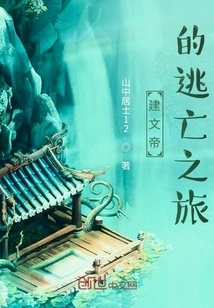
Emperor Jianwen's Escape
History建文帝的逃亡之旅
Ink Painting Hermit
Combining and referring to a large number of documents, it adopts the form of a novel. It mainly tells the story that on June 13, the 4th year of Jianwen (AD 1402), King Zhu Di of Yan attacked the city of Yingtian (now Nanjing). At this time, Emperor Jianwen Zhu Yunwen was in the palace. Under the protection of ministers Yang Yingneng, Cheng Ji and others, Zhu Yunwen was ordained as a monk, and then inherited the life order of his grandfather Zhu Yuanzhang. They entered the north gate through a secret passage built by people and fled to a hut at the foot of Qingliang Mountain at the exit. Then under the protection of Li Fang, his son and others, Emperor Jianwen and others began to hide everywhere, and took refuge in Guangyan Temple in Sichuan, Lion Mountain in Yunnan and other places. In this way, Emperor Jianwen and others left their footprints in Guangxi, Yunnan, Sichuan, Guizhou and other provinces.
Combining and referring to a large number of documents, it adopts the form of a novel. It mainly tells the story that on June 13, the 4th year of Jianwen (AD 1402), King Zhu Di of Yan attacked the city of Yingtian (now Nanjing). At this time, Emperor Jianwen Zhu Yunwen was in the palace. Under the protection of ministers Yang Yingneng, Cheng Ji and others, Zhu Yunwen was ordained as a monk, and then inherited the life order of his grandfather Zhu Yuanzhang. They entered the north gate through a secret passage built by people and fled to a hut at the foot of Qingliang Mountain at the exit. Then under the protection of Li Fang, his son and others, Emperor Jianwen and others began to hide everywhere, and took refuge in Guangyan Temple in Sichuan, Lion Mountain in Yunnan and other places. In this way, Emperor Jianwen and others left their footprints in Guangxi, Yunnan, Sichuan, Guizhou and other provinces.
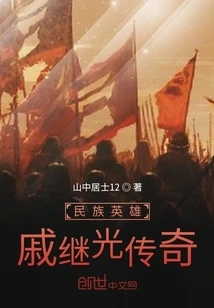
民族英雄戚继光传奇
Ink Painting Hermit
In the 34th year of Jiajing (AD 1555), Hu Zongxian sent people to recruit the pirate leader Wang Zhishuo. In the 35th year of Jiajing (AD 1556), Qi Jiguang was appointed as General Ning Shaotai. After two battles at Longshan Institute in World War I and Longshan Institute in World War II, Qi Jiguang decided to train his troops. Soon the Battle of Cengang broke out. After the pirate leader Wang Zhi was lured to surrender by Hu Zongxian in 1557 AD, Zhejiang Inspector Wang Bengu arrested Wang Zhi and imprisoned him. Then Wang Zhi's adopted son Mao Haifeng colluded with the young master of Hizen Kingdom Matsuura Heizhun and others to invade Zhejiang. The Battle of Cengang broke out, and the Ming army started from 1 From the end of 557 to 1558, they could not capture Cengang. After Qi Jiguang arrived, he issued a military order. Qi Jiguang led the army and repeatedly attacked Cengang, which caused the Japanese pirates to become disoriented. On the last day, Qi Jiguang led the soldiers to fight with the Japanese pirates holding wolves, causing chaos in the Japanese pirates' formation. The battle of Cengang ended. Wang Zhi was beheaded in 1559. After the Battle of Cengang, Qi Jiguang decided to train his troops, so he recruited 4,000 new troops in Yiwu. He won the battles of Huajie and other battles during the Taizhou victory. After the Taizhou victory, the Japanese invaders in Zhejiang were basically wiped out. Later, he went to Fujian and won the battles of Hengyu Island and Lindun. In 1562, Qi Jiguang, Yu Dayou, and Tan Lun fought side by side again and won great victories at Pinghaiwei and Xianyou. In 1565, Qi Jiguang and Yu Dayou annihilated the pirate leader Wu Ping and put an end to the Japanese invasion.
In the 34th year of Jiajing (AD 1555), Hu Zongxian sent people to recruit the pirate leader Wang Zhishuo. In the 35th year of Jiajing (AD 1556), Qi Jiguang was appointed as General Ning Shaotai. After two battles at Longshan Institute in World War I and Longshan Institute in World War II, Qi Jiguang decided to train his troops. Soon the Battle of Cengang broke out. After the pirate leader Wang Zhi was lured to surrender by Hu Zongxian in 1557 AD, Zhejiang Inspector Wang Bengu arrested Wang Zhi and imprisoned him. Then Wang Zhi's adopted son Mao Haifeng colluded with the young master of Hizen Kingdom Matsuura Heizhun and others to invade Zhejiang. The Battle of Cengang broke out, and the Ming army started from 1 From the end of 557 to 1558, they could not capture Cengang. After Qi Jiguang arrived, he issued a military order. Qi Jiguang led the army and repeatedly attacked Cengang, which caused the Japanese pirates to become disoriented. On the last day, Qi Jiguang led the soldiers to fight with the Japanese pirates holding wolves, causing chaos in the Japanese pirates' formation. The battle of Cengang ended. Wang Zhi was beheaded in 1559. After the Battle of Cengang, Qi Jiguang decided to train his troops, so he recruited 4,000 new troops in Yiwu. He won the battles of Huajie and other battles during the Taizhou victory. After the Taizhou victory, the Japanese invaders in Zhejiang were basically wiped out. Later, he went to Fujian and won the battles of Hengyu Island and Lindun. In 1562, Qi Jiguang, Yu Dayou, and Tan Lun fought side by side again and won great victories at Pinghaiwei and Xianyou. In 1565, Qi Jiguang and Yu Dayou annihilated the pirate leader Wu Ping and put an end to the Japanese invasion.
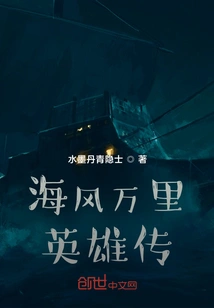
海风万里英雄传
Ink Painting Hermit
This book is divided into two volumes. The first volume is "The Heroes of the Wanli Korean War". It mainly tells the story of Qi Jiguang's nephew Qi Jin who helped Korean soldiers and civilians fight against the Japanese army in the Wanli Korean War. It also tells the story of how on April 13, the 20th year of Wanli (May 23, 1592), the Japanese Taige Toyotomi Hideyoshi ordered Xiaoxi Xing. Naga, Kato Kiyomasa, Kobayakawa Takakage, Ukita Hideie and others led an army of 158,000 people and began to attack North Korea. The Wanli Korean War broke out. On January 27, 1593, the national hero and Eastern Expedition Admiral Li Rusong and the manager Song Yingchang led a 45,000 Ming army across the Yalu River and entered Yiju in North Korea. , After starting to help the Korean soldiers and civilians fight against the Japanese army, Li Rusong led Yang Yuan, Zha Damou, Wu Weizhong, Qi Jin and others on the Korean battlefield to win the first war to aid Korea such as the Battle of Pyongyang and the burning of Longshancang. There was also the experience of Li Rusong leading everyone to break through the Japanese encirclement in the Battle of Bidiguan, and the war After the outbreak, Shi Shiyong, Xu Yu and others successfully obtained a large amount of intelligence about the Japanese army in Japan. Finally, they also described that after the second war to aid Korea began in July 1597, Xing Jie, Liu Wei, Ma Gui, Chen Lin, Deng Zilong, Wu Weizhong, Qi Jin and others helped the Korean army and civilians win the victory at Jishan and the Battle of Luliang. The second volume is "The Legend of Taiwan's Heroes in the Late Ming and Early Qing Dynasties", which mainly tells the stories of national heroes Shen Yourong and Zheng Chenggong who were Qi Jiguang's subordinates in the late Ming and early Qing dynasties, who successfully recovered Taiwan respectively. Nan Juyi and Yu Dayou's son Yu Zigao and others commanded the Ming army to recover the Penghu Islands, and Shi Lang led the Qing army to unify Taiwan.
This book is divided into two volumes. The first volume is "The Heroes of the Wanli Korean War". It mainly tells the story of Qi Jiguang's nephew Qi Jin who helped Korean soldiers and civilians fight against the Japanese army in the Wanli Korean War. It also tells the story of how on April 13, the 20th year of Wanli (May 23, 1592), the Japanese Taige Toyotomi Hideyoshi ordered Xiaoxi Xing. Naga, Kato Kiyomasa, Kobayakawa Takakage, Ukita Hideie and others led an army of 158,000 people and began to attack North Korea. The Wanli Korean War broke out. On January 27, 1593, the national hero and Eastern Expedition Admiral Li Rusong and the manager Song Yingchang led a 45,000 Ming army across the Yalu River and entered Yiju in North Korea. , After starting to help the Korean soldiers and civilians fight against the Japanese army, Li Rusong led Yang Yuan, Zha Damou, Wu Weizhong, Qi Jin and others on the Korean battlefield to win the first war to aid Korea such as the Battle of Pyongyang and the burning of Longshancang. There was also the experience of Li Rusong leading everyone to break through the Japanese encirclement in the Battle of Bidiguan, and the war After the outbreak, Shi Shiyong, Xu Yu and others successfully obtained a large amount of intelligence about the Japanese army in Japan. Finally, they also described that after the second war to aid Korea began in July 1597, Xing Jie, Liu Wei, Ma Gui, Chen Lin, Deng Zilong, Wu Weizhong, Qi Jin and others helped the Korean army and civilians win the victory at Jishan and the Battle of Luliang. The second volume is "The Legend of Taiwan's Heroes in the Late Ming and Early Qing Dynasties", which mainly tells the stories of national heroes Shen Yourong and Zheng Chenggong who were Qi Jiguang's subordinates in the late Ming and early Qing dynasties, who successfully recovered Taiwan respectively. Nan Juyi and Yu Dayou's son Yu Zigao and others commanded the Ming army to recover the Penghu Islands, and Shi Lang led the Qing army to unify Taiwan.
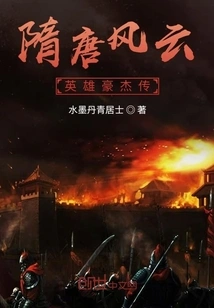
隋唐风云英雄豪杰传奇
Ink Painting Hermit
This book is a revised version of "The Legend of Heroes of the Sui and Tang Dynasties", which combines the historical books of "Sui Shu", "Old Tang Shu", "New Tang Shu" and "Zi Zhi Tong Jian", as well as the classics "The Romance of Sui and Tang Dynasties", "Shuo Tang" and "Xue Rengui's Conquest of the East" Famous works, from Yang Guang who killed his father and usurped the throne in July of the 4th year of Renshou (604 AD) to the Qin King Li Shimin who launched the Xuanwumen Revolution on June 4 of the 9th year of Wude (626 AD) and ascended to the throne two months later; from the 3rd year of Zhenguan (629 AD) Emperor Taizong of the Tang Dynasty Li Shimin appointed Li Jing, Minister of War, as the general manager of the army. He led more than 100,000 troops to attack the Turks in separate directions. The Eastern Turks were destroyed in the 23rd year of Zhenguan (630 AD) and ended in the 19th year of Zhenguan (AD 629). In February 645 AD) Li Shimin personally conquered Goguryeo and Li Zhi ascended the throne in the 23rd year of Zhenguan (AD 649 AD) as Emperor Gaozong of the Tang Dynasty. Finally, it will be described that Wu Zetian became the queen and Changsun Wuji represented the fall of the Guanlong Group. It shows the magnificent history of the Sui and Tang Dynasties, and tells classic stories such as Qin Shubao's rescue of Tang Guogong's family, Taiyuan's army, Li Shimin's Xuanwumen Revolution, Princess Wencheng's entry into Tibet, Xuanzang's journey to the west, and other classic stories. It also shows the wonderful lives of heroes such as Qin Shubao, Luo Shixin, Cheng Yaojin, Yuchi Gong, Wei Zheng, and Changsun Wuji.
This book is a revised version of "The Legend of Heroes of the Sui and Tang Dynasties", which combines the historical books of "Sui Shu", "Old Tang Shu", "New Tang Shu" and "Zi Zhi Tong Jian", as well as the classics "The Romance of Sui and Tang Dynasties", "Shuo Tang" and "Xue Rengui's Conquest of the East" Famous works, from Yang Guang who killed his father and usurped the throne in July of the 4th year of Renshou (604 AD) to the Qin King Li Shimin who launched the Xuanwumen Revolution on June 4 of the 9th year of Wude (626 AD) and ascended to the throne two months later; from the 3rd year of Zhenguan (629 AD) Emperor Taizong of the Tang Dynasty Li Shimin appointed Li Jing, Minister of War, as the general manager of the army. He led more than 100,000 troops to attack the Turks in separate directions. The Eastern Turks were destroyed in the 23rd year of Zhenguan (630 AD) and ended in the 19th year of Zhenguan (AD 629). In February 645 AD) Li Shimin personally conquered Goguryeo and Li Zhi ascended the throne in the 23rd year of Zhenguan (AD 649 AD) as Emperor Gaozong of the Tang Dynasty. Finally, it will be described that Wu Zetian became the queen and Changsun Wuji represented the fall of the Guanlong Group. It shows the magnificent history of the Sui and Tang Dynasties, and tells classic stories such as Qin Shubao's rescue of Tang Guogong's family, Taiyuan's army, Li Shimin's Xuanwumen Revolution, Princess Wencheng's entry into Tibet, Xuanzang's journey to the west, and other classic stories. It also shows the wonderful lives of heroes such as Qin Shubao, Luo Shixin, Cheng Yaojin, Yuchi Gong, Wei Zheng, and Changsun Wuji.
隋唐风云英雄传
Ink Painting Hermit
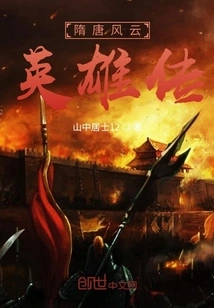
Combining the history books of "Book of Sui", "Old Book of Tang", "New Book of Tang" and "Zi Zhi Tong Jian", as well as the classical masterpieces "Romance of Sui and Tang", "Shuo Tang" and "Xing Tang Zhuan", from Yang Guang's parricide and usurping the throne in July of the 4th year of Renshou (604 AD) to the Qin King Li Shimin launched the Xuanwu Gate Rebellion on June 4 of the 9th year of Wude (626 AD) and ascended to the throne two months later. It shows the magnificent historical picture of the Sui Dynasty and tells the life trajectories of heroes such as Qin Shubao, Luo Shixin, Cheng Yaojin, Li Jing, Wei Zheng and Changsun Wuji during the Sui and Tang Dynasties.
Combining the history books of "Book of Sui", "Old Book of Tang", "New Book of Tang" and "Zi Zhi Tong Jian", as well as the classical masterpieces "Romance of Sui and Tang", "Shuo Tang" and "Xing Tang Zhuan", from Yang Guang's parricide and usurping the throne in July of the 4th year of Renshou (604 AD) to the Qin King Li Shimin launched the Xuanwu Gate Rebellion on June 4 of the 9th year of Wude (626 AD) and ascended to the throne two months later. It shows the magnificent historical picture of the Sui Dynasty and tells the life trajectories of heroes such as Qin Shubao, Luo Shixin, Cheng Yaojin, Li Jing, Wei Zheng and Changsun Wuji during the Sui and Tang Dynasties.