Library
Browse and search books
1 novel found
唐代御史制度与文人
Huo Zhijun
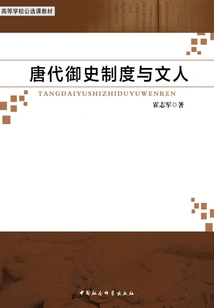
The ancient Chinese supervisory system was established in the Three Dynasties and flourished over time, reaching its peak in the Li and Tang Dynasties. The group of censors in the Tang Dynasty was not only the subject of supervision, but also the subject of literary creation. When they were the subject of supervision, the group of censors in the Tang Dynasty showed vigorous supervision practice and unscrupulous admonishment posture; when they were the subject of literature, the spirit of supervision and remonstrance accompanying their active political participation deeply affected the literary creation of the censors of the Tang Dynasty. But so far, there has been no monograph in the academic circle that studies the relationship between the censors and literature in the Tang Dynasty as a relatively independent literary phenomenon. This book attempts to study the relationship between the censors and literature in the Tang Dynasty from the perspectives of literature, history, law and other disciplines. The genealogy and the genealogy of thinking characterized by truth-seeking, criticism, and healing also dynamically examine the development and changes of the censor's personality in different historical stages of the Tang Dynasty and its relationship with literature; it not only examines the impact of the censor's activities on the literature of the Tang Dynasty at a macro level, but also explores the relationship between the censor's activities and poetry and prose creation at a micro level. This book, to a certain extent, makes up for the structural flaws in current research on Tang Dynasty literature and has achieved overall innovative and original academic results.
The ancient Chinese supervisory system was established in the Three Dynasties and flourished over time, reaching its peak in the Li and Tang Dynasties. The group of censors in the Tang Dynasty was not only the subject of supervision, but also the subject of literary creation. When they were the subject of supervision, the group of censors in the Tang Dynasty showed vigorous supervision practice and unscrupulous admonishment posture; when they were the subject of literature, the spirit of supervision and remonstrance accompanying their active political participation deeply affected the literary creation of the censors of the Tang Dynasty. But so far, there has been no monograph in the academic circle that studies the relationship between the censors and literature in the Tang Dynasty as a relatively independent literary phenomenon. This book attempts to study the relationship between the censors and literature in the Tang Dynasty from the perspectives of literature, history, law and other disciplines. The genealogy and the genealogy of thinking characterized by truth-seeking, criticism, and healing also dynamically examine the development and changes of the censor's personality in different historical stages of the Tang Dynasty and its relationship with literature; it not only examines the impact of the censor's activities on the literature of the Tang Dynasty at a macro level, but also explores the relationship between the censor's activities and poetry and prose creation at a micro level. This book, to a certain extent, makes up for the structural flaws in current research on Tang Dynasty literature and has achieved overall innovative and original academic results.